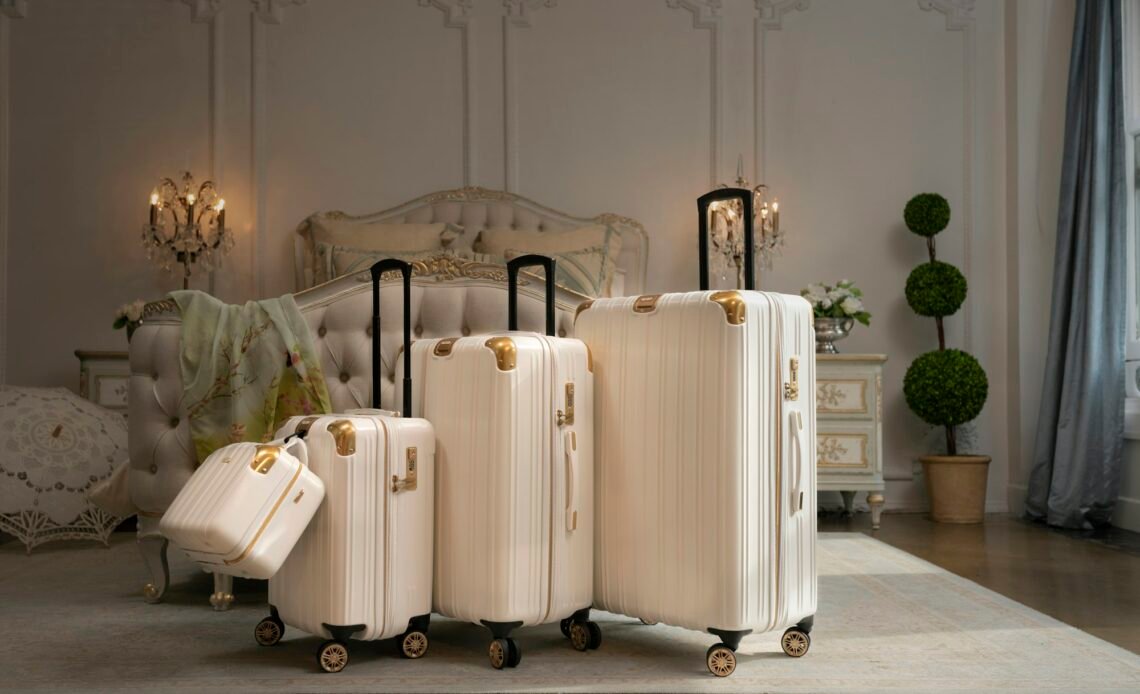
The carry-on has quietly become the most negotiated piece of luggage in modern travel. Checked-bag fees now routinely top $35–$75 each way on US carriers, European low-cost lines charge almost as much for an oversized cabin bag as for the flight itself, and lost-luggage headlines have made plenty of travelers rethink what actually needs to go in the suitcase. The result is a small but durable market in gear built specifically to make one bag do more: compress more clothing into less space, keep a phone charged through a transatlantic delay, and replace the oversized toiletry bottles airport security loves to confiscate. Below are five pieces of travel gear, verified for current pricing and specifications, that keep showing up in gear guides and frequent-flier kits for good reason.

Packing cubes: Eagle Creek Pack-It Reveal Cube Set
Eagle Creek’s Pack-It Reveal line, the latest iteration of the packing cube system the brand has sold for more than a decade, lists at $59 for the three-piece XS/S/M set on Eagle Creek’s own site and at REI. The cubes use a half-zip “reveal” top panel rather than full mesh, which lets travelers see and grab specific items without unzipping the entire cube, and a compression zipper on each piece that reduces packed volume by roughly 20 percent once fastened. Retail prices fluctuate: outdoor retailers such as Backcountry and Altitude Sports have discounted the set to the $36–$45 range during sale periods, while Eagle Creek’s bundled Pack-It Reveal Carry-On Set, which adds a larger garment folder and shoe cube, runs $78 on sale against a $104 list price. For a one-bag international trip, the three-cube set is generally enough to separate tops, bottoms, and undergarments into distinct, compressible units, which also makes repacking after a TSA bag check considerably faster.
Power: Anker 737 Power Bank (PowerCore 24K)
Battery anxiety on long-haul flights and layovers has made power banks one of the most-packed items in any carry-on, and the Anker 737 remains a frequently recommended option among higher-capacity models. It carries 24,000mAh of capacity (about 90Wh), which keeps it under the 100Wh ceiling that the TSA and most international carriers set for carry-on lithium-ion batteries without requiring special airline approval. Anker’s own US store lists it at $109.99, down from an original $149.99, with a built-in digital display that shows remaining charge and real-time wattage, three output ports (two USB-C, one USB-A), and a maximum output of 140W, enough to fast-charge a MacBook alongside a phone. At 629.9 grams, it is one of the heavier options for a day bag, which is the trade-off travelers make for being able to fully recharge a laptop and a phone from a single battery between flights.
Toiletries: Cadence Capsules
Cadence’s magnetic, refillable capsules address the specific annoyance of travel-size toiletry bottles that either leak in a dopp kit or get thrown out after one trip because they are not worth refilling. The capsules snap together magnetically into a single stackable block and use a wide-mouth opening designed for refilling from full-size bottles, rather than being sold pre-filled and disposable. Pricing on the brand’s own site runs per capsule: $15 for the Small (0.56 oz), $24 for the Medium (1.32 oz), and $38 for the Large, with labeled magnetic tiles sold separately at $6 each; a Medium Trio bundle with five tiles lists at $131. The brand markets a patented leak-resistant seal, though some independent reviewers have reported occasional leaking with thinner liquids such as toner or certain serums, so travelers packing those products may want to test a capsule at home before a trip rather than trusting it blind on travel day.
Tracking: Apple AirTag
Apple released a second-generation AirTag in January 2026, with Apple’s own pricing listing the single unit at $29 and the four-pack at $99, though retailers have discounted the four-pack as low as $64.98 on Amazon in the months since launch. Slipped into a checked bag or a packing cube, the coin-sized tracker uses the Find My network, built on the hundreds of millions of Apple devices worldwide, to report a bag’s last known location, which has become one of the more effective low-cost responses to airline mishandling. The second-generation version carries over the same precision-finding feature for nearby iPhones and extends battery life modestly over the original. For travelers checking a bag on a connecting itinerary, with lost- and delayed-luggage rates still a meaningful risk on multi-carrier bookings, a tracker in the bag turns “where is my suitcase” from a phone call to the airline into a glance at an app.
Rest: Trtl Pillow Plus
The Trtl Pillow Plus departs from the inflatable horseshoe pillow familiar from decades of economy-class travel, using an internal adjustable support frame wrapped in soft fleece that straps around the neck rather than inflating around it, intended to hold the head upright against a seat or window without the pillow sliding down mid-flight. Trtl’s US site lists the Plus at $74.99, with some listings showing it as high as $89.99; UK pricing runs £79.99 and Canadian pricing around CA$119.99, reflecting the premium positioning relative to a standard $15–$20 inflatable pillow. It is machine washable and folds into its own carry pouch, though some reviewers note it is bulkier to repack into that pouch than a simple inflatable alternative, and the price point is a genuine drawback against cheaper options for travelers who only fly occasionally. For anyone logging multiple long-haul flights a year, independent reviewers have rated it between 4.4 and 4.8 out of 5 across major retail listings, with the adjustable frame cited most often as the reason it outperforms inflatable pillows on actual in-seat sleep.
None of these five is essential on its own, and none solves every problem a long trip creates. But together they represent where travel gear spending has actually moved: not toward novelty, but toward smaller, more deliberate purchases that reduce the number of ways a trip can go wrong, whether that is a half-charged phone at a layover, a leaking toiletry bag, or forty-five minutes spent waiting at a baggage carousel wondering if the suitcase made the connection at all.
