In 2013, David Carter was running the floor at Roka, the upscale Japanese robatayaki restaurant in Mayfair, when he decided to spend his savings on something unrelated to sushi: a large smoker, bought in Texas and shipped home to London. He started selling brisket off that smoker at Street Feast’s Dalston Yard market, one stall among dozens competing for the same crowd of beer-holding Londoners. Twelve years, a permanent Shoreditch address, and one Michelin Bib Gourmand later, that stall is Smokestak — and it’s done as much as any single restaurant to define what London barbecue actually tastes like.
From a Market Stall to Sclater Street
Carter, who was born in Barbados, had spent years in restaurant management before the detour into barbecue — Roka was his last job before Smokestak began. The stall built a cult following on the London market-and-festival circuit for several years before Carter opened a permanent restaurant at 35 Sclater Street in Shoreditch in 2016, a narrow, industrial-feeling room close to Brick Lane that kept the same smoked-meat-first menu that had worked at the markets. Michelin added Smokestak to its Bib Gourmand list in 2018 — the award for restaurants judged to offer good cooking at moderate prices — and the restaurant has held it ever since, including a feature as Michelin’s own UK “Bib of the Month” in January 2025, which singled out the pricing as remarkable for the quality and portion size on offer.
London’s Barbecue Decade
Smokestak didn’t start London’s barbecue habit — it joined one already underway. Credit for that usually goes to Pitt Cue Co., which began in 2011 as a food van parked under Hungerford Bridge, run by Tom Adams and Jamie Berger, before the pair opened a permanent restaurant in Soho in 2012. Pitt Cue is widely described as the restaurant that kicked off London’s barbecue craze, pulling low-and-slow Texan and Southern American technique — offset smokers, dry rubs, hours-long cook times — into a city that had mostly known barbecue as a summer garden activity involving sausages and lighter fluid. (Its own founders, by some accounts, pushed back on getting all the credit — barbecue had been building in pockets of the city before they opened.) Pitt Cue closed in 2019 after eight years, by which point Carter’s stall-turned-restaurant had already outlasted the restaurant that inspired it, and Carter had gone on to co-found Manteca, an Italian nose-to-tail restaurant, with chef Chris Leach, followed by the Greek-inspired Agora and Oma in Borough Market.
What’s Actually Worth Ordering
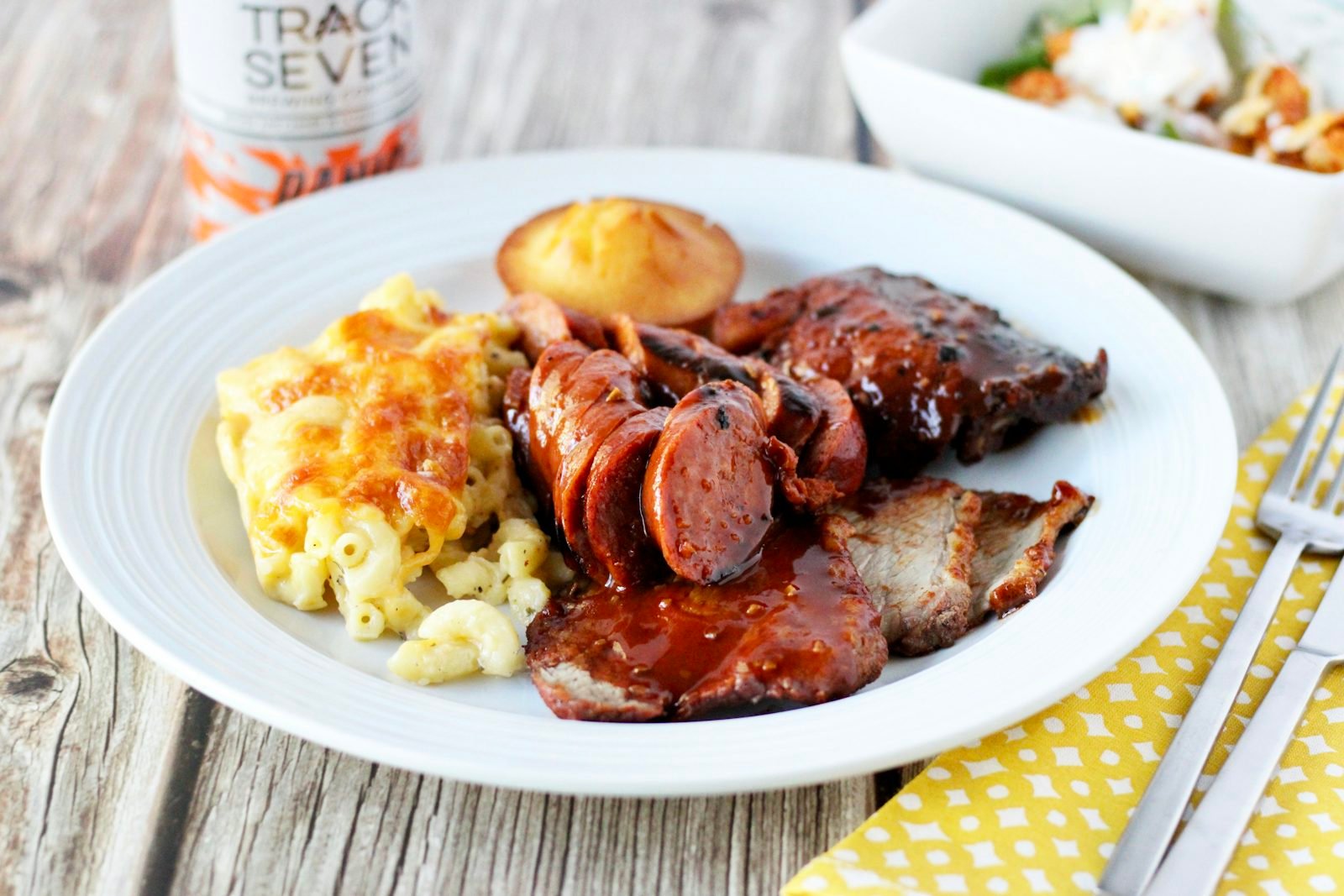
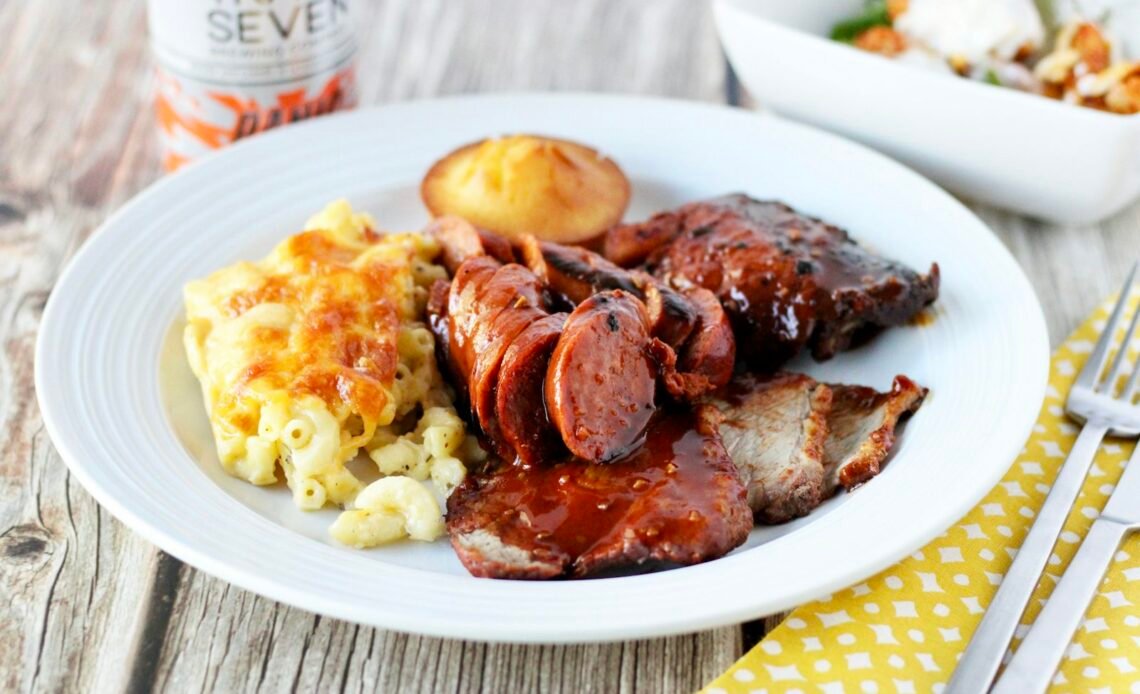
The dish Smokestak actually got famous for is the brisket bun — a soft bun stuffed with shredded, sauced brisket that built the restaurant’s festival-circuit reputation before the Sclater Street site ever existed, and it’s still the thing most reviewers mention first. For the table, Smokestak also does a whole smoked brisket to share, cooked for 12 to 15 hours over kiln-dried English oak — the kind of cook time that only makes sense with the market-tested confidence of a restaurant that’s been doing this for over a decade. Beyond the brisket, the menu has leaned on thick-cut pork ribs served with pickled cucumber, and crispy ox cheek (sometimes crispy beef shin, depending on the day’s cut) with anchovy mayo — a pairing that borrows more from British bar-snack instincts than anything you’d find in Texas, which is arguably the more honest way to describe what Smokestak actually is: Texan technique filtered through a London kitchen, not a transplant of it.
The Practical Details
Smokestak is at 35 Sclater Street, London E1 6LB, a short walk from both Shoreditch High Street and Brick Lane. Michelin currently rates it in its “££” bracket — the guide dropped its old flat price caps for Bib Gourmand restaurants, so that bracket is the most reliable current signal, and it lines up with OpenTable’s estimate of roughly £26 to £40 per head before drinks. It serves lunch and dinner most days of the week, with Sunday hours running shorter than the rest. Reservations are handled by phone rather than through the main booking platforms — a holdover, fittingly, from its market-stall days, when the only way to get your food was to show up and queue.