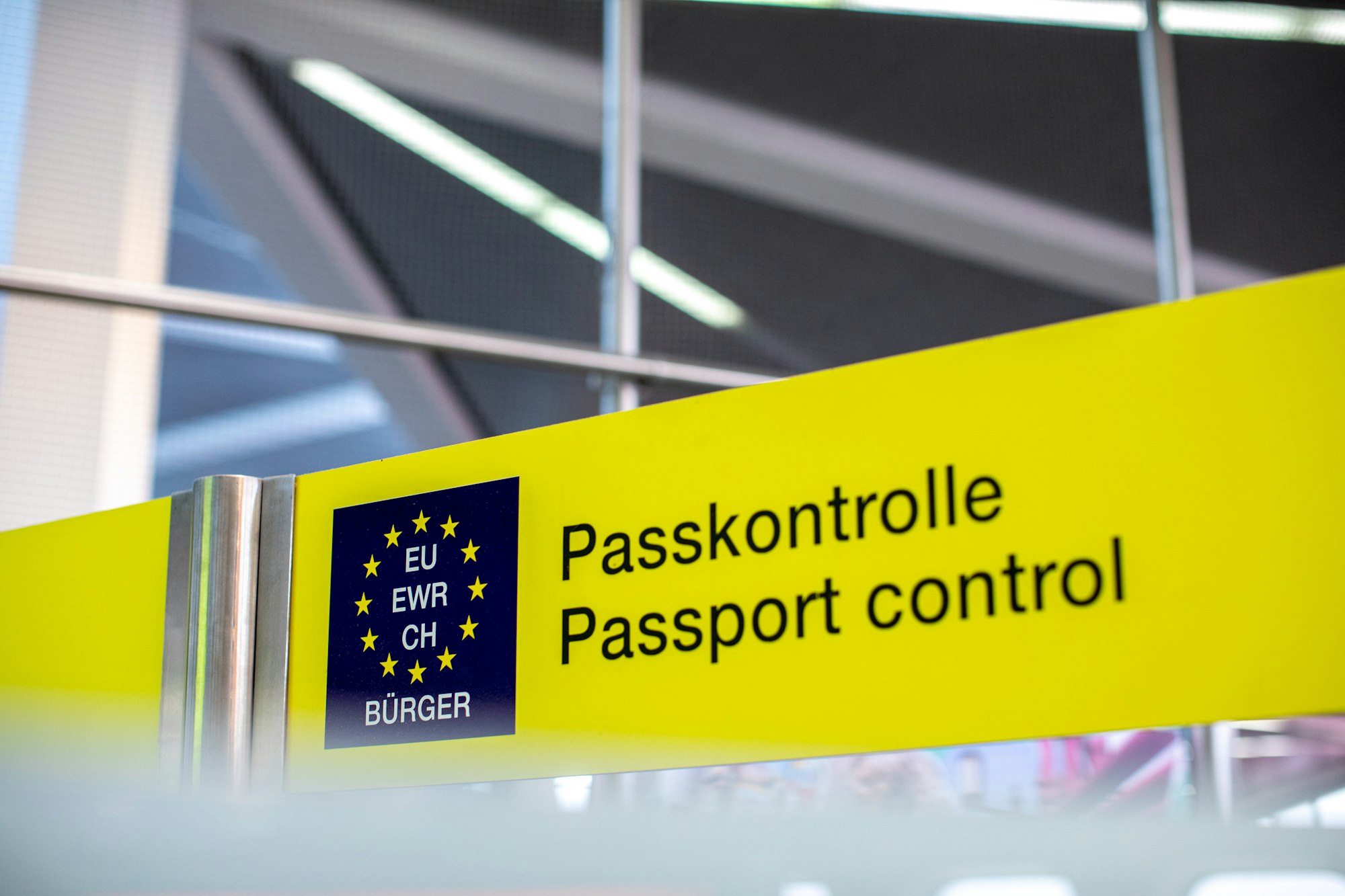
More than five years after Brussels first promised a digital gatekeeper for Europe’s borders, the European Travel Information and Authorisation System still has not opened for applications. The European Commission’s own target of “the last quarter of 2026” quietly disappeared from the official ETIAS portal over the summer, and eu-LISA — the EU agency actually building the system — has told the Financial Times that a 2026 launch is “no longer feasible.” The working expectation now, confirmed by national government travel notices including Poland’s, is 2027. Brussels has not named a date and has only promised to announce one several months before it goes live.
Where Things Actually Stand This November
As of now, ETIAS is not operational anywhere. No applications are being collected, no fees are being charged, and visa-exempt travelers — Americans, Britons, Canadians, Australians, Japanese nationals and dozens of other nationalities — can still enter the 29 Schengen countries plus Cyprus exactly as they always have, with nothing more than a valid passport. The European Commission’s eu-LISA management board discussed the launch on June 17, 2026, and a spokesperson later confirmed to the Financial Times that there had been no further developments since. A revised timeline was expected to follow a subsequent board session, but no new date has been published. Anyone encountering a website that claims to sell ETIAS authorizations today is looking at a scam — the only legitimate source, once applications open, will be the Commission’s own travel-europe.europa.eu portal.
Why the Date Keeps Slipping
ETIAS depends on a companion system, the Entry/Exit System (EES), which replaces manual passport stamps with biometric registration — fingerprints and a facial photo — logged automatically at the border. EES rolled out progressively starting October 12, 2025, and became fully operational across all 29 Schengen states on April 10, 2026. The rollout was rough: long queues were reported at several major airports, and nine national governments asked Brussels to extend emergency “flexibility” measures that let border staff fall back on manual checks when EES kiosks bogged down. Those flexibility measures expired on September 6, 2026, with no formal extension granted. People close to the discussions have said the priority is getting EES to run smoothly before layering a second new system — ETIAS — on top of it, which is widely seen as the real reason the 2026 target quietly fell away.
The Fee Has Already Tripled — Before the System Has Even Opened
Whenever ETIAS does launch, it will cost more than originally advertised. The 2018 regulation that created ETIAS set the fee at €7. Commission Delegated Regulation (EU) 2025/1411, dated July 16, 2025 and published in the Official Journal on October 29, 2025, raises that to €20 per application, which the Commission justified by pointing to cumulative EU inflation of just over 30% since 2016. Applicants under 18 or over 70 remain exempt from paying — but they still have to submit an application and receive approval, the fee waiver doesn’t waive the authorization itself. Once granted, an ETIAS authorization will be valid for three years or until the traveler’s passport expires, whichever comes first, and it will be tied to that specific passport.
Who Will Need It, and Who’s Already Covered
ETIAS will apply to nationals of visa-exempt third countries entering any of 30 European countries — the 29 Schengen members plus Cyprus, which is enforcing ETIAS even though it isn’t yet a full Schengen member. Ireland, which never joined Schengen’s border-free zone, is not part of the scheme. Travelers who already hold a valid Schengen visa, EU residence permits, or who qualify under the UK-EU Withdrawal Agreement are exempt from applying at all. Everyone else from a visa-exempt country — the U.S., UK, Canada, Australia, Japan, South Korea and around 60 other nationalities — will eventually need to apply online before departure, pay (or claim their age-based exemption), and receive approval, which authorities say will typically arrive within minutes but can take up to 30 days if manual review is triggered.
What Happens on Day One, Whenever That Is
The regulation builds in a soft landing. For the first six months after whatever launch date is eventually set, travelers will be urged, but not required, to hold an ETIAS — border guards won’t refuse entry solely for lacking one if a traveler meets all other entry conditions. A second six-month grace period follows, during which only first-time arrivals without a prior ETIAS can still be waved through; repeat visitors will need one. Only after roughly a year of operation does full enforcement kick in, at which point an approved ETIAS becomes a hard requirement for boarding, with no exceptions.
Where This Fits Among Other Travel-Authorization Schemes
Europe is hardly alone in building these systems, and it’s the laggard, not the leader. The United Kingdom’s own Electronic Travel Authorisation became fully and strictly mandatory on February 25, 2026, for roughly 85 visa-exempt nationalities, with airlines now required to confirm a valid ETA before letting anyone board; it costs £20 per application, confirmed on the UK government’s own site. The United States’ long-running ESTA, which used to cost $21, now runs $40.27 and ticked up again to $40.62 on October 16, 2026 under an inflation-adjustment clause. Against that backdrop, ETIAS’s eventual €20 fee and its repeated delays look less like an outlier and more like Brussels simply being the slowest of the major Western travel-screening regimes to get its system working.
What to Actually Do Right Now
Nothing, for the moment. There is no ETIAS application to file, no fee to pay, and no reason to pay a third-party site that claims otherwise. The one genuinely new requirement already in force is EES registration at the border itself — travelers from outside the EU should expect to have fingerprints and a photo taken on their next arrival into any Schengen country, a process that adds a few extra minutes at passport control. Beyond that, the only useful thing to do is keep an eye on the Commission’s official ETIAS portal for the eventual start date, which by law must be announced well in advance — likely sometime in 2027, though nothing is official yet.