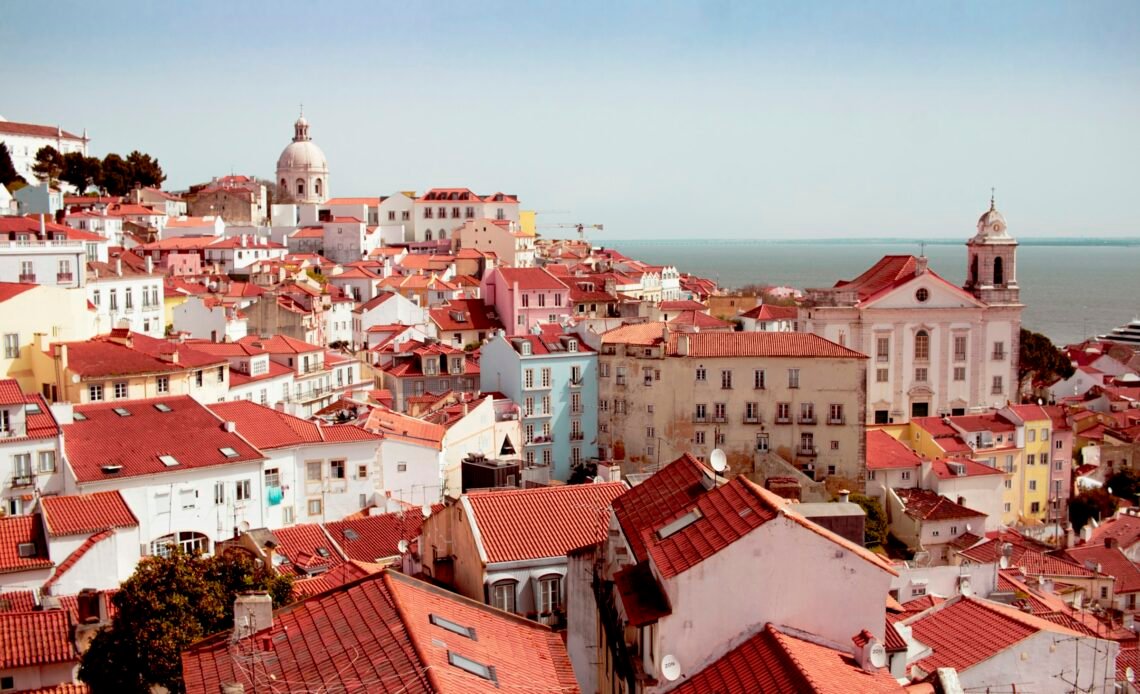
Lisbon rewards patience. The city’s seven hills mean every itinerary is really a negotiation between what you want to see and how much your calves can take, and 2026 adds a new wrinkle: several of the funiculars that once made the climbing optional are still out of service after last year’s accident. Three days is the right amount of time to do Lisbon properly — tiled facades in the morning, grilled fish at lunch, fado at night — without the frantic pace a 48-hour layover forces on you. Here’s a current, walkable, properly fact-checked itinerary, with a Navegante-card cheat sheet so you don’t overpay for transit on day one.

Before You Go: Navegante Card or Lisboa Card?
The old Viva Viagem card has effectively been folded into the Navegante system — the physical card (€0.50, reloadable at any metro station) is now usually called Navegante Ocasional, and it works across metro, trams, buses, and the Cascais and Sintra train lines. Load it with “Zapping” pay-as-you-go credit for around €1.70 a ride, or a 24-hour unlimited pass for roughly €7. For most three-day visits doing a mix of walking and transit, this is the cheaper option. The Lisboa Card is a different product: it bundles unlimited transit with free or discounted entry to paid sights — Jerónimos Monastery, Torre de Belém, the Carmo ruins — and is priced by duration (24/48/72 hours), running roughly €27 to €65 depending on length. It only pays for itself if you’re stacking several paid museums and monuments into your days; check current pricing at lisboacard.org before buying, since figures shift seasonally.
Day 1: Baixa, Bairro Alto, and a Night of Fado
Start in Praça dos Restauradores, the obelisk-anchored square marking the edge of downtown Baixa. Here’s the 2026 update worth knowing before you plan your morning: the Glória Funicular, which has carried visitors up to Bairro Alto since 1885, has been closed since a fatal derailment in September 2025. Carris has confirmed it won’t be a repair but an entirely new structure, not expected to open until 2029 — and as of late 2026, the Bica and Lavra funiculars and the Santa Justa Lift remain suspended too, with only the Graça funicular back in service. Skip waiting for any of them. Walk up Calçada da Glória instead — it’s steep but takes under ten minutes — or hop bus 758.
At the top, Igreja de São Roque is one of Lisbon’s most deceptive churches: a plain Renaissance facade hiding a gilded interior and the Capela de São João Baptista, assembled in Rome from lapis lazuli and mosaic tile before being shipped to Lisbon in pieces — reputedly the most expensive chapel in Europe by weight when it was built. Entry to the church is free; the attached museum charges a small admission fee. From there, it’s a short walk to Largo do Carmo and the Convento do Carmo — the roofless Gothic ruin left standing since the 1755 earthquake as a deliberate memorial. The archaeological museum inside the ruins is open Monday through Saturday (closed Sundays), roughly 10am–7pm in summer and 10am–6pm in winter, for €7 (€5 reduced, under 14 free).
For an afternoon pastry stop, Manteigaria’s original Chiado counter on Rua do Loreto still turns out pastéis de nata to order (€1.50 each, boxes available), and Landeau on Rua das Flores — a five-minute walk away — remains the city’s reference point for a single, extremely dense slice of chocolate cake (around €4.50, with a complimentary espresso).
For dinner, cross to Alfama for fado at O Corrido – Casa de Fado on Campo de Santa Clara, an intimate room that’s still operating and well reviewed, typically open Tuesday and Thursday through Sunday from 8pm (closed Monday and Wednesday). Set dinner-and-fado menus run roughly €35–55 depending on the tier — reserve ahead, since seating is limited. If you’d rather eat elsewhere and catch fado another night, note that traroro has already covered Solar dos Presuntos in depth — still one of the city’s great traditional dining rooms, a few minutes away near Rossio — so we won’t repeat that ground here.
Day 2: Trams, Towers, and the Age of Discovery
Belém is a 25–30 minute ride from downtown, and the modern 15E tram (fully accessible, unlike the vintage 28) is the right choice over driving — figure around €1.70–1.90 per ride on a loaded Navegante card, or €3.30 paying cash on board. Start at MAAT, the Museum of Art, Architecture and Technology, whose undulating white roof doubles as a public terrace over the river; it’s open Wednesday to Monday, 10am–7pm (last entry 6:30pm, closed Tuesdays), with adult admission around €11.
From there it’s a riverside walk to Jerónimos Monastery, Lisbon’s UNESCO-listed Manueline showpiece — the cloisters cost €18 for adults (€9 reduced, free under 12), the church itself is free, and the monastery is closed Mondays. Book a timed entry online if you can; walk-up queues regularly run past an hour. Torre de Belém, a few minutes further along the water, runs a standalone adult ticket around €15; a discounted joint ticket with Jerónimos is sometimes available, so compare prices on the official site before buying either separately. Round out the waterfront with the Monument of the Discoveries, whose compass-rose mosaic and viewing platform are worth the climb, before heading back toward downtown.
Finish the day back in the city center at the Rua Augusta Arch — street level is free, but the rooftop viewpoint (around €3.50, daily roughly 10am–7pm) gives one of the best vantage points over Praça do Comércio and the river. For dinner, make the trip out to Cervejaria Ramiro on Avenida Almirante Reis: still the city’s most famous seafood hall, priced by the kilo, open Tuesday–Sunday noon to around 12:30am (closed Mondays), and still packing in a line most nights — reservations are accepted and worth making.
Day 3: Alfama on Foot, Then LX Factory
Save your last day for Alfama itself — Lisbon’s oldest neighborhood, the one part of the city the 1755 earthquake largely spared, which is why its alleys still run at pre-grid, medieval angles. Go early, before the walking-tour groups thicken the lanes. Climb to Castelo de São Jorge first (adult tickets run around €17, reduced €8.50 for ages 13–25, €14 for 65+, free under 12; buy through the castle’s official site or the BOL ticketing platform to avoid reseller markups) for the ramparts view over the Baixa grid and the river. Wind back down through the Alfama’s switchbacks toward Miradouro das Portas do Sol and Miradouro de Santa Luzia, both free and both postcard-worthy, then detour to the Fado Museum if you want the genre’s history before hearing it live again. If your visit lands on a Tuesday or Saturday, the Feira da Ladra flea market near the National Pantheon is worth timing your morning around.
In the afternoon, head across town to LX Factory, the former industrial complex in Alcântara now packed with design shops, record stores, and a rooftop Landeau cake counter if you missed the original. It’s at its best — and most crowded — during the Sunday market (10am–6pm), so a weekday visit is calmer. Alternatively, spend the afternoon in Príncipe Real, the hilltop district of concept stores and antique shops around the Jardim do Príncipe Real; stop at Nannarella on Rua Nova da Piedade for gelato widely considered the best in the city (daily, roughly noon–10pm) before closing out your trip with an early dinner nearby. Either choice gives you a Lisbon that feels distinct from the monastery-and-monument version of Belém and the tile-and-trams version of Alfama — proof the city has more than one register.
One honest caveat: if seafood by the water is non-negotiable, Furnas do Guincho — the grilled-fish institution marking 45 years in business in 2026 — is genuinely excellent, but it’s in Cascais, roughly 40 minutes outside Lisbon proper, not a city stop. Worth folding into a Cascais or Sintra day trip rather than squeezing into these three days.
