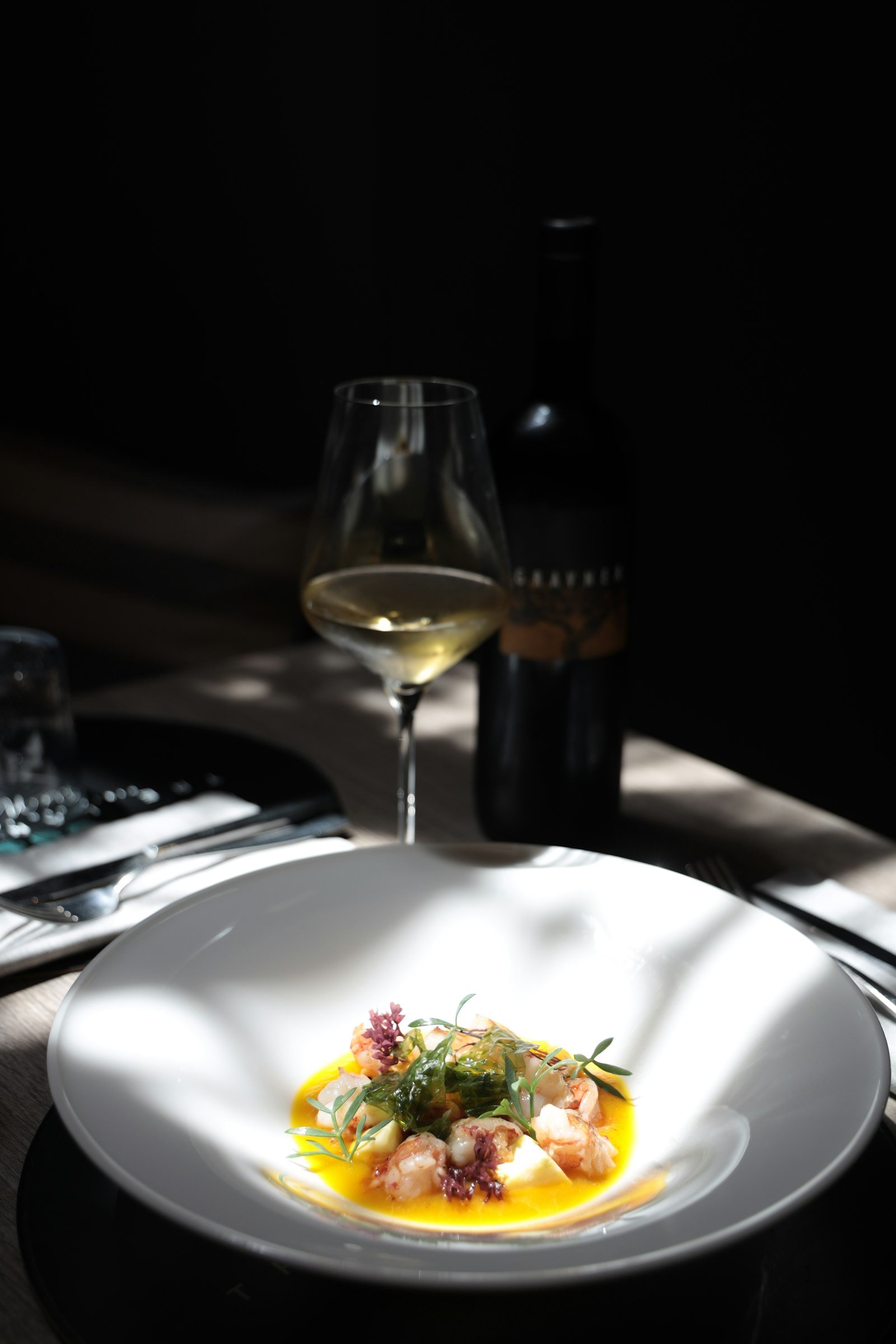
On November 27, 2025, the Michelin Guide Thailand ceremony handed its highest honor to a restaurant serving no pad kra pao, no tom yum, no Thai food at all. Sühring, tucked inside a converted 1970s villa on a quiet soi in Bangkok’s Yan Nawa district, was promoted to three Michelin stars — making it only the second restaurant in Thailand’s history to reach the top tier, after Sorn. The menu that earned it is built entirely around German cooking: currywurst, spätzle, wild boar pie. The chefs, twin brothers Thomas and Mathias Sühring, grew up near Berlin. Neither of them is Thai, and that was never the point.
Two Chefs From East Berlin, By Way of a Five-Star Hotel
Thomas and Mathias Sühring trained in Germany and worked their way up to the Ritz-Carlton in Wolfsburg before a job offer brought them to Bangkok. They ended up as chefs de cuisine at Mezzaluna, the fine-dining room on the 65th floor of the Lebua Hotel — and it was there that they met a fellow chef named Gaggan Anand, then running the restaurant that would go on to top Asia’s 50 Best for four straight years. Anand became their partner, and in February 2016 the twins opened their own restaurant under their own name, in a restored villa on Soi Yen Akat, serving a cuisine almost nobody in Bangkok was cooking at a serious level: modern German food, rebuilt from the dishes they remembered eating at their grandmother’s farm outside East Berlin.
It did not take long to register. Within a year, Sühring entered Asia’s 50 Best Restaurants list at No. 13 — the second-highest debut on that year’s ranking, behind only Odette in Singapore. Two Michelin stars followed in 2018, the year Michelin’s guide first covered Bangkok at all, and Sühring held them for seven straight editions before the jump to three in the 2026 guide. The restaurant now sits alongside Sorn, the Southern-Thai specialist that became Thailand’s first three-star restaurant in 2023, as one of only two addresses in the entire country at that level — out of 468 restaurants Michelin inspected for the 2026 Thailand guide.
The Food Being Awarded Is Genuinely, Specifically German
Sühring’s menu changes every two to three months, built around a single tasting format the brothers adjust on the night between five and seven courses, but a few dishes recur because regulars would revolt if they didn’t. One is a currywurst served in a small Berlin-style paper box — a wink at the sliced sausage doused in curry-spiced ketchup that a Berlin snack-stand owner named Herta Heuwer is credited with inventing on September 4, 1949, at the corner of Kantstrasse and Kaiser-Friedrich-Strasse, after she got hold of curry powder and ketchup from British occupying soldiers. A plaque marks the spot in Berlin today; Germany’s own patent office is more cautious than the city is about crediting Heuwer alone, but the currywurst-as-Berlin-icon story is the one that stuck, and it’s the one Sühring is riffing on, 9,000 kilometers away.
Other dishes lean further into German regional tradition than most diners outside Germany will have encountered: spätzle, the hand-pulled egg noodle that originated in the Swabian region of southwestern Germany, served here with Périgord truffle; a wild boar pie called Wildschweinpastete that appears on the menu in winter, tied to a hunting culture that runs centuries deep in rural Germany; and a version of Himmel und Erde — literally “heaven and earth,” a Rhineland dish of apples (“from the trees, toward heaven”) stewed down and layered with potatoes (“earth,” from the old German word Erdapfel), classically finished with fried blood sausage. It’s a centuries-old peasant dish from a region neither brother is from, reinterpreted by two Berliners cooking in Thailand — which is roughly the whole premise of the restaurant in one plate.
What It Costs, and Where It Is
Sühring sits at 10 Soi Yen Akat 3, in the Chong Nonsi area of Bangkok, inside a genuine two-story villa the brothers gutted and redesigned rather than a purpose-built dining room — guests walk through a front garden before they reach the table, which is very much the intended effect. The single tasting menu has run between roughly 7,800 and 9,800 Thai baht per person (about $240 to $305), with wine pairings adding another 4,800 to 9,800 baht; a shorter lunch menu, served Thursday through Sunday, has been priced closer to 4,800 baht. Dinner runs Wednesday through Sunday. Reservations are taken roughly ten weeks out, and that window will only get tighter now that the third star is official — book directly through the restaurant’s own site rather than a reseller, and confirm current pricing when you do, since newly three-starred rooms are exactly the ones that tend to move their numbers.
What makes Sühring’s win worth noting beyond Bangkok is what it says about where culinary authority actually sits in 2026. Michelin’s three stars have historically rewarded a chef’s command of a specific place’s food — French food in France, kaiseki in Kyoto. Sühring just won the same honor for cooking that has nothing to do with the country it’s served in, made by chefs with nothing to prove about Thai cuisine, inside a villa they built specifically to not look like Thailand at all. The guide’s own 2026 ceremony introduced a new Mentor Chef Award the same night, honoring chefs who train the next generation — a fitting pairing, since Sühring’s whole story is proof that the next generation of a country’s fine-dining scene doesn’t have to come from the country at all.