Google DeepMind introduced Gemini Robotics 2.5 on November 10, 2026 — its most capable vision-language-action model yet, and one it says lifts task success rates by 30% to 100% depending on what’s being asked of the robot, while completing tasks 20% to 30% faster. The real headline isn’t the benchmark chart, though. It’s that Apptronik’s Apollo 2 humanoid, running on this model, is now sorting automotive brackets on live Mercedes-Benz production lines in Kecskemét, Hungary, and Sindelfingen, Germany, with a 96% success rate.
What actually changed
Gemini Robotics 2.5 is the successor to Gemini Robotics 2, which Google released in July 2026 and which was notable mainly for giving a single model control over a humanoid’s “whole body” — walking, crouching, and manipulating objects — rather than just its arms and hands. The new version, per DeepMind’s own announcement (written by robotics lead Carolina Parada), keeps that whole-body control but pushes hard on dexterity: Google says it evaluated the model across more than 200 distinct tasks, from serving food with tongs to tying a bow on a gift box to pipetting liquid in a lab setting.
The per-task numbers are specific enough to be worth citing directly. Packing pastries with tongs went from a 5% success rate under the previous model to 100% under Gemini Robotics 2.5. Closing the lid of a toolbox went from 0% to 93%. Untying ribbon bows went from 0% to 70%. Folding pants only reached 40% — a reminder that deformable, unpredictable materials like fabric remain one of the harder categories for robotic manipulation, even with a major model upgrade. The model natively supports multiple robot hardware types, including Apptronik’s five-finger, 22-degree-of-freedom “SharpaWave” hand and the simpler two-finger grippers on Franka Duo arms — a deliberate choice, since most robotics companies don’t want to retrain a model from scratch for every new gripper design.
A car factory, not a demo stage
What separates this launch from a lot of humanoid-robot news is that the flagship example isn’t a staged demo — it’s a proof-of-concept running inside two actual Mercedes-Benz plants. Apollo 2 performs what Google and Apptronik call “automotive kitting”: pulling metal brackets out of bulk supply bins and sorting them into trays, pre-sequenced in the exact order needed for that vehicle’s assembly line, correcting on the fly for gaps in placement or small shifts in its surroundings. Google says the pilot combines two of its models — Gemini Robotics-ER for tracking the overall workflow, and the new Gemini Robotics 2.5 model for the actual hand-and-arm control.
Jeff Cardenas, Apptronik’s co-founder and CEO, framed it as the use case the company built Apollo for: “This is what we built Apollo for: useful work alongside people in real industrial settings.” He added that the updated models “improve dramatically in just a few weeks of post-training” and “carry over to Mercedes-Benz production with very little drop-off” — a claim about how well a model trained in simulation or a lab transfers to a messy, unscripted factory floor, which has historically been one of the biggest gaps between robotics demos and robotics deployments.
The safety fine print
Google is also leaning on this release to make a safety case. It says a new “inference-time reasoning guidance” system — essentially, the model reasoning about physical hazards in the moment rather than relying only on pre-trained caution — raised safe task completion around obstacles by 33% and around nearby people by 43%. The company also published a new open-source benchmark called ASIMOV-Jailbreak: hundreds of prompts designed to disguise unsafe physical instructions inside innocuous-sounding requests, across dozens of different scenes. Google reports that Gemini 4 Argon — an early, internal version of its next-generation Gemini 4 model, used here as the robotics safety evaluator — resisted 99.5% of those jailbreak attempts, up from 82% for the prior baseline model, Gemini Robotics-ER 2.
What’s still unclear
For now, Gemini Robotics 2.5 is rolling out only to Google’s named robotics partners — Apptronik, Agile Robots, and the Mercedes-Benz pilot team are credited in the announcement — with no public API, pricing, or general-availability date disclosed. That’s consistent with how Google has handled its robotics line generally: unlike Gemini’s consumer and developer models, the robotics models stay behind partner agreements rather than shipping through a public API console. Whether “kitting parts at a 96% success rate in two specific plants” turns into a wider rollout across Mercedes-Benz’s network, or stays a proof-of-concept like plenty of humanoid-robot pilots before it, is the open question the next few months of reporting will have to answer — Google’s post doesn’t say, and neither Apptronik nor Mercedes-Benz has announced a production timeline.
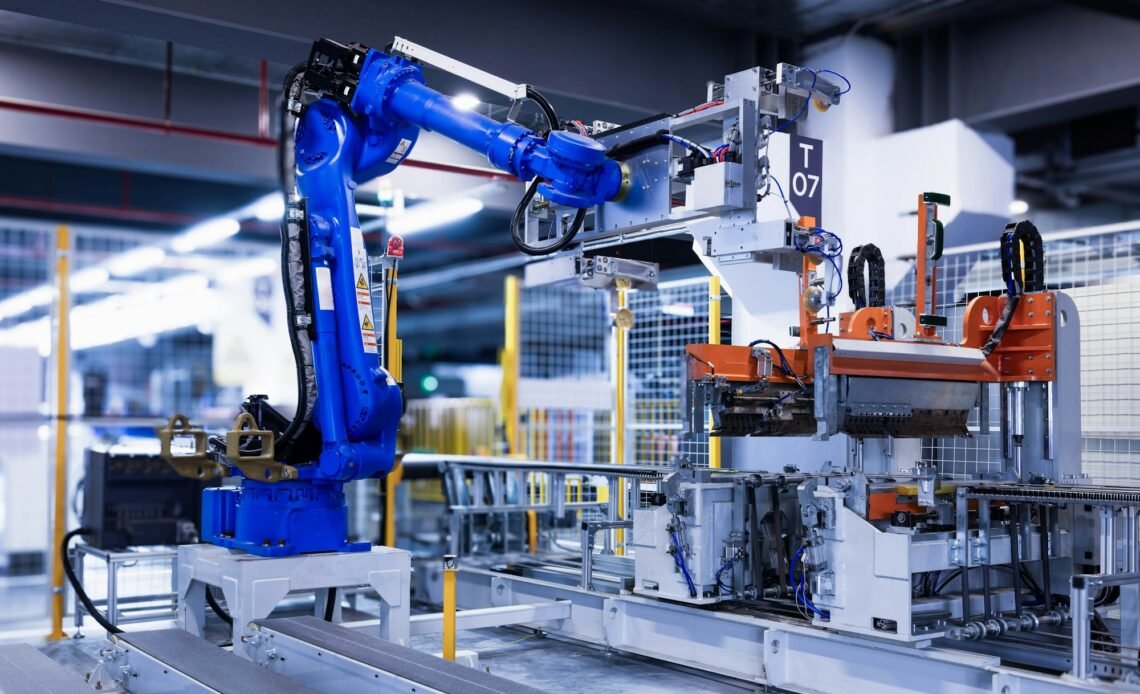
Image: illustrative photo of an industrial robot arm on a factory assembly line (Homa Appliances, via Unsplash) — not a photo of Apptronik’s Apollo 2 or an actual Mercedes-Benz production line, which Google and Apptronik have not released press imagery of.