Dell Technologies reported record quarterly revenue of $54.9 billion for its fiscal third quarter, up 103% from the $27.0 billion it booked in the same quarter a year earlier, according to the company’s own earnings release filed with the SEC on Tuesday, November 24. Dell also raised its full-year revenue outlook to $202.0 billion — up 78% year over year — and disclosed a record $132.3 billion AI server backlog after booking $60.2 billion in new orders during the quarter alone.
The numbers, as Dell reported them
The figures come straight from Dell’s Form 8-K filing with the Securities and Exchange Commission, dated November 24, 2026. Alongside the $54.9 billion in quarterly revenue, Dell raised its full-year fiscal 2027 guidance to non-GAAP diluted earnings per share of $29.68, with a GAAP diluted EPS guidance of $28.24. CFO David Kennedy said in the release that the quarter delivered record revenue, record EPS, and $4.9 billion returned to shareholders, and that non-GAAP operating expenses fell to 7% of revenue — what he described as the lowest level in the company’s 42-year history.
A backlog bigger than some companies’ annual sales
The headline number inside the report is the backlog: $132.3 billion in AI-related server orders still waiting to be fulfilled, after the company booked $60.2 billion of new AI orders in this quarter alone — according to COO Jeff Clarke’s comments in the same release. For context, that quarterly booking figure is more than twice Dell’s entire quarterly revenue from a year ago. A backlog of that size means Dell is effectively pre-selling a large share of next year’s AI-server manufacturing capacity before it’s built, which is also why the company felt comfortable raising full-year revenue guidance by tens of billions of dollars in a single update rather than waiting for the orders to actually ship.
Where this fits in Dell’s history
Dell is one of the older names in American computing to be posting numbers like these. Michael Dell started the company in 1984 as a university freshman, dropping out to run it full time; the company says it began as a small startup selling custom-built PCs directly to buyers. It went private in 2013 in a $24.9 billion leveraged buyout led by Dell himself alongside Silver Lake Partners, then returned to public markets in 2018 when Dell Technologies’ Class C common stock began trading on the NYSE. Along the way it acquired EMC — and with it, VMware — in 2016, a deal the company has said made it the largest technology-infrastructure company in the world at the time; it spun VMware back out as an independent company in 2021. More than four decades after a dorm-room PC business, the company’s single largest growth line is now server hardware built to run other companies’ AI models.
The context around the release
Dell’s report landed in a week where Wall Street has been unusually jumpy about exactly the kind of spending Dell’s backlog represents. Through the fall, chip and “neocloud” stocks — companies like CoreWeave and Oracle that lease out AI computing capacity — have swung sharply on investor questions about how all of this AI infrastructure is actually being financed, and whether customer demand can keep pace with the debt being taken on to build it. Dell’s own earnings don’t resolve that debate one way or another; a hardware maker booking record orders says something about current demand, but it says nothing about whether that demand, or the financing behind it, holds up over the years those orders will take to deliver. The company’s full, consolidated quarterly results — including segment-level breakdowns for its Infrastructure Solutions Group versus its traditional PC business — are detailed in the SEC filing itself rather than in any single summary figure.
The bottom line
What’s independently verifiable here is narrow but real: Dell’s own SEC filing shows record quarterly revenue, a raised full-year outlook, and the largest AI order backlog the company has reported to date. What that means for Dell’s stock price, for the broader AI-infrastructure trade, or for how any other company’s shares perform this week is a separate question this article isn’t making a call on — nothing here is a recommendation to buy, sell, or hold Dell stock or any other security, and a strong earnings report is not a forecast of what a stock does next.
This article is for educational purposes only and does not constitute investment advice. Always do your own research or consult a licensed financial advisor before making investment decisions. See our Financial Disclaimer for more.
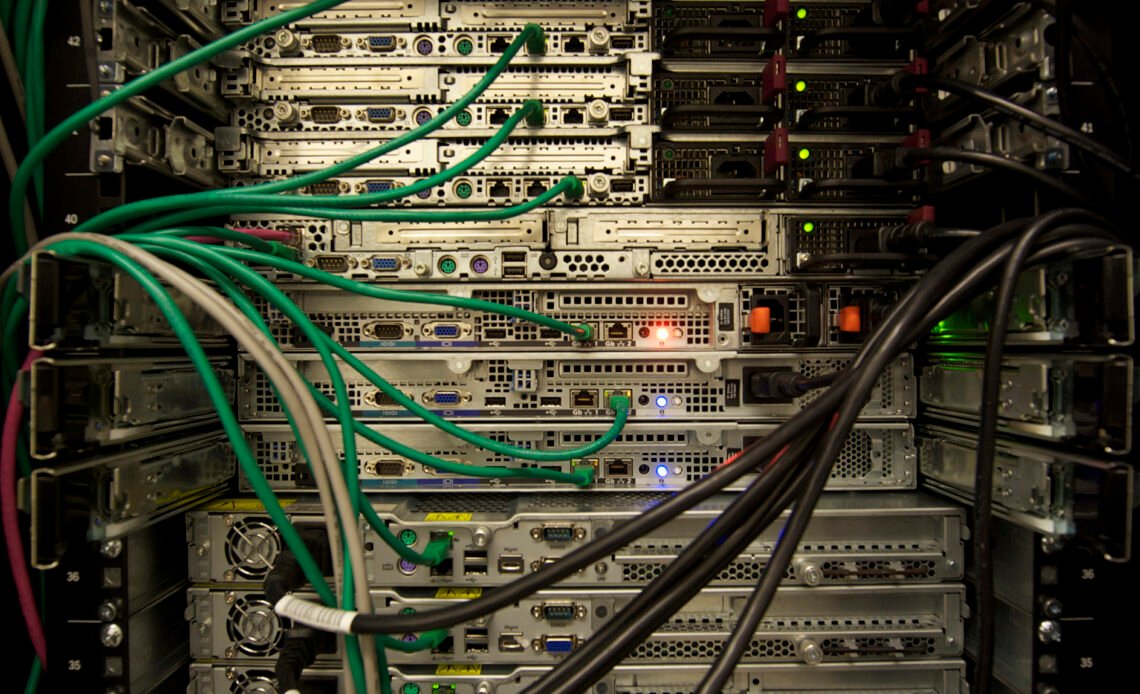
Featured image: servers in a rack. Photo by Abigor, via Wikimedia Commons (CC BY-SA 3.0). Illustrative of AI server infrastructure generally, not a photo of Dell’s own facilities or products.