On Saturday, November 21, Fitstop opened its 175th studio worldwide at 310 Culver Blvd. in Playa del Rey, California — a beachside stretch of Los Angeles’s Westside. The location is owned by Andres Hansen, a former Division I athlete who was among the brand’s first American members when Fitstop started expanding into the U.S. Founder and CEO Pete Hull called the opening “a special milestone” for a brand that now spans Australia, New Zealand, Singapore, and the United States. It is a long way from where Fitstop actually began: a tin-shed gym in Brisbane.
From a Brisbane Tin Shed to Four Countries
Pete Hull signed the lease on his first gym — a converted tin shed in Brisbane — in 2013, after spending time training athletes informally out of his parents’ garage. Four years later, in 2017, Hull turned the single gym into a franchise, a decision that let Fitstop scale a format built around 45-minute functional-training sessions rather than a single signature machine or class type. Former Zambrero CEO Stuart Cook later joined as chairman to help steer the brand’s international push. The expansion math has been steady rather than explosive: Fitstop crossed roughly 25 Australian locations in its early franchise years, then kept compounding through New Zealand, Singapore, and — starting with a handful of Southern California studios — the United States, to reach 175 locations globally this month.
What’s Actually Different About a Fitstop Class
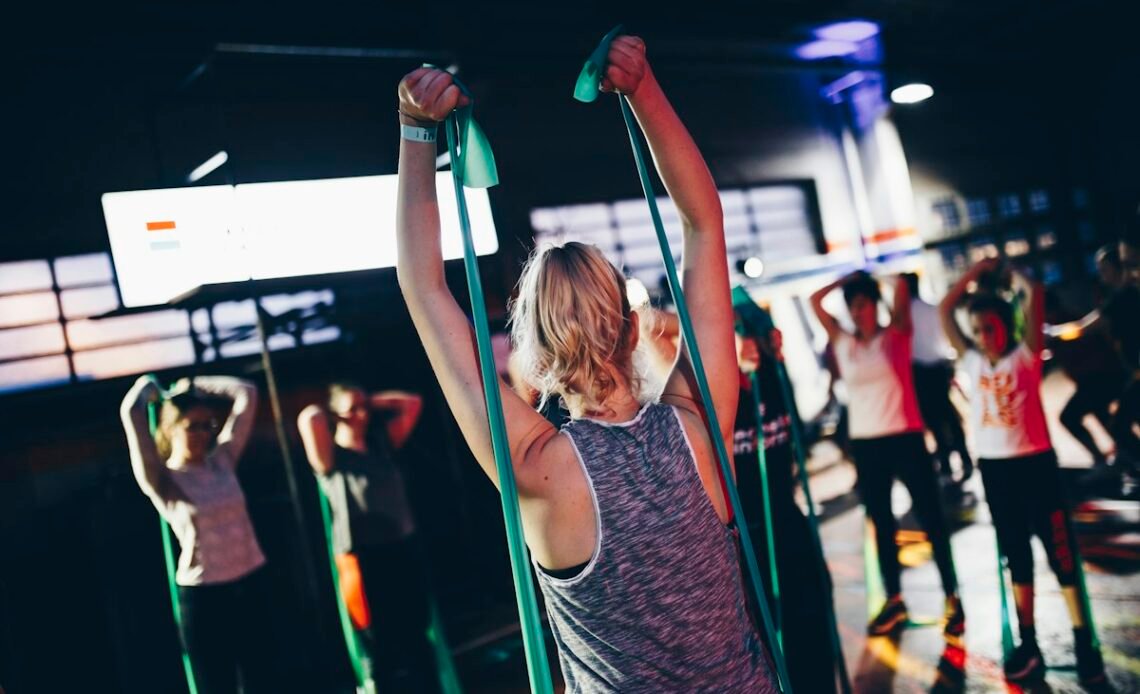
Fitstop doesn’t sell itself on one gimmick the way a treadmill-and-weights studio or a reformer-only studio does. Its own training material describes the workouts as a blend of a set long-term progression with varied day-to-day sessions — enough structure that coaches can track measurable progress class to class, but enough variety that members aren’t repeating the same circuit every visit. Sessions run 45 minutes, built around functional movement — the kind of squatting, pulling, carrying, and conditioning work used in team sports training rather than isolated machine work — done in a group format with a coach calling cues to the room. It’s closer in spirit to a sports team’s conditioning session than to a boutique dance-cardio class, which is part of why the brand has found a following among former athletes like Hansen.
What It Actually Costs Right Now
Fitstop doesn’t publish one flat U.S. membership rate — pricing is set location by location, the same way most boutique fitness franchises handle it — but this Thanksgiving week happens to be a good time to check, since several studios are running real Black Friday pricing. The La Jolla, California location is offering new members the rest of 2026 of training for $99, a deal explicitly marked as its final Black Friday promotion and unavailable to anyone already on an active membership. Other U.S. locations, including the new Playa del Rey studio and the Santa Monica studio, are running two-week trial offers priced at roughly one week’s worth of standard membership. Both are time-limited intro offers rather than ongoing rates, so the honest move for anyone curious is to check the specific studio’s page rather than assume a national number.
Why This Is Happening Now
Fitstop’s 175-studio milestone lands in the middle of a broader boutique-fitness land grab that has pulled in private equity money across nearly every workout category — reformer Pilates, boxing, cycling, and now team-based functional training. What makes Fitstop’s growth notable is the geography: most of the brands currently expanding fastest in the U.S. started here. Fitstop is importing an Australian franchise model, tested across nearly a decade and three countries, into a U.S. boutique-fitness market that’s historically been dominated by homegrown names. Whether a 45-minute team workout invented in a Brisbane tin shed can out-scale the Barry’s and F45s of the world remains an open question — but with a Southern California beach town as its newest stop, Fitstop isn’t waiting around to find out.