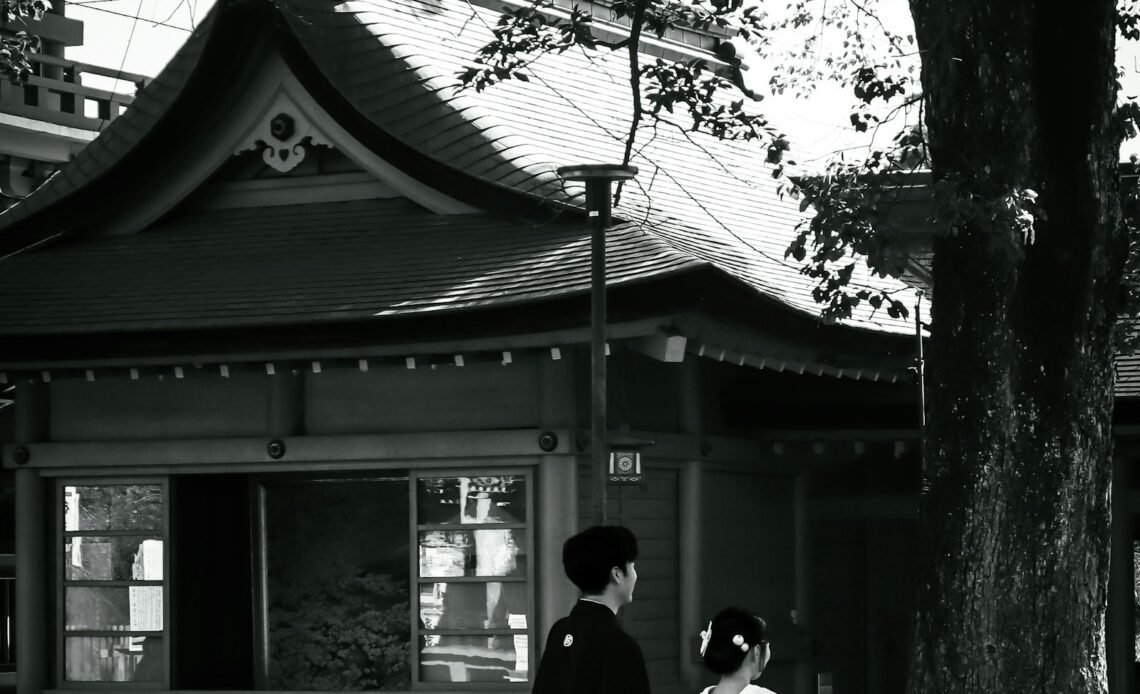
In Japan, there is no judge, no officiant, and no vows exchanged in a courtroom. A marriage becomes legally real the moment a clerk at a city or ward office stamps a single sheet of paper called the kon’in todoke (婚姻届) — the marriage registration. For two Japanese nationals, filing it is a Tuesday-afternoon errand. For a couple where one partner is a foreign national, it’s the same form, but the office won’t accept it until the foreign partner clears a step most people never know exists: proving to a Japanese government clerk, with a document from their own country, that they are legally free to marry.

The real first step: get your eligibility document before you go near a ward office
Japan’s family register system has no way to check a foreign national’s marital history, so it outsources that check to the foreign partner’s own government. Before filing anything in Japan, the foreign partner needs a document — commonly called a Certificate of Eligibility to Marry, an Affidavit of Competency to Marry, or, for UK and many Commonwealth and European nationals, a Certificate of No Impediment — issued or notarized by their home country’s embassy or consulate in Japan. The exact name, format, and issuing process differ by nationality, so the real first move isn’t a ward-office visit; it’s a call or booking with that embassy’s consular section to find out what they issue and how long it takes.
The 2026 wrinkle Americans specifically need to know about
For years, the U.S. Embassy in Tokyo and its consulates notarized a standard Affidavit of Competency to Marry — a self-sworn statement the embassy stamped so Japanese ward offices would accept it. The embassy discontinued that service as of September 1, 2025, citing that marriage law in the U.S. is governed state by state, with no federal registry a consular officer can check, and no way to verify the truth of a sworn statement. The notice doesn’t name an official replacement. In practice, this means American citizens need to contact the specific ward office where they plan to register first and ask what alternative proof of legal capacity to marry it will accept — some offices have worked with a notarized personal affidavit from a private notary, paired with a copy of the relevant U.S. state’s marriage-eligibility statute, but this is not standardized. Get the answer in writing from the ward office before assuming anything is automatic.
What actually goes in the folder
- The kon’in todoke form itself, filled out in Japanese and signed by two adult witnesses — any nationality, no family relation required.
- The foreign partner’s Certificate of Eligibility, Affidavit of Competency, or Certificate of No Impediment from their embassy or consulate.
- A Japanese translation of every foreign-language document, carrying the translator’s name and signature or seal. Several municipalities, including Urasoe City in Okinawa, allow the couple or any Japanese-proficient acquaintance to do this translation themselves — it does not have to come from a licensed agency, though some offices are stricter, so confirm locally.
- Proof of the foreign partner’s nationality and identity: passport, and residence card if already living in Japan.
- If one partner is Japanese: a koseki tohon (full family register copy) less than three months old — not needed if filing at the Japanese partner’s own registered municipality, where staff can pull it directly.
- If both partners are foreign nationals: no koseki is involved. The office instead records the marriage in a special register for foreign nationals, and each partner typically still needs their own eligibility document from their respective embassy.
Timing and the fine print that trips people up
Eligibility certificates are often only valid for three to six months from the date of issue, so register before it lapses or you’ll need a new one. One restriction that used to complicate timing is gone: until April 1, 2024, Japanese Civil Code barred women from remarrying within 100 days of a divorce. That provision was abolished as part of a broader paternity-law revision, so divorced partners — Japanese or foreign — no longer need to plan a filing date around it. Registration itself is free; a certified copy of the marriage record afterward typically costs around ¥350 for a standard copy, more for a decorative version some offices sell. Processing is often same-day when every document is complete and in order. Missing the eligibility certificate is the single biggest delay: without it, the office usually asks for a copy of the relevant home-country law establishing the foreign partner’s right to marry, plus its own Japanese translation — a slower, case-by-case path.
After the stamp
A marriage registered only in Japan is not automatically recognized back in the foreign partner’s home country. Most ward offices will issue a certified copy or an acceptance certificate (juri shomeisho) specifically for this purpose, which the couple then forwards to their home embassy, consulate, or civil registrar to record the marriage abroad too. That second filing has its own deadlines and document list, which vary by country — ask about it in the same visit where you pick up the eligibility certificate, not after the Japanese paperwork is already done.
A note on relying on this guide: the pattern above holds across most of Japan’s roughly 1,700 city and ward offices and several embassies’ published guidance, but each office and each country sets its own fine print — which document names it accepts, whether self-translation is allowed, how long a certificate stays valid, and what counts as acceptable proof when a required document doesn’t exist. Confirm the specifics with the foreign partner’s embassy or consulate in Japan and with the exact municipal office where you intend to file before relying on anything here, including this article — small details in this process differ by nationality and by city in ways that matter.
None of this requires a wedding. The ceremony, the rings, the photos at the shrine or the beach — all of that is optional and can happen before, after, or never. The folder at the ward office counter is the only part that makes it legal, and getting the right piece of paper from the right embassy, early, is what actually determines how smooth that counter visit turns out to be.
