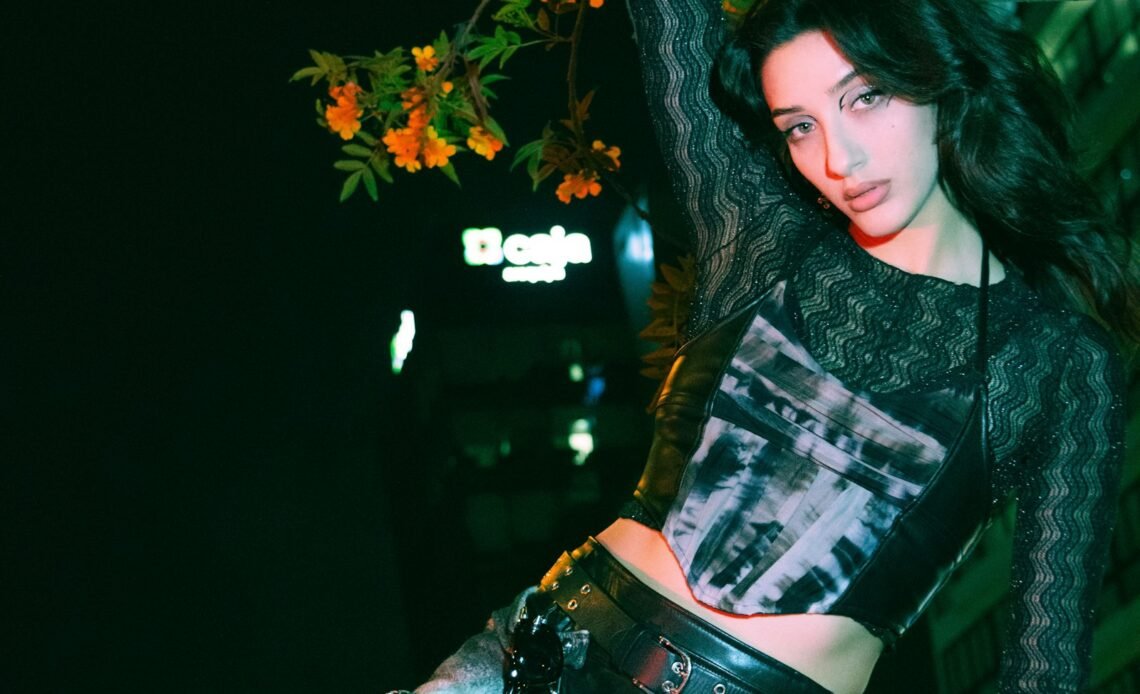
Low-rise jeans, chain belts, and barely-there micro skirts aren’t just resurfacing on TikTok mood boards anymore — they’re back on actual shelves, with real release dates and real price tags attached. The Y2K aesthetic that K-pop group NewJeans helped reignite when they debuted in 2022 has, four years later, graduated from a nostalgia cycle into a genuine commercial trend: mall brands are relaunching archive silhouettes, luxury runways keep sending out chrome and crystal, and the group most credited with sparking the look is now better known for a prolonged legal fight with its label than for new music. Here’s what’s actually driving Y2K fashion this season, and where the real drops are.

The Group That Relit the Fuse
NewJeans debuted in August 2022 under ADOR, a HYBE-owned label, with a visual identity built on late-’90s and early-2000s Japanese street fashion layered onto Y2K silhouettes — low-rise denim, baby tees, logo-heavy accessories — rather than the more futuristic, maximalist looks K-pop girl groups had leaned on for years. Vogue Hong Kong later noted that within roughly two years of debut, individual members had signed on as ambassadors for Gucci, Louis Vuitton, Chanel, Burberry, and Dior, a pace that helped push the era’s low-rise-and-logomania look back toward the center of luxury fashion’s attention.
Since 2024, though, the group has spent more time in Seoul courtrooms than on stages. The five original members sought to exit their exclusive ADOR contract amid a dispute over working conditions and creative control, briefly performing under the name “NJZ” in early 2025 while the case played out. Courts ultimately sided with the label: in October 2025, the Seoul Central District Court ruled the original ADOR contract remains valid through 2029, a decision the members’ lawyers said they intended to appeal. As of this writing in November 2026, the group’s lineup and release plans remain unresolved — ADOR circulated a “2026 Summer of NewJeans” teaser series in June, but no new single, album, or tour has been officially confirmed. Given how unsettled the situation still is, the surer story right now is what’s happening with the aesthetic itself, independent of the group.
The Mall Brands Are Making It Literal
The clearest evidence that Y2K has moved past internet nostalgia and into retail strategy: True Religion and Baby Phat, two of the actual 2000s brands that defined the look the first time around, announced a joint collection on October 20, 2026, which went on sale October 27 on both labels’ websites. The campaign, titled “Making the Campaign” and shot like a mock reality show set in a Beverly Hills mansion, is fronted by Love Island USA season 8 stars Aniya Harvey and Kayda Bosse. The limited-edition pieces lean hard into archive signatures rather than watered-down reinterpretations: crystal-embellished low-rise jeans, airbrushed baggy jeans, bootcut and flared denim, zip-up jackets and vests, a roughly 10-inch micro skirt, fitted baby tees, a fur mini, and a halter set.
The Runways Already Signed Off
High fashion got here first and hasn’t let go. Diesel’s Fall/Winter 2025-26 Milan show went all-in on ultra-low-rise pants, micro-mini skirts, and skin-baring silhouettes, with menswear cut cheekily low-rise as well. Blumarine — a brand that arguably never fully left the 2000s, having built its entire modern identity on reviving its own early-2000s archive since the early 2020s — layered chain jewelry over low-rise jeans for Fall/Winter 2026-27. Fiorucci’s Spring 2026 collection revived founder Elio Fiorucci’s original playful, candy-colored spirit from the brand’s 1970s-through-90s heyday, a direct ancestor of the Y2K look. And Juicy Couture, long synonymous with the velour tracksuit, confirmed in November 2025 that it was expanding into a full-scale apparel and denim business rather than resting on one archive silhouette, following it with a surf-inflected Juicy Couture x Roxy swim capsule in 2026.
Why It’s Sticking Around
Fashion’s nostalgia cycle generally runs 20 to 25 years behind, which puts the early 2000s squarely in rotation right now — but what’s kept this particular revival going past a single viral season is that it’s arriving from both directions at once. Runway houses like Blumarine and Diesel give the look credibility and set the silhouette (low-rise, body-skimming, metallic), while accessible brands like True Religion, Baby Phat, and Juicy Couture make it purchasable without a European flight. For anyone easing in rather than going full archive, the lower-commitment entry points are the ones showing up across both tiers: a chain belt over straight-leg denim, a fitted baby tee instead of a crop top, or tinted sunglasses rather than a full head-to-toe look. The pieces worth spending on are the ones with actual 2000s-brand provenance — Ed Hardy, Baby Phat, Juicy Couture, True Religion — since those are the names doing the trend’s heavy lifting in 2026, not generic fast-fashion knockoffs chasing the same mood board.
