Order a “crêpe” in Paris and a Breton will quietly correct you if what lands on the table is folded around ham and an egg. In Brittany, that’s a galette — made with buckwheat flour, never sugar — and the distinction has held for centuries at Breizh Café, the crêperie that opened on Rue Vieille du Temple in Le Marais in 2010 and has been drawing lines down the block ever since. Founder Bertrand Larcher built his menu on a simple rule his Fougères-born mother taught him: buckwheat is for the savory course, wheat is for dessert, and the two never share a griddle.

Galette and Crêpe Aren’t the Same Word
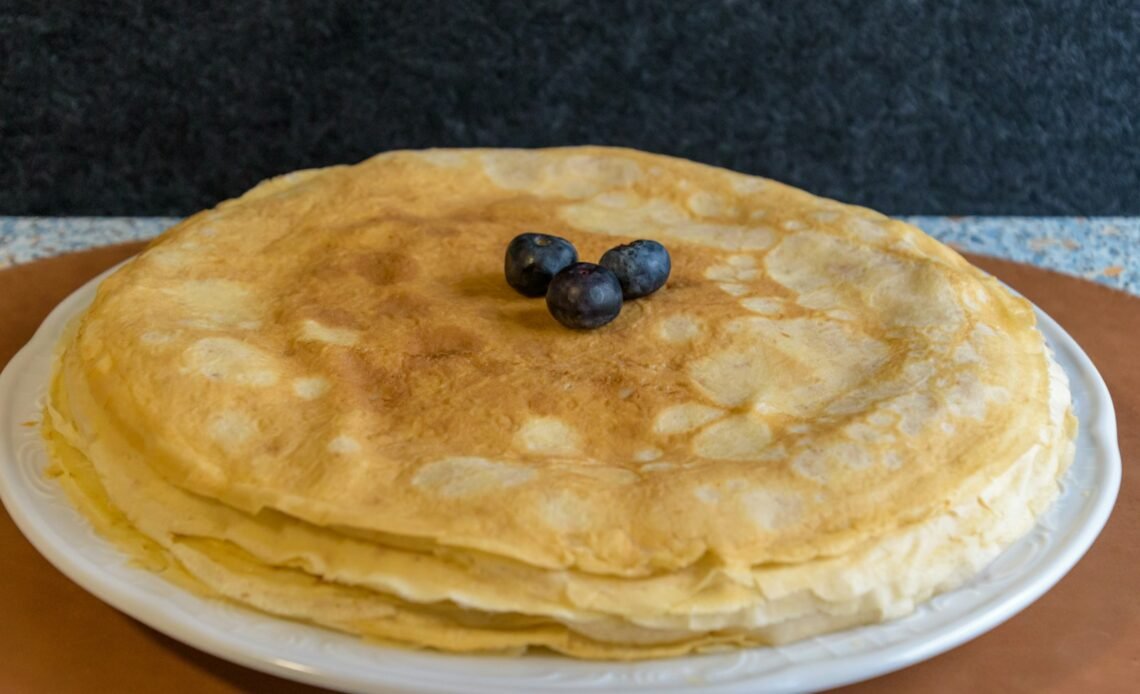
Outside Brittany, “crêpe” gets used for everything thin and round. Inside it, the word is reserved for the sweet, pale disc made from froment — wheat flour, milk, egg, butter — folded around sugar, chocolate, or fruit. The savory version is a galette de sarrasin: 100% buckwheat flour, water, and salt, no egg or dairy in the batter, traditionally cooked on a cast-iron billig and left with a slightly darker, lacier edge than its wheat cousin. Buckwheat isn’t even a grain — it’s a pseudo-cereal related to rhubarb — which is why galettes are naturally gluten-free, a point Breton crêperies have marketed for decades before “gluten-free” was a menu category anywhere else. Breizh Café sources its buckwheat as an organic, stone-ground, IGP Bretagne-certified flour, milled from grain grown on the brand’s own 11-hectare farm in Saint-Coulomb, between Cancale and Saint-Malo — the same farm that supplies the more than 1,000 apple trees behind its cider.
The Marais Original
Breizh Café’s flagship sits at 109 Rue Vieille du Temple in the 3rd arrondissement, a few minutes from the Musée Picasso, and it’s the location that put Larcher’s version of the galette — closer to Japanese kaiseki plating than to a beach-boardwalk crêpe stand — on the international radar. He credits a stint living in Japan for the restraint: fewer ingredients per galette, each one sourced and named, rather than the overstuffed “everything” version common at tourist-trap crêperies near the Eiffel Tower. The butter is churned by Jean-Yves Bordier in Saint-Malo; the ham is artisanal from Brittany; the cheese is Comté, not a processed blend. A neighboring Breizh Café épicerie next door sells the same Breton pantry — cider, buckwheat flour, Bordier butter — to take home.
What to Order: Savory Galettes
The baseline is the Complète (€11.80) — fried or scrambled organic egg, artisanal Breton ham, Comté, and Bordier butter, the dish most Bretons would call the default order. Add Guémené andouille sausage for the Complète Andouille (€13.80), or go north for the Cancalaise (€16.50): potato, artisanal smoked herring, crème fraîche, and herring roe standing in for caviar, named for the oyster town up the coast from the farm. The Paysanne (€17.50) stacks a fried egg, Comté, Guémené andouille, and onions confit in cider — the most purely Breton combination on the card, cider showing up as a cooking ingredient rather than just a drink pairing. For something plainer, a galette gets nothing but Bordier butter — salted or with Espelette pepper — for €7.50, which is closer to how buckwheat galettes were eaten in rural Brittany before ham and eggs became standard.
What to Order: Sweet Crêpes
The wheat side of the menu starts at €5.90 for a plain Beurre-Sucre — salted butter and brown sugar, the Breton childhood default — and climbs toward the flambéed specialties, finished tableside. The Suzette (€14.50) pairs salted butter caramel with orange and a Grand Marnier flambé; the Duchesse Anne (€14.50) uses housemade apple compote and Fine de Bretagne, a Breton apple brandy, instead. The menu’s clearest nod to Larcher’s Japan years is the Quimperoise (€12.50): kinako soy-bean powder, kuromitsu (Okinawan black sugar syrup), and green tea ice cream, wrapped in the same wheat crêpe as the classics. And for anyone who wants buckwheat without going savory, the Carrément Sarrasin (€11.80) uses a dried, cracker-crisp buckwheat crêpe called a kraz, layered with buckwheat honey and buckwheat ice cream — the one dessert on the menu that proves the grain works both ways.
Good to Know
Breizh Café Le Marais is open daily; recent visitor reports put hours at roughly 11:30 a.m. to 11 p.m., though the restaurant has periodically closed for a short stretch in February for the full team to visit the Saint-Coulomb farm, so it’s worth checking breizhcafe.com or calling +33 1 42 72 13 77 before a special trip. It doesn’t take walk-in luck for granted at peak lunch and dinner hours — booking a few days ahead is the safer move, especially on weekends. A galette, a crêpe, and a bowl of farm-fermented lait ribot (€3.80) on the side is the closest thing Paris has to a Breton diner run at Michelin-adjacent precision, and it remains, a decade and a half after Larcher opened the doors, the easiest place in the city to taste the actual difference between a crêpe and a galette rather than just hear someone explain it.
