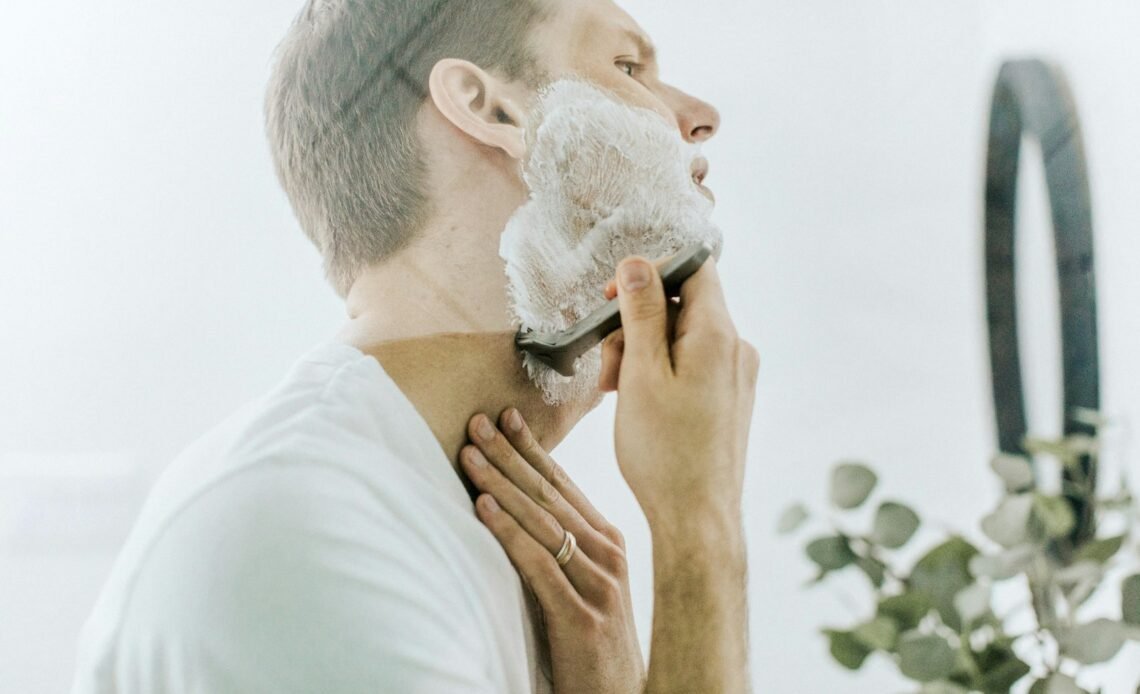
Men’s grooming has quietly stopped being an afterthought aisle wedged between motor oil and energy drinks. It is now a venture-backed, direct-to-consumer, occasionally publicly-traded business — and the products winning real market share in late 2026 are the ones solving a specific problem rather than just smelling good. Three releases currently moving units and reviews are worth a closer look: a cult deodorant brand’s first serious play at daily-wear staying power, a shaving system engineered around a problem the mainstream razor industry ignored for decades, and a telehealth hair-loss spray that has turned a once-awkward prescription into a $35-a-month subscription line item.
Here is what is actually in them, what they cost, and why each one has earned its spot in a 2026 routine.
1. Dr. Squatch Invisible Glide Deodorant — $12.99
Dr. Squatch built its reputation on bar soap and irreverent YouTube ads, but its Invisible Glide Deodorant ($12.99 for a 2.65 oz stick, sold at Target, Walmart and Tractor Supply) is the brand’s real push into daily routine territory. The formula is aluminum-free and marketed as roughly 98% natural, built to glide on clear — no white cast on dark clothing, a specific complaint that dogs many “natural” deodorants that rely on starch or clay bases. It comes in scents like Coconut Castaway, Coastal Mist, Fresh Falls and Wood Barrel Bourbon, consistent with the brand’s beach-and-woods olfactory identity.
The brand backed the launch with its signature comedic marketing, enlisting Megan Fox for a “Professor Fox” campaign that puts a glossy celebrity face on a famously scrappy soap company — a sign of how much capital Dr. Squatch is now willing to spend defending deodorant shelf space against Native, Hims’ grooming line and legacy players like Old Spice. Retailer reviews cluster between 4.0 and 4.7 stars across dozens of ratings: the recurring praise is no staining and no white marks after a workout; the recurring complaint is that for some users with sensitive skin it can cause mild irritation, and a handful of reviewers say the scent fades faster than expected in heat. It is not a miracle fix for every body chemistry, but at under $13 it is a low-risk way to test whether an aluminum-free formula actually holds up to a real day.
2. Bevel Trimmer — $149.95
Bevel is the shaving brand Tristan Walker built specifically to fix razor bumps and ingrown hairs in coarse and curly facial hair — a problem the mass-market razor industry spent decades effectively ignoring. The brand’s current flagship, the Bevel Trimmer, sells for $149.95 on getbevel.com and carries a 4.85-out-of-5 average across more than 700 reviews on the brand’s own site, an unusually high score for a grooming tool in this price bracket.
The engineering case is the real story: the trimmer uses an adjustable, zero-gap blade system designed to cut hair cleanly at the skin’s surface without the drag and snag that causes strands to curl back and embed — the mechanical root cause of razor bumps. It is built to pair with Bevel’s wider shave system (single-blade safety razors, pre-shave oil, post-shave balm), the same bump-prevention philosophy applied across the whole routine rather than fixed with one product in isolation. Walker & Company Brands, Bevel’s parent, was acquired by Procter & Gamble in 2018 — a rare instance of a Black-founded personal-care startup being absorbed by one of the industry’s largest conglomerates, and a vote of confidence that still underwrites the brand’s credibility with new customers today. Reviewers note it requires more setup and maintenance than a disposable trimmer — oiling the blades, learning the adjustable gap — but call the line precision and the bump reduction worth the extra five minutes.
3. Hims Topical Finasteride + Minoxidil Spray — from $35/month
Hair loss treatment used to mean an awkward dermatologist visit and a daily pill with a reputation — fair or not — for side-effect anxiety. Hims, the telehealth brand under NYSE-listed Hims & Hers Health (ticker: HIMS), has turned that into a $35-a-month subscription: a single topical spray combining 0.3% finasteride with 6% minoxidil, prescribed after an online consultation and shipped directly, no pharmacy counter required.
The pitch is pairing the two most clinically established hair-loss ingredients — finasteride, which blocks the DHT hormone linked to follicle shrinkage, and minoxidil, which improves blood flow to the scalp — into one topical application instead of a pill plus a separate foam or liquid. Keeping finasteride topical rather than oral is the detail driving adoption: it is the same active ingredient at work, but applied directly to the scalp rather than circulating systemically, which is the specific trade-off many younger men are opting into. The business context matters here in a way it rarely does for a skincare product: Hims & Hers trades as a public company, reports its subscriber numbers every quarter, and has turned “normalize the prescription” into a real revenue line rather than a marketing slogan — which is exactly why competitors from Keeps to Ro have raced to match its pricing and packaging.
The Takeaway
None of these three products is reinventing grooming from scratch — deodorant, razors and minoxidil have existed for decades. What is new is the precision: each one is solving one specific, named complaint (staining, bumps, follicle shrinkage) with a formula or mechanism you can actually point to, backed by a brand willing to put a real price and a real reputation behind the claim. That is a useful filter for a crowded category — before buying into the next “trending” grooming drop, ask what specific problem it solves, and what, concretely, is different about how it solves it.
