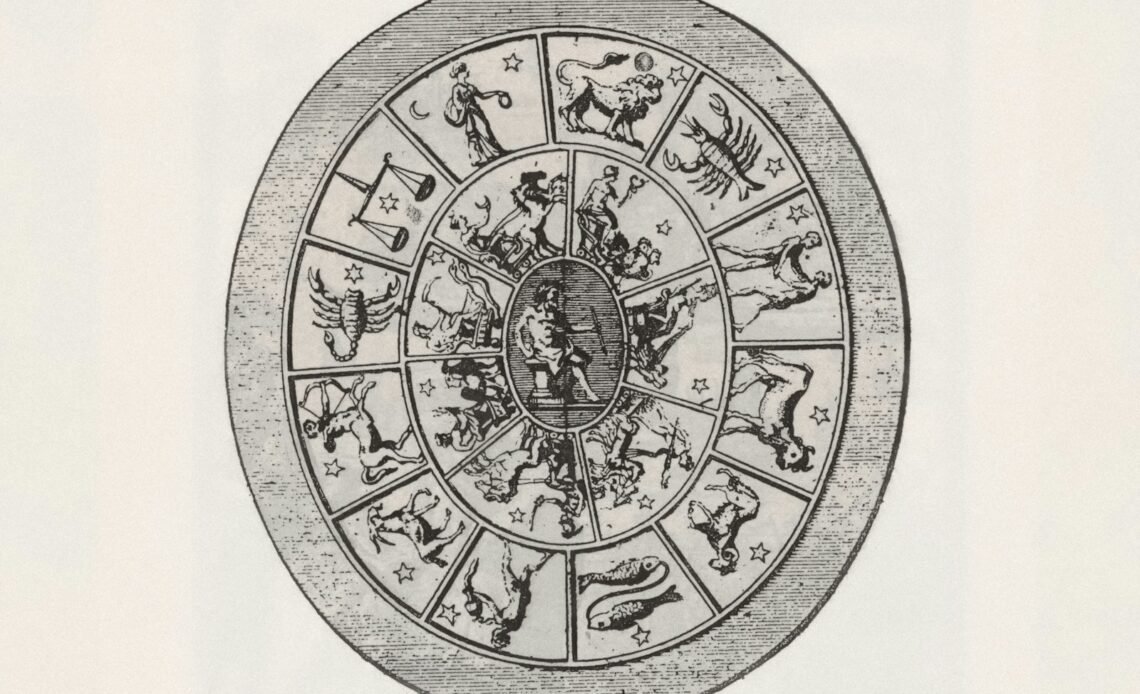
Saturn and Neptune are both moving backward through the sky right now. Saturn turned retrograde in Aries on July 27, 2026, and won’t station direct again until mid-December; Neptune has been retrograde since early July and turns direct around December 12. Astrology apps have been buzzing about it for months, framing the overlap as a season for “reckoning” and “dissolving illusions.” Whether or not you buy any of that, the real story isn’t in the stars — it’s in a 1948 classroom experiment that explains, with uncomfortable precision, why horoscopes feel like they were written specifically for you.
The explanation has a name, a verified origin, and seven decades of replication behind it. Here’s what the actual psychology research says about why your horoscope “hits different” — and why that’s worth knowing whether you check it for fun or genuinely plan your week around Co-Star.
The 1948 experiment that cracked the case
In 1948, psychologist Bertram Forer gave 39 of his students at UCLA a personality test he called the Diagnostic Interest Blank. A few days later, he handed each student a personalized write-up of their results and asked them to rate, on a scale of 0 to 5, how accurately it described them. The average score came back at 4.26 out of 5 — students felt deeply, specifically seen.
Then Forer told them the truth: every student had received the exact same write-up, word for word. He’d assembled it from sentences lifted out of a newsstand astrology book. There was no test result behind any of it. He published the findings in 1949 in the Journal of Abnormal Psychology under a title that doesn’t mince words: “The Fallacy of Personal Validation: A Classroom Demonstration of Gullibility.” Psychologist Paul Meehl later gave the phenomenon its more common name, the Barnum effect, after showman P.T. Barnum — though it’s just as often called the Forer effect.
The sketch Forer used included lines like “you have a tendency to be critical of yourself” and “at times you have serious doubts as to whether you have made the right decision or done the right thing.” Read that again: it’s true of almost everyone, almost all the time. That’s the trick. Vague, mildly flattering, universally applicable statements get experienced as laser-targeted insight, because the reader does the work of filling in the specifics from their own life. The researchers call this the subjective validation problem — the sketch doesn’t describe you; you make it describe you.
Confirmation bias does the rest of the work
The Barnum effect explains why a vague statement feels accurate the moment you read it. Confirmation bias explains why it keeps feeling accurate for the rest of the day. Cognitive scientist Raymond Nickerson’s widely cited 1998 review in Review of General Psychology, “Confirmation Bias: A Ubiquitous Phenomenon in Many Guises,” lays out decades of evidence that people systematically notice and remember information that confirms what they already expect, while letting disconfirming information slide past unregistered.
Apply that to a horoscope that tells you Mercury retrograde will cause communication snafus this week. You have one tense group chat on Tuesday — filed as proof. You also have four completely normal conversations, a smooth work email thread, and a pleasant dinner with a friend — filed as nothing, because nothing happened worth noticing. The horoscope wasn’t right; your attention was selectively recruited to make it look right. Run that pattern for a decade of daily horoscope-reading and it’s easy to accumulate a lifetime of “it’s scary how often this is true,” without a single rigorous data point behind it.
What happens when astrology is actually tested
Psychological comfort is one question; predictive accuracy is another, and astrology has been put through a genuine scientific test. In 1985, physicist Shawn Carlson published “A Double-Blind Test of Astrology” in Nature — still the most cited empirical test of natal astrology. Carlson recruited 28 astrologers, nominated by the National Council for Geocosmic Research specifically to ensure the test was fair to the discipline, and asked them to match more than 100 real natal charts to the correct personality profiles generated by the California Psychological Inventory, a standard, validated psychological assessment. If astrology’s core claims held up, experienced astrologers should have matched charts to profiles well above chance. They didn’t. Accuracy was statistically indistinguishable from random guessing.
That finding sits inside a broader pattern: no peer-reviewed mechanism has ever been demonstrated by which the position of planets at the moment of birth would shape human personality or future events, and astrology is standardly classified as a pseudoscience in the scientific literature. It hasn’t stopped it from being popular — a National Science Foundation public-attitudes survey found a meaningful share of Americans, especially younger adults, describe astrology as at least “somewhat scientific,” a gap between public perception and the evidence that researchers who study scientific literacy have flagged for years.
So why does it still feel worth reading?
None of this means the 30 seconds you spend on your horoscope app is a waste, or that liking astrology makes you gullible. Treated honestly — as a structured prompt for reflection rather than a forecast — a horoscope works the way a tarot pull or a journaling app notification works: it’s a low-stakes nudge to pause and ask “how am I actually doing this week?” The Barnum effect is powerful precisely because the statements it exploits are usually true-ish for most people most of the time, which means sitting with one for a minute can genuinely surface something real about your mood or your choices, even though the planets had nothing to do with generating it.
The honest version of horoscope-reading is the one that holds both facts at once: the pull you feel toward your sign’s forecast is a well-documented, thoroughly studied piece of human psychology, and the forecast itself isn’t tracking anything in the sky. Enjoy Saturn’s retrograde-season “reckoning” energy if it gives your week a useful frame. Just know that the reckoning, like the rest of it, is coming from you — not Aries.

