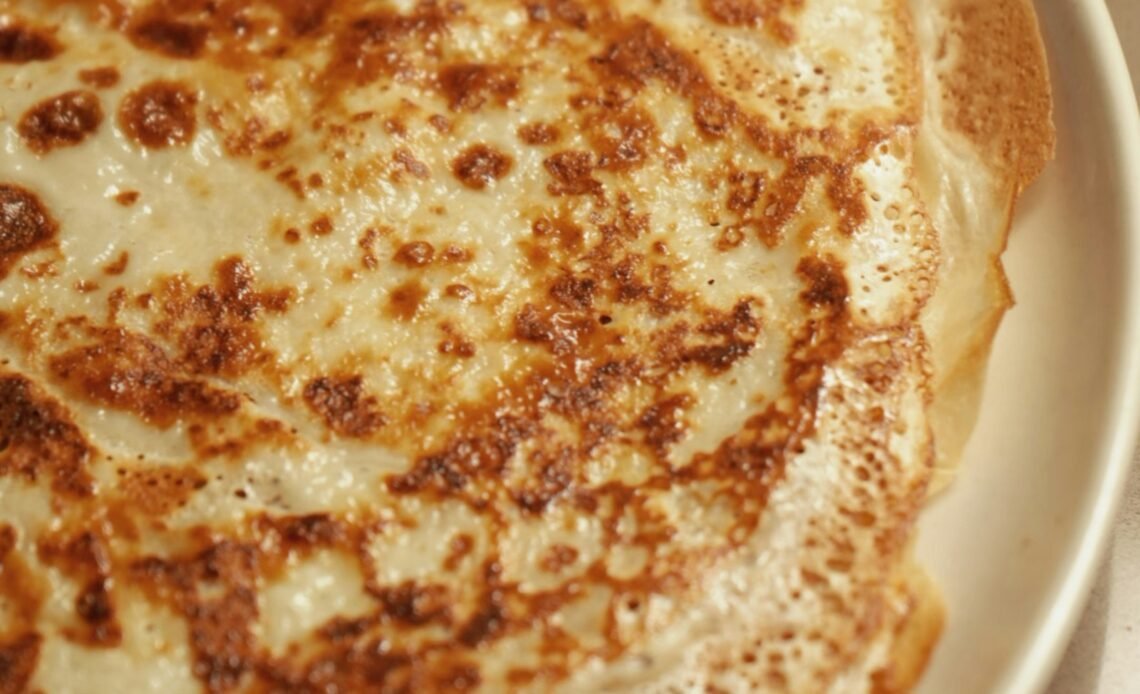
Amsterdam has a rule most visitors never learn: a pancake here is not breakfast. It is a full meal, savory first, served any time from mid-morning to last call, and it arrives the size of a dinner plate — thin enough to fold, but nowhere near as thin as a French crêpe. The city’s longest-running proof of this is The Pancake Bakery, which has been frying pannenkoeken inside a 17th-century canal house at Prinsengracht 191 since 1973, with the same family still running it after a round of changes in 1980 set the menu it largely keeps today.

A Dish That’s Older Than the Country’s Independence
The Dutch were writing down pancake recipes before most of Europe standardized the dish. De Verstandige Kock (“The Sensible Cook”), a cookbook printed in Amsterdam in 1669 as part of a larger volume called Het Vermakelijck Landtleven, included recipes for several pancake variations, including a version called the “Groeninger pancake.” Food historians consider it the most influential Dutch cookbook of the 17th century — the book that helped fix pancakes into Dutch home cooking long before pancake houses existed as a restaurant category. Food historian Kenneth Albala, whose 2013 book Pancake: A Global History traces the dish across cultures, places the Dutch version in that same 17th-century Golden Age food culture that also produced stroopwafels and poffertjes, the Netherlands’ other two pancake relatives.
What sets a Dutch pannenkoek apart structurally is the batter itself: it contains no sugar at all. That single fact is why the same disc of flour, milk, and egg can go savory or sweet with equal ease — nothing in the base fights with either direction. The common order at a Dutch table is a full savory pancake as the meal, followed by a smaller sweet one as dessert, a sequence closer to a prix-fixe dinner than to a Sunday brunch stack.
Inside a 17th-Century Canal House
The building itself is part of the draw. Prinsengracht 191 sits on Amsterdam’s outermost canal of the UNESCO-listed 17th-century Grachtengordel (canal ring), in a merchant house built during the same wave of Golden Age construction that filled the ring with narrow, tall facades funded by VOC-era trade money. The Pancake Bakery took over the space in 1973 and has kept the exposed beams and canal-house proportions rather than renovating them away — guests eat at tables stacked across what were once separate floors of a single-family trading house, a short walk from the Anne Frank House at the top of the same canal.
What’s Actually on the Menu
The restaurant’s own site lists more than 75 pancake combinations, split across breakfast, brunch, lunch, and dinner menus, with breakfast and brunch pancakes starting from €8.50 and lunch and dinner versions from €14.50. The savory side leans international rather than strictly Dutch, which is part of the house style:
- Spanish — chorizo and paprika.
- Italian — speck, sun-dried tomato, and pesto.
- Mexican — spiced minced meat and jalapeño.
- Norwegian — smoked salmon and cream cheese.
For the classic Dutch combination, the move is bacon with stroop — a thick, dark sugar-beet syrup — on the same pancake. It reads like a contradiction on an English-language menu, but it’s the most ordinary thing a Dutch household makes: salt and smoke against dark caramel sweetness, no apology needed for mixing the two. The kitchen also runs a full savory menu beyond pancakes — uitsmijters (fried eggs over bread with bacon, ham, or cheese), omelettes, soups, and salads — for anyone at the table who wants off the pancake format entirely.
Good to Know
The Pancake Bakery is open daily, 9:00 a.m. to 8:30 p.m. Monday through Thursday and Sunday, and until 9:00 p.m. on Friday and Saturday. It doesn’t take reservations for small groups during peak lunch hours, so expect a short wait if you arrive between 12:30 and 2:00 p.m. on a weekend. It’s a five-minute walk from the Anne Frank House and sits directly on tram lines 2 and 13 at the Westermarkt stop, making it an easy stop to fold into a Jordaan afternoon rather than a destination that requires its own trip.
What makes it worth the detour isn’t novelty — it’s that the format has barely changed in five decades while the city around the canal has. A plate-sized pancake, savory first, inside a house built when the canal ring itself was new: it’s one of the few Amsterdam meals that’s actually older than most of the attractions around it.
