Three real luxury launches landed within the same ten days in early November 2026, and together they make an odd trio: a 260-year-old Swiss watchmaker leaning harder into an acoustic trick most buyers will never hear used, a Chinese EV brand aiming its newest sedan directly at Rolls-Royce’s oldest customers, and a French fashion house reissuing a suitcase that has now sold out twice. Real prices, real specs, and what’s actually driving each one.

Audemars Piguet’s Supersonnerie Trio — from CHF 325,000
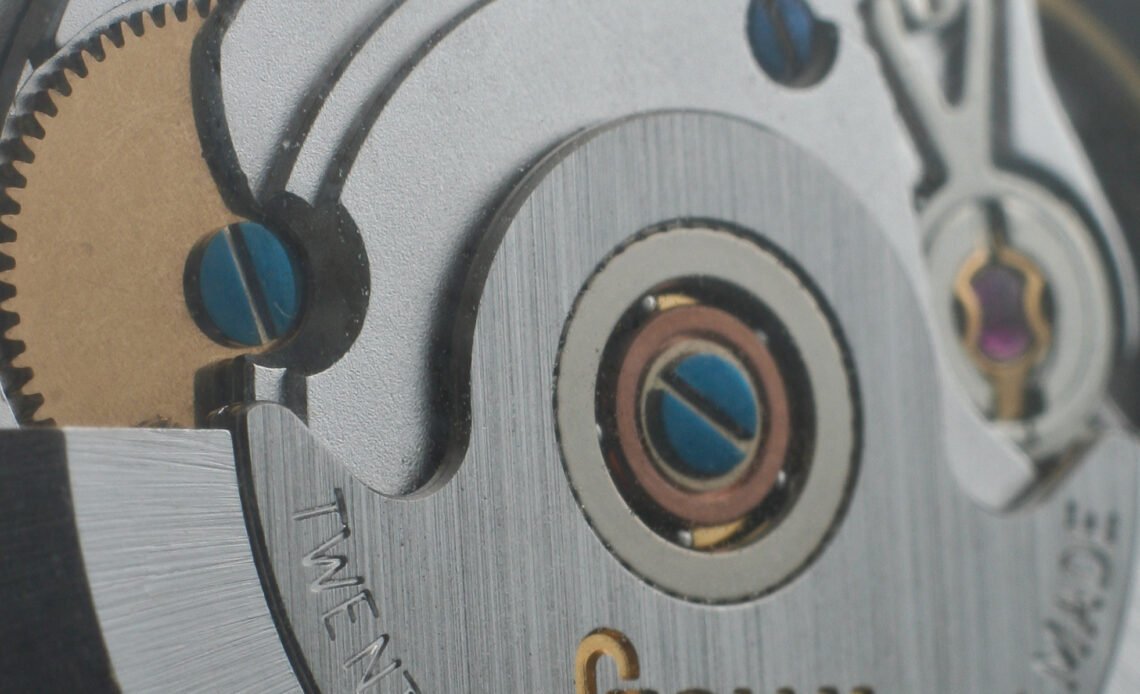
Audemars Piguet unveiled five new references on November 2, 2026, split across two unrelated ideas. Two are 38mm Code 11.59 time-only watches with stone dials. The other three matter more: a Supersonnerie trio built around the brand’s own chiming technology, first introduced in 2016 to solve a problem that had dogged minute repeaters for centuries — in a traditional repeater, the same metal case that makes the watch loud enough to hear also muffles and dulls the chime. Supersonnerie uses the sapphire crystal itself as a soundboard, with the movement suspended inside the case on a separate ring rather than screwed directly to it, so the chime rings clearer and louder without the case absorbing it. The new trio pairs two 42mm Royal Oak cases (one in titanium, one in pink gold) and a 41mm Code 11.59 case with the Calibre 2953 movement. Watchonista reported launch prices of CHF 325,000 for the Code 11.59 version, CHF 351,100 for the titanium Royal Oak, and CHF 391,400 for the pink gold Royal Oak — though several other retailers list the same pieces as price on request, which is standard practice for anything this limited in AP’s high-complications tier. The Code 11.59 line itself has had a rocky reputation since its contested 2019 debut, when collectors balked at its $20,000+ starting price for a brand-new case shape; six years on, AP has mostly answered that criticism by putting its most technically serious watchmaking — minute repeaters, tourbillons, grande sonneries — into the line rather than abandoning it.
BYD’s Yangwang Altior — around ¥2.08 million ($291,000)
BYD’s ultra-luxury sub-brand Yangwang gave the Altior its global debut on November 7, 2026, at the Emirates Palace Mandarin Oriental in Abu Dhabi, ahead of a China reveal under the name Dingyao. The pitch, stated outright by multiple outlets covering the event, is a direct shot at the Rolls-Royce Ghost: a 5.6-meter four-seat electric sedan with rear coach doors that swing open to nearly 90 degrees, four independent motors, and a claimed CLTC range past 1,000 kilometers. The first run is a 399-unit limited edition called Shanhe Dingyun, taking a 300,000-yuan deposit against an expected price of roughly 2.08 million yuan — about $291,000 at current exchange rates, though one outlet separately reported a $311,500 pre-sale figure, so treat the final number as provisional until BYD locks it in. A five-seat version is coming later and isn’t part of this first pre-order batch. Yangwang is BYD’s answer to the fact that “cheap EV maker” isn’t a reputation that sells a $300,000 car — the brand already built the U8, an armored SUV that can spin in place and float, specifically to prove it can do engineering flourishes Western luxury brands treat as their own territory.
Dior x RIMOWA’s “Dior Oblique” Carry-On — reissued November 2026
Dior confirmed a November 2026 restock of its aluminum carry-on made with RIMOWA, the German luggage house LVMH has owned a majority stake in since 2016. The case first appeared on Dior’s Summer 2022 men’s runway under creative director Kim Jones, pairing RIMOWA’s grooved aluminum shell with Dior’s Oblique jacquard motif, and it has sold out at least twice since — both colorways, a black version and a blue-to-black gradient, were open for pre-order on Dior’s US site ahead of the November arrival at boutiques. Earlier versions of the case retailed around $3,460; Dior hadn’t published a US price for this specific reissue at the time of writing, which is worth flagging rather than guessing at. The restock is a small but telling signal for RIMOWA specifically: the brand spent 2026 pushing into handbags and soft luggage for the first time in its 128-year history, and leaning back on its highest-demand fashion collaboration shows it isn’t ready to let the hard-shell suitcase that built its name go quiet while it experiments elsewhere.
The Pattern Here
None of these three is competing with the others for a customer, but all three are selling the same underlying idea: that real craft and real scarcity are worth more than a spec sheet. AP’s bet is that an acoustic engineering problem most owners will trigger a handful of times a year is still worth hundreds of thousands of francs to solve properly. BYD’s bet is that a Chinese EV brand can build the coach-door theater Rolls-Royce has owned for a century, at a price that undercuts a Ghost by roughly half. And Dior’s bet is the simplest of the three — that a suitcase people already tried to buy twice is worth making a third time, no redesign required.
