On November 4, 2026, at Teatro Municipal in Lima, judges from The 50 Best Restaurants named Asador Etxebarri — a 35-seat grill house in a Basque village most people couldn’t find on a map — the best restaurant on earth. It is the culmination of a strange, patient climb: third in 2019, sixth in 2015, fourth in 2023, second in both 2024 and 2025, and now, finally, first. The restaurant that got there did not add foam, liquid nitrogen, or a tasting-menu narrative about childhood memories. It got there by building its own grills and burning the right wood under the right fish.
A Tradition Older Than the Restaurant
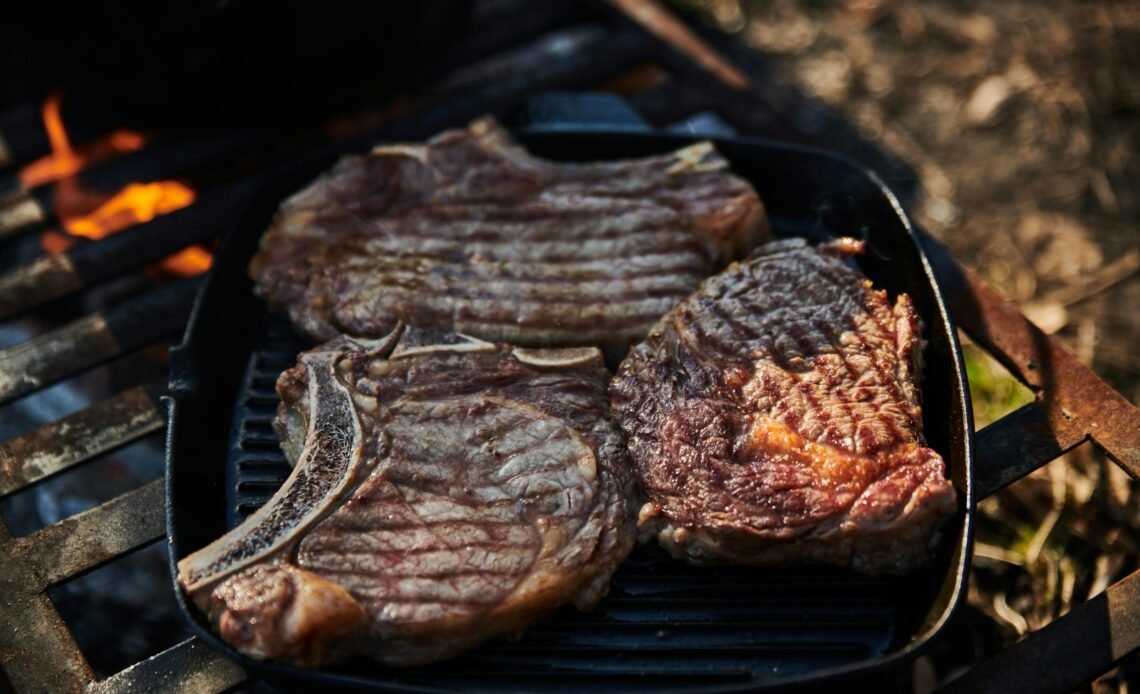
Grilling over wood embers is not an innovation in the Basque Country — it is close to the region’s default cooking method, and it predates fine dining there by centuries. Coastal towns grilled the day’s fish because it was fast and needed nothing else; inland towns like Tolosa and Gernika built a parallel tradition around the chuleta, a thick-cut beef chop taken not from young prime cattle but from old dairy cows and working oxen, retired animals whose fat had developed the deep, almost cheesy flavor that a tender young steak never gets. Asadores — grill houses — in Gernika, a 20-minute drive from Atxondo, have served that chuleta over oak coals for generations, and it is still ordered by weight, char-black outside and blood-red within.
Basque food culture also organized itself socially around fire: the txoko, a members-only gastronomic club rooted in San Sebastián, where men historically gathered to cook for each other over wood and argue about how it was done. Asador Etxebarri and Aitor Arregi’s Elkano, an hour away in Getaria, are usually credited as the two kitchens that took that inherited, workmanlike grilling culture and turned it into something exacting enough to chase Michelin stars and world rankings — a movement some Spanish food writers call the nueva parrilla, the new grilling.
A Flag-Factory Worker Who Taught Himself to Cook
Bittor Arguinzoniz was born in Axpe, the hamlet next to the restaurant, in the Atxondo valley about an hour southeast of Bilbao. He spent years working in a flag factory, not a kitchen, before he and his father bought an old stone village bar at 1 San Juan Plaza in 1989 and reopened it the following year as Asador Etxebarri. He had no formal training. What he had was an obsession with fire: within a few years he had ripped out conventional grilling equipment and started building his own, eventually installing six custom grills on hand-cranked pulley systems, each one raised or lowered independently to control heat with more precision than a dial ever could.
Arguinzoniz treats wood the way a sommelier treats grapes — as an ingredient, not fuel. Holm oak, which burns long, hot, and clean, goes under beef. Old vine cuttings, lighter and more aromatic, go under fish and shellfish. He built his own tools around that logic too, including a perforated pot designed to cook seafood in wood steam rather than direct flame. The result is a kitchen where the menu changes seasonally but the method — manual, slow, entirely dependent on the cook’s eye rather than a thermostat — has stayed the same since the early 1990s. Michelin awarded the restaurant its first star in 2010 and has kept it ever since.
What €300 Buys
Etxebarri seats 35 to 40 people and runs almost entirely on a single 14-course tasting menu priced at €300 per person as of this month, tax included, drinks and service extra, with a deposit required to confirm the reservation — booking is by request rather than an open calendar, and tables are typically locked up months out. Wine pairings are chosen by Mohamed Benabdallah, who previously ran the cellar at Mugaritz.
The sequence leans on hyper-local, often humble ingredients handled with total control over smoke: clams and hand-dived baby squid, hake kokotxas (the fish’s throat, prized for its collagen-rich texture), gamba de Palamós prawns barely touched by heat, and veal sweetbreads lacquered in char. The chuleta remains the dish regulars travel for — a thick, oak-grilled beef chop sliced tableside, the Basque Country’s signature plate executed by the kitchen most responsible for making the world pay attention to it. Dessert, notably, is also grilled: a smoked beetroot ice cream that puts the restaurant’s defining idea — that fire belongs in every course, not just the main one — on the plate until the very end.
Going
Asador Etxebarri sits on San Juan Plaza in Atxondo, in the Bizkaia countryside, roughly an hour’s drive from Bilbao and best reached by car since public transport into the valley is sparse. Reservations open months in advance and go through the restaurant directly rather than a third-party platform; with the No. 1 ranking now attached to its name, 2027 availability is likely to disappear faster than usual. For a restaurant that spent three decades proving a point about wood, smoke, and patience, the title feels less like a surprise than an overdue correction.

