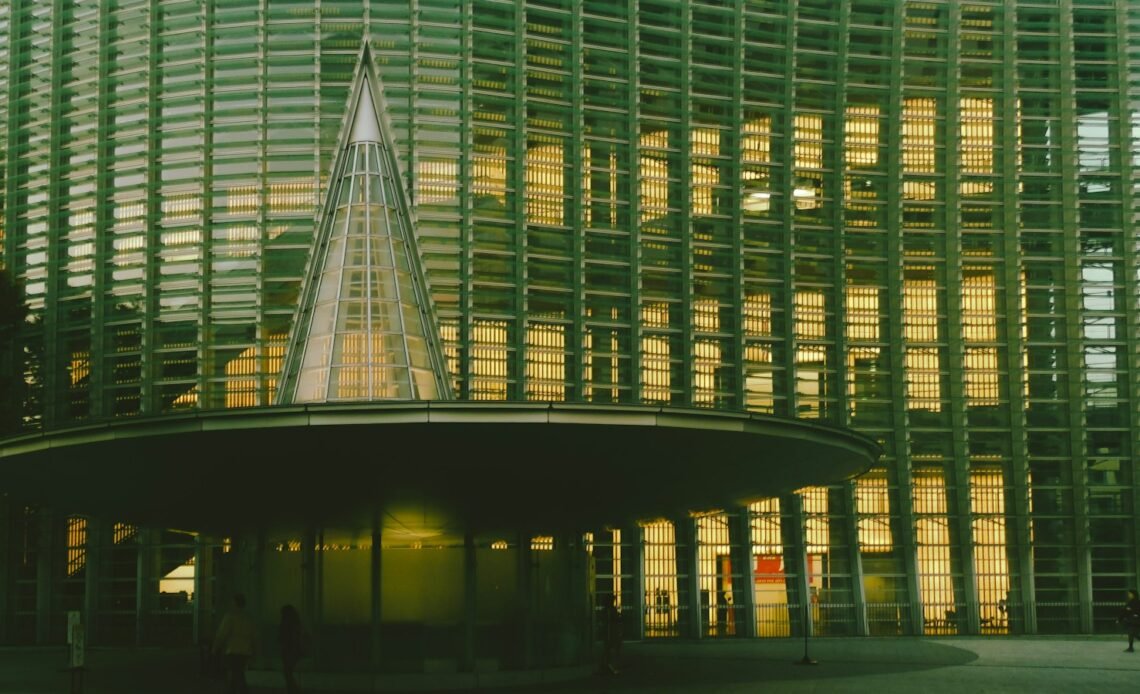
A Leonardo da Vinci painting is hanging in Japan for the first time in the artist’s history, and the clock is running out to see it. “Masterpieces of the Renaissance from the Musée du Louvre,” on view at The National Art Center, Tokyo in Roppongi through December 13, 2026, centers on the Louvre’s “Portrait of a Woman” — the painting better known by its old nickname, La Belle Ferronnière. It’s the first time the Louvre has sent a Leonardo across the world to Japan since it lent the Mona Lisa in 1974, and the first time this particular portrait has ever been exhibited there. More than 50 works from the Louvre’s collection, spanning painting, sculpture, prints, drawings and decorative arts, fill out the rest of the show, but the da Vinci is the reason people are booking timed tickets for the final week.
A Painting That Hasn’t Left Paris for Japan in 52 Years
Only around 15 paintings in the world are confidently attributed to Leonardo da Vinci, and the Louvre holds five of them — the Mona Lisa, the Virgin and Child with St. Anne, the Virgin of the Rocks, St. John the Baptist, and the Portrait of a Woman. That last one is the painting on loan in Tokyo. For centuries it circulated under the name La Belle Ferronnière, a title tied to a legend — never confirmed — that the sitter was the mistress of a Parisian ironmonger (“ferron”). The Louvre now catalogues it more cautiously as Portrait of a Woman, since the sitter’s true identity was never settled, though the old nickname still shows up in most exhibition materials, including the National Art Center’s own.
The last time the Louvre sent a Leonardo painting to Japan at all was 1974, for an exceptional loan of the Mona Lisa that drew long lines and became a landmark moment in Japan’s postwar museum-going history. Fifty-two years later, this is the follow-up — and organizers and Japanese press have both leaned on that half-century gap as the show’s central pitch. Unlike the Mona Lisa’s famously brief, heavily guarded 1974 stop, this exhibition gives the portrait a full four-month run inside a dedicated gallery, through December 13.
What Else Is in the Room
The exhibition is organized around four themes — Journeys, Innovation and Refinement of Technique, A Gaze Toward Antiquity, and The Rise of Portrait Art — tracing how Renaissance art moved across Italy, France and the rest of Europe and how techniques and ideas about portraiture evolved along the way. Beyond the Leonardo, the Louvre has lent works connected to Botticelli, Titian, Dürer and El Greco, plus Lucas Cranach the Elder’s “The Three Graces” (1531). The National Art Center’s own count puts the show at “more than 50” works; a museum-association listing puts the figure at 56 — a small discrepancy likely down to how prints, drawings and decorative objects get counted alongside paintings and sculpture. Either way, it’s a far larger and more varied show than a single celebrity painting suggests, built out of loans across several departments of the Louvre rather than a single collection.
Getting In Before It Closes
The National Art Center, Tokyo sits at 7-22-2 Roppongi, Minato-ku — a direct underground walk from Exit 6 of Nogizaka Station on the Tokyo Metro Chiyoda Line, and a short walk from Roppongi Station (Hibiya Line / Toei Oedo Line) or Aoyama-itchome Station. The museum is open 10:00 to 18:00 daily, extended to 20:00 on Fridays and Saturdays, with last admission 30 minutes before closing. It’s normally closed Tuesdays, but this run has exceptions — it opens on September 22, November 3 and December 8, with a closure shifted instead to November 4.
The final stretch has its own rules worth planning around: from December 7 through the closing day on December 13, the museum moves to a specified date-and-time ticket system, meaning visitors need a timed slot rather than just a same-day ticket, and hours on December 7–12 extend to 20:00 (last entry 19:30) to handle the closing crowds. Same-day general admission is ¥2,400, with discounted tickets at ¥1,400 for university students and ¥1,000 for high schoolers; entry is free for junior-high-age visitors and younger. Tickets and the current timed-entry rules are posted on the National Art Center’s official English ticket page (ac.nact.jp/english/ticket); the exhibition’s own microsite, run by co-organizer Nippon Television, is at ntv.co.jp/louvre2026. Given the subject and the closing-week rush expected, booking a timed slot in advance rather than showing up and hoping is the safer bet this close to the end of the run.

