In 2006, Will Beckett and Huw Gott opened a steak restaurant on Commercial Street in Spitalfields, in a stretch of east London that was still rough around the edges. The two had been friends since childhood and had already run a Shoreditch pub, The Redchurch, and the Marquess Tavern in Islington, but money was tight enough that one of their parents had to remortgage their house to help get the new place open. Twenty years later, that restaurant, Hawksmoor, is a nine-site London steakhouse group with outposts in Manchester, Edinburgh, New York, Chicago and Boston — and in March 2026, it was ranked the No. 2 steak restaurant group in the world, for the second year running, at the World’s 101 Best Steak Restaurants awards.
From a Remortgaged House to Seven Dials
The Spitalfields original survived its shaky start, but it was the second site that turned Hawksmoor into a brand. Beckett and Gott opened a branch in Seven Dials, on the edge of Covent Garden, in 2010, and it became the kind of runaway success that lets a small operator expand with confidence rather than desperation. The group kept adding sites through the 2010s — Guildhall, Borough, Knightsbridge, Air Street near Piccadilly — and in November 2025 opened its most dramatic room yet: Hawksmoor St Pancras, inside the Grade I-listed former Midland Grand Dining Room at the St Pancras Renaissance hotel, a Gothic Revival space designed by Sir George Gilbert Scott in the 1870s. The 95-cover restaurant was named Opening of the Year 2026 by the World’s 101 Best Steak Restaurants list and placed 13th on the overall global ranking. Hawksmoor is now owned by the private equity firm Graphite Capital, though Beckett and Gott remain closely associated with the brand they built out of that first, under-funded Spitalfields lease.
The Beef Behind the Reputation
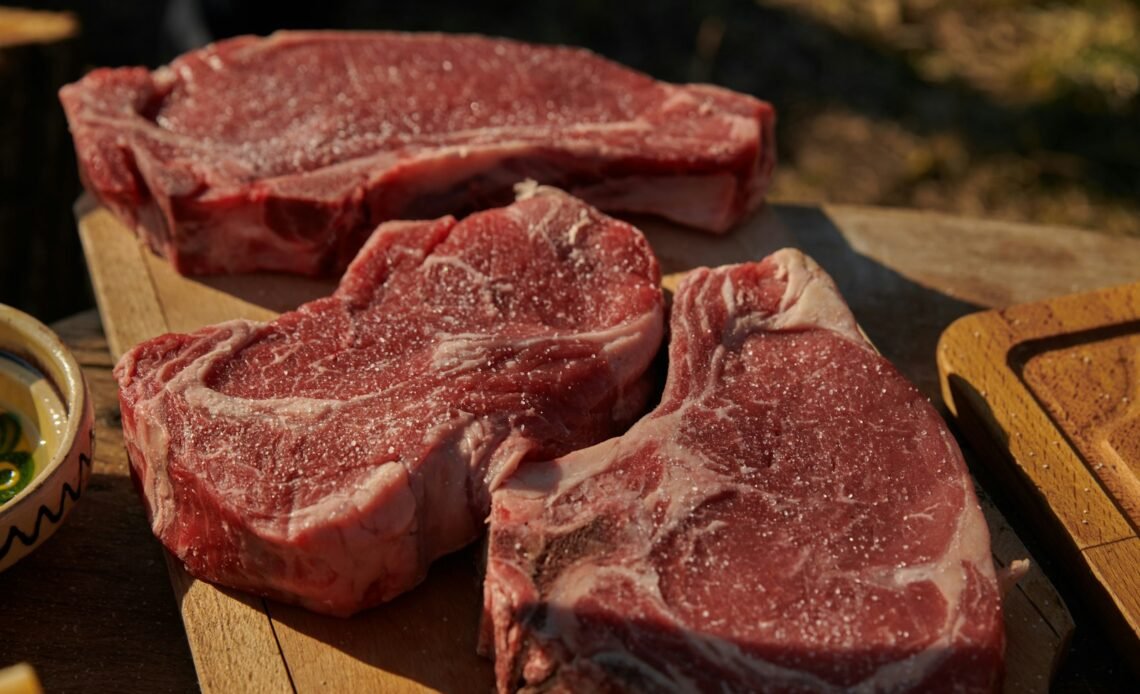
Hawksmoor’s menu leans on native British cattle breeds rather than imported grain-fed beef — Longhorn, Red Poll and Hereford, reared on farms in North Yorkshire and the Lake District. The Longhorn in particular is sourced from The Ginger Pig, the Yorkshire butcher chain that’s become a go-to supplier for London restaurants chasing provenance over volume. Every cut is dry-aged in-house for a minimum of 35 days before it reaches a plate, the slow process that concentrates flavor and tenderizes the meat by letting natural enzymes break down muscle fiber — the same basic technique steakhouses have used for over a century, just applied here to cattle breeds that had mostly fallen out of commercial use before chains like Hawksmoor and The Ginger Pig made a selling point of bringing them back.
A Very British Institution, Reheated
Hawksmoor’s other calling card is Sunday lunch, and the Observer named it the UK’s best Sunday roast on two separate occasions, including in 2010, not long after the Seven Dials branch opened. The Sunday roast itself is a tradition nobody can date precisely — competing accounts place its roots anywhere from Henry VII’s England in the late 1400s to the industrializing cities of the 1700s and 1800s, and the popular story about families leaving a joint of meat to slow-cook in the baker’s oven while they were at church (bakers didn’t fire their ovens for bread on Sundays) is treated by food historians as folklore rather than documented fact. What’s better evidenced is that the format hardened into its current shape — a roasted joint, potatoes, a token green vegetable, gravy — in Victorian households, and that it survived wartime rationing largely intact. Hawksmoor’s version serves dry-aged rump or sirloin carved thick, alongside roast potatoes finished in beef dripping, Yorkshire pudding, roasted carrots and buttered greens, bone marrow and onion gravy — a fine-dining kitchen’s take on a meal that most Britons grew up eating at a kitchen table, not a white tablecloth.
What to Order and What It Costs
Steak prices scale with the cut: a 275g rump starts at around £27, climbing toward £57 for a larger fillet or rib-eye, with a 600g Chateaubriand for two listed at roughly £96 — figures that move with the market, so treat them as a current ballpark rather than gospel. OpenTable estimates a typical dinner at the Seven Dials branch, including drinks, at £26 to £40 a head, while a basic Sunday roast runs about £27. Beyond the steak list, the menu keeps a handful of dishes that regulars order on repeat — potted beef on toast as a starter, a bone marrow side, and a sticky toffee pudding that shows up on most reviewers’ “don’t skip this” list.
The Practical Details
For a first visit, Seven Dials (11 Langley Street, WC2H 9JG) is the easiest to justify: it’s the branch that built the brand’s reputation, it’s walkable from Covent Garden and Leicester Square tube stations, and it runs a full Sunday roast service. For an occasion, Hawksmoor St Pancras — inside St Pancras Renaissance London hotel, Euston Road, NW1 2AR — trades a bit of the original’s grit for one of the most striking dining rooms in the city. Both, like the rest of the group’s London sites, take bookings through the restaurant’s own website and standard platforms rather than a phone-only system — a sign of how far the brand has moved from its market-stall-adjacent origins.

