London rarely fits into a long weekend, and most itineraries don’t try — they pick a neighborhood and call it a trip. Seven days is enough to actually move through the city the way it’s built: a Victorian museum quarter, a river lined with 1,000 years of power struggles, a market economy that never really stopped since the Romans ran one on the same mud, and a steak restaurant that’s become as much a London institution as the pubs it shares postcodes with. This itinerary covers all of it, plus a north London detour and a literary bear, with real prices and real history attached to every stop.

Day 1: South Kensington and Knightsbridge
Start at the Victoria and Albert Museum, which exists because of a trade fair: the profits from the 1851 Great Exhibition in Hyde Park funded it, and it opened in 1852 as the Museum of Manufactures before Queen Victoria renamed it for herself and her late husband in 1899. General admission is free and the museum is open daily, 10am–5:45pm (later on Fridays) — budget at least three hours for the fashion, ceramics, and Cast Courts galleries alone. If “Schiaparelli: Fashion Becomes Art” is still running when you visit, it’s ticketed separately (£28 weekdays, £30 weekends; check vam.ac.uk, as its closing date has moved before). From there it’s a 10-minute walk to Harrods, which Charles Henry Harrod opened as a single grocer’s shop on Brompton Road in 1849 — it grew into the five-floor emporium standing there now, and the Art Deco-tiled Food Halls, added in 1902, are worth seeing even if you buy nothing. Book dinner at Hawksmoor Knightsbridge: the 35-day dry-aged rump (around £27) is the entry point, the showpiece Chateaubriand for two (roughly £96) is the splurge, and the lunch/early-evening Express menu — two or three courses built around the same dry-aged rump and chips — is the better-value move if you’re eating earlier.
Day 2: Westminster and the River
This is the day for the postcard stops, and they’re worth the crowds. Westminster Abbey has hosted every coronation since William the Conqueror’s in 1066; the Houses of Parliament and the Elizabeth Tower (the actual name of the clock tower everyone calls Big Ben) sit just across the road. Time the morning around the Changing of the Guard at Buckingham Palace if it’s running that day (check the Royal Collection Trust’s schedule — it’s not daily in winter). Walk the South Bank in the afternoon: the London Eye, the reconstructed Globe Theatre, and Borough Market’s edges all sit within a mile of each other along the Thames path, and it’s one of the few stretches of the city where you can walk for an hour without needing a map.
Day 3: The Tower and the City
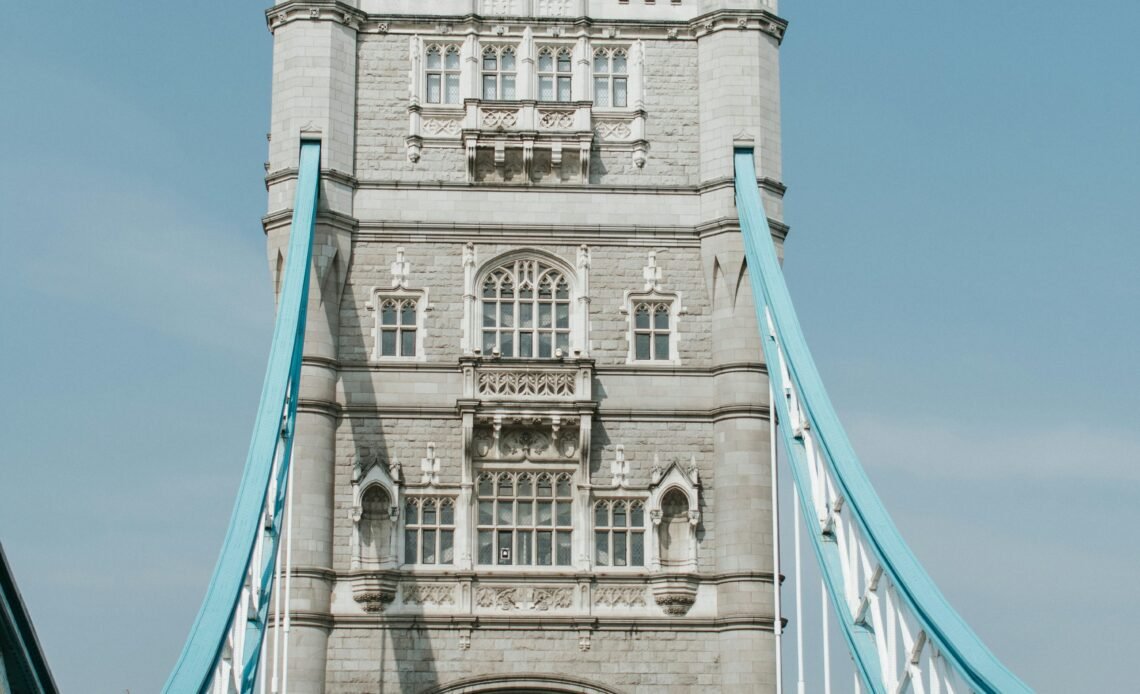
The Tower of London’s oldest structure, the White Tower, dates to 1078 under William the Conqueror — it’s been an armory, a royal mint, a prison, and, since the 17th century, home to the Crown Jewels, which is the reason most people queue. Adult tickets run £37–38 depending on source (book ahead at hrp.org.uk and go early; the Crown Jewels line is the bottleneck). Walk across Tower Bridge afterward, then head into the City of London for lunch at The Crosse Keys on Gracechurch Street — a Wetherspoon pub, but not an ordinary one: it occupies the 1913 former headquarters of the Hong Kong and Shanghai Banking Corporation, a Grade II-listed building with marble pillars, a glass dome, and what was once the largest banking floor in the City, all serving £6 pints under the old HSBC ceiling. Spend the evening at Borough Market, which has operated in some form on this site since at least the 1200s and is one of the few London markets where the stalls are still mostly about eating on the spot rather than souvenirs.
Day 4: Shoreditch and the East End
Spend the morning on Brick Lane and around Spitalfields Market, both shaped by waves of immigration — Huguenot silk weavers in the 1700s, Jewish garment workers in the 1800s and early 1900s, and the Bangladeshi community that’s given Brick Lane its curry-house reputation since the 1970s. The street art in Shoreditch changes constantly, so there’s no fixed route — just walk Redchurch Street and the surrounding blocks. Book dinner at Smokestak on Sclater Street: founder David Carter started it as a street-food stall in 2013 before opening this permanent site, and the 15-hour smoked beef brisket is the dish the reviews keep coming back to, alongside barbecue-glazed pork belly and a charred-greens side with tahini and pomegranate. Expect to spend roughly £30–40 a head.
Day 5: The British Museum, Covent Garden, and Soho
The British Museum is free and enormous — the Rosetta Stone and the Parthenon sculptures (still the subject of Greece’s long-running restitution request) are the two most-asked-about objects, but the Egyptian mummy galleries and the Sutton Hoo Anglo-Saxon treasure are worth the detour from the main route. Give it a full morning. In the afternoon, Covent Garden’s covered market sits on what was literally a convent garden before the Reformation — Henry VIII seized the land from Westminster Abbey in the 1500s, and it became London’s main fruit and vegetable market for over 300 years before the stalls moved out to Nine Elms in 1974 and the building turned into what it is now. Finish in Soho for dinner; it’s the neighborhood with the city’s highest concentration of good small restaurants per block, so picking one matters less than just going.
Day 6: Camden and Notting Hill
Camden Market grew up around the Regent’s Canal, dug in the 1810s to link the Grand Union Canal to the Thames at Limehouse; the market itself didn’t take its current form until the 1970s, when it became a center of London’s punk and alternative-music scenes — the Dublin Castle pub nearby gave Madness their first gigs. Walk the canal towpath toward Primrose Hill for a free, genuinely good skyline view before heading across town to Notting Hill. Portobello Road Market is busiest and best on Saturdays, when the antiques stalls that made it famous (and the ones Hugh Grant’s bookshop in the 1999 film was modeled on) are all open; midweek, it’s a much quieter fruit-and-veg street market.
Day 7: North London and Paddington
If you want a sports day, Tottenham Hotspur Stadium runs a Stadium Tour and the Dare Skywalk — a roped walk around the stadium’s roof edge — as a combined package, listed at £55 on the official site, though standalone stadium tours run from around £32–37 through resellers; check tottenhamhotspurstadium.com directly for match-day and tour-day availability, and look for a membership or partner discount code before booking, since several (RICS members, assorted days-out sites) knock 5–20% off. If football isn’t the draw, spend the morning instead at Paddington Station chasing the real Paddington Bear: the bronze statue under the station clock on Platform 1 (it was briefly moved during Elizabeth line construction and has since returned), and the Paddington Bear shop in the station’s Lawn area — the only shop in the world dedicated entirely to the character, which hands out a free “Pawprint Trail” map of filming locations around the station. Either way, it’s a fitting last day: a stadium built on 2019 ambition, or a bear who arrived at this exact station as a refugee in Michael Bond’s 1958 story, both still drawing people to the same patch of west London.
Practical Notes
Late spring (May–June) and early autumn (September) give the best odds against rain without summer’s crowds and prices; December adds Christmas markets and lights but also the year’s highest hotel rates. The Tube and buses run on contactless or Oyster at identical fares, capped at £8.90 a day or £44.70 a week for Zones 1–2 — both figures have been frozen since early 2026, so they should hold for the rest of the year. A realistic daily budget outside lodging is £60–90 per person: a sit-down dinner, a museum ticket or two, and transport, with the Hawksmoor and Smokestak dinners pushing the higher days closer to £100.
