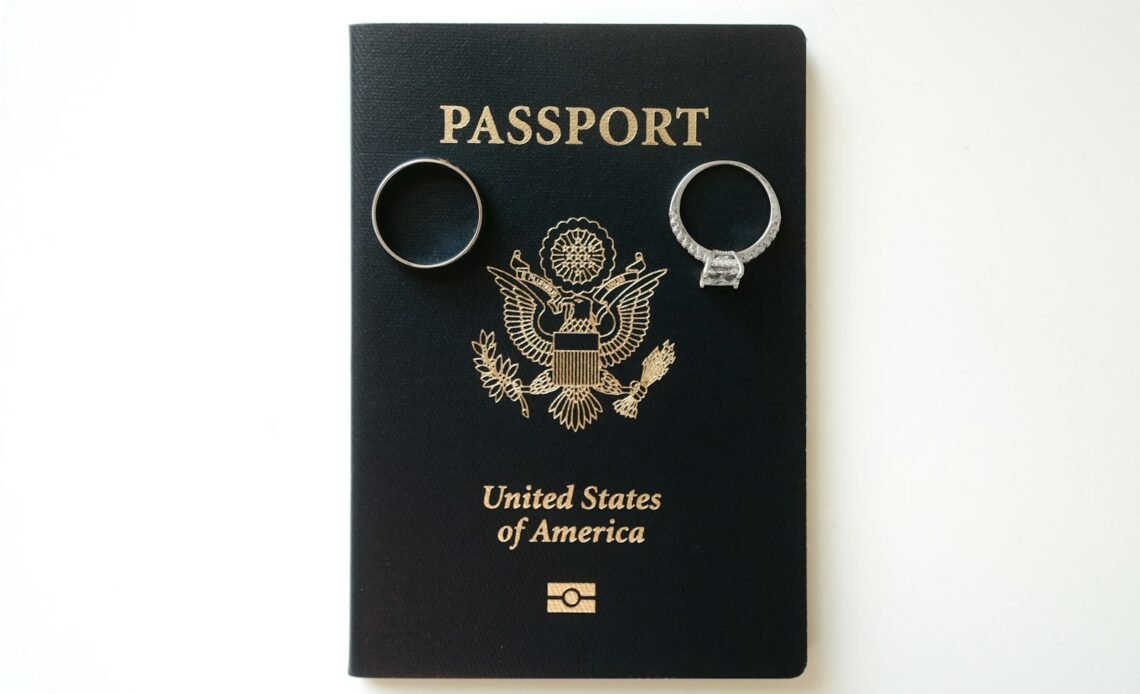
Marrying in South Korea when one partner isn’t Korean is not the paperwork horror story some forums make it sound like — but it is a documents race against the clock, and the clock starts with the foreign partner’s home country, not with the Korean government. Here is what actually happens at the counter, what the foreign national needs to bring, and where the process has gotten stricter.

The real first step: order your “certificate of marital status” before anything else
South Korea doesn’t require a church, courthouse, or officiant ceremony to create a legal marriage. The legal act is the marriage report — 혼인신고, hon-in shin-go — filed at a Si/Gu/Eup/Myeon office (city, district, town, or township office; practically, this means your local 주민센터 or 구청). Once that office accepts your paperwork, you are married under Korean law as of that filing date, no ceremony required.
The bottleneck is never the Korean side’s paperwork. It’s the document the foreign national needs, generally called a certificate of marital status or affidavit of eligibility to marry, proving they are legally free to marry. This single document can take the longest to obtain, especially once apostille or consular legalization and a certified Korean translation are added on top, so the real first move — before booking a district-office appointment, before anything else — is figuring out which office issues this document for the foreign partner’s nationality and starting that request immediately.
How embassies fit in
For many nationalities, this certificate is issued by the foreign national’s own embassy or consulate inside Korea, not by a Korean agency. U.S. citizens, for example, get an Affidavit of Eligibility to Marry notarized at the U.S. Embassy in Seoul for a $50 notarial fee — no trip home needed, just an embassy appointment and a passport. Japanese nationals generally need both partners to appear in person at the Japanese Embassy’s consular section in Seoul. Chinese nationals submit a different document, a 미혼증명서 (certificate of being unmarried), through Chinese consular channels rather than a U.S.-style affidavit. Requirements genuinely differ by nationality — this is the first place couples should call, not assume.
Apostille, legalization, and translation — the part that trips people up
South Korea is a member of the 1961 Hague Apostille Convention, which means a document apostilled in another member country is accepted at Korean district offices without additional embassy legalization. If the foreign partner’s home country is not a Hague member, the document instead needs consular legalization — certification by the Korean embassy or consulate in that country — which adds real time.
This list is not static. Vietnam, one of the largest sources of marriage migration to Korea, only became a Hague Apostille Convention member on September 11, 2026, under Vietnam’s Decree 293/2026/ND-CP. Before that date, Vietnamese civil documents needed full consular legalization through the Korean embassy in Hanoi or Ho Chi Minh City; since that date, an apostille from Vietnam’s designated competent authority is sufficient at Korean offices instead. Couples with a Vietnamese partner should confirm which regime applies to documents issued around that transition date, since processing rules for the changeover were still being clarified by both governments as of late 2026.
Whichever route applies, every foreign-language document also needs a Korean translation. Requirements on who can translate it vary by district office — some accept a plain translation with the translator’s name, signature, and contact information attached; others want a certified or notarized translation. This is exactly the kind of detail that differs office to office, so couples should call their specific Si/Gu/Eup/Myeon office directly rather than relying on a generic checklist, including whether both partners must appear in person to file (some offices allow one partner to file alone with the other’s signed consent on the form; others don’t).
What actually goes in the folder
- The marriage report form (혼인신고서) itself, signed by two adult witnesses with their names and ID information — witnesses don’t need to appear in person, only sign the form
- The Korean national’s family relation certificate (가족관계증명서) and basic certificate (기본증명서), issued by their own local office
- The foreign national’s passport and a certificate of marital status/affidavit of eligibility to marry, apostilled or consular-legalized as applicable
- A certified Korean translation of every foreign-language document
Original documents matter: most district offices will not accept photocopies for the foreign national’s eligibility certificate, and submitted originals are generally not returned. Once a complete, correctly certified packet is submitted, acceptance is often same-day; an incomplete or incorrectly certified packet is the single biggest cause of delay couples report.
Marriage registration is not a visa — and scrutiny has tightened
Filing the marriage report makes the marriage legal in Korea. It does not, by itself, grant the foreign spouse the right to live in Korea. Staying in Korea as a married couple requires separately applying for an F-6 marriage migrant visa (or a change of status if already in Korea) through Korea’s immigration service, HiKorea. That process is a different animal entirely: Korean authorities have tightened screening on F-6 applications in recent years in response to documented marriage-visa fraud, and officers may conduct in-person interviews — sometimes covering basic Korean-language ability and relationship history — particularly for couples where one partner is from a country with a history of fraud-flagged applications. The Korean sponsor’s income is also assessed against a minimum household threshold (in the mid-20-million-won range for a two-person household as of 2026, adjusted periodically), and couples are commonly asked for evidence the relationship is genuine: photos together, communication records, and a written account of how the couple met.
Finally, registering in Korea doesn’t register the marriage anywhere else. The foreign partner’s home country typically requires its own separate registration of the marriage — through its embassy in Korea, a consulate, or an agency back home — and that process runs entirely independently of the Korean filing.
Disclaimer: exact documents, acceptable translation standards, apostille-versus-legalization rules, and visa screening criteria vary by nationality pairing and change over time. This guide reflects publicly available information as of November 2026 and is not legal advice. Confirm current requirements directly with your local Si/Gu/Eup/Myeon office, the relevant embassy or consulate, and HiKorea before beginning the process.
