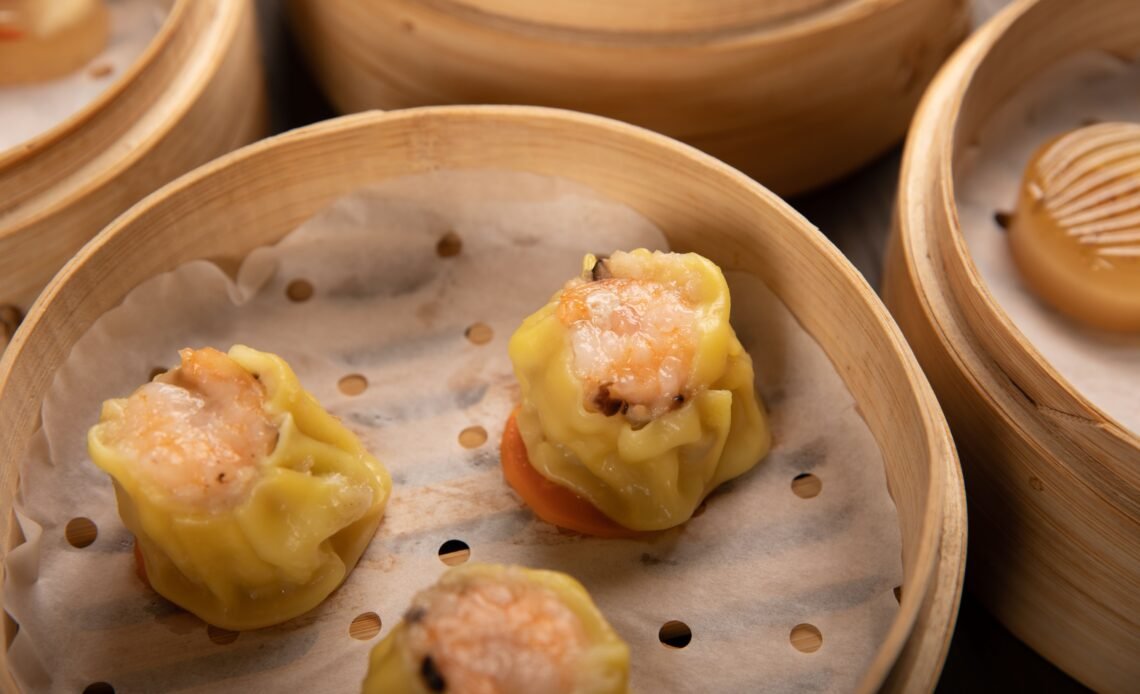
On a Hong Kong dim sum cart, siu mai (燒賣) and har gow are sold as a pair — the “two treasures” that anchor almost every trolley — but they didn’t start out as cousins. Har gow is a Cantonese invention through and through. Siu mai isn’t. The open-topped pork-and-shrimp dumpling steaming in its yellow wrapper today started life more than a thousand miles north, as a mutton snack in an Inner Mongolian tea house, and Cantonese cooks rewrote nearly everything about it except its name and its shape.
A Mutton Dumpling From 1,500 Miles North
Most food histories trace siu mai back to Hohhot, now the capital of Inner Mongolia, sometime between the Ming and Qing dynasties. It shows up in old records under the name 稍賣 — “sold on the side” — describing a cheap snack sold alongside tea rather than a dish in its own right, which is also roughly how it still functions at yum cha today. The Hohhot original bears almost no resemblance to the version on a Hong Kong trolley: it’s built from chopped mutton, scallion, and ginger, wrapped in a plain wheat-dough skin gathered and pinched at the top into an open pouch, closer in spirit to a savory dumpling-shaped bun than a dim sum bite. That open-topped, pleated-waist shape is the one thing that survived the dish’s journey south almost unchanged.
How Canton Rewrote the Filling
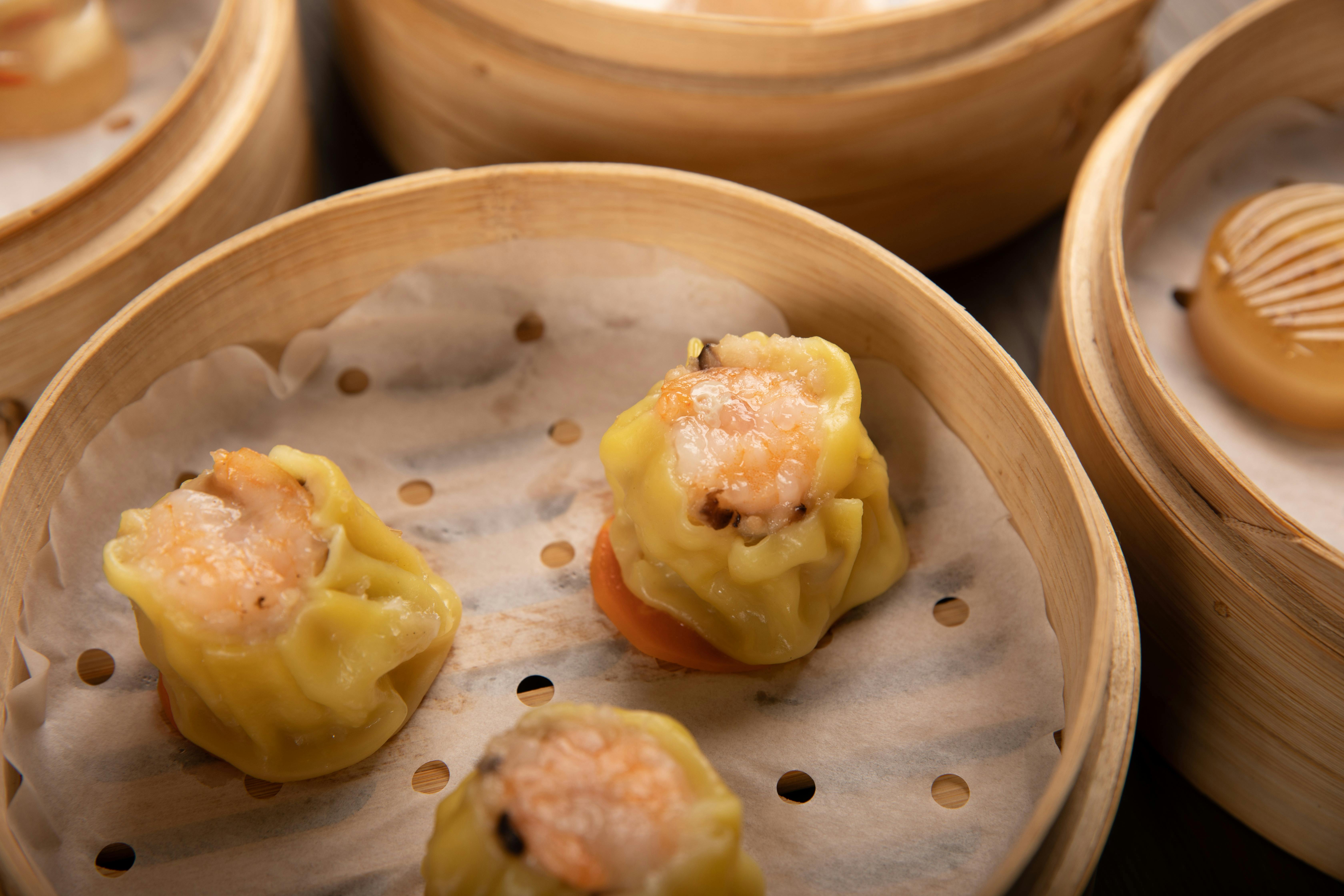
By the time the dumpling reached Guangdong teahouses, the mutton was gone. Cantonese kitchens swapped in ground pork, shrimp, and dried shiitake, wrapped the filling in a thin, round, egg-yellow wonton-style skin instead of the thicker northern dough, and served it steamed rather than boiled — long-running teahouses in Guangzhou and Hong Kong, among them Lin Heung and Luk Yu, are credited with popularizing this version through the early-to-mid twentieth century, and it’s this Cantonese take that most of the world now simply calls “siu mai,” with the northern mutton original barely known outside China. The standard gloss for the name is “cook and sell,” though a Hong Kong siu mai shop owner interviewed by the South China Morning Post’s Goldthread offered a different, more folksy read: he said the chef who named it wanted the dumplings to “sell like hotcakes.” Nobody can verify which etymology is older, but both point at the same thing — this was always a fast, inexpensive teahouse item, not a banquet dish.
The Orange Dot Isn’t What You Think
Every siu mai has that small bright dot pressed into the top, and most diners assume it’s crab roe. Sometimes it is — upscale versions do finish with real crab or fish roe, and it’s a genuine ingredient, not a myth. But because roe is expensive and tends to fall off during steaming, most restaurant and home versions substitute minced carrot for color, or a dab of tobiko, which holds its place and its orange tone for a fraction of the cost. The dot isn’t flavoring the dumpling in any meaningful way in most kitchens — it’s there to mark the open top and signal, at a glance across a crowded trolley, which basket is siu mai.
The Recipe
Makes about 24. Soak 4 dried shiitake mushrooms in hot water for 20-30 minutes, then squeeze dry and dice finely. In a bowl, combine 250g (about 9 oz) ground pork — shoulder, with some fat, not lean loin — with 150g (about 5 oz) raw shrimp, peeled, deveined, and roughly chopped by hand so some texture survives rather than puréed smooth. Add the shiitake, 1 tablespoon cornstarch, 1 tablespoon oyster sauce, 1 tablespoon Shaoxing wine, 1 teaspoon sugar, 1 teaspoon sesame oil, ½ teaspoon salt, and ¼ teaspoon white pepper. Stir the mixture vigorously in one direction for 2-3 minutes, then pick it up and slap it back into the bowl a dozen or so times — this develops the sticky, slightly bouncy texture that keeps the filling from crumbling once steamed. Cover and refrigerate for at least 30 minutes.
Use thin, round, yellow siu mai or wonton wrappers (if you can only find square wonton skins, trim the corners into rough circles with scissors). Hold a wrapper in a loose fist, spoon about 1½ tablespoons of filling into the center, and gently press the filling down while your fingers gather the wrapper’s edges up and around it in loose pleats, leaving the top open so the pork and shrimp show through. Tap the dumpling’s base flat on the counter so it stands upright, then press a small piece of carrot or a few grains of tobiko into the exposed top for color. Repeat with the remaining wrappers and filling.
Line a bamboo or metal steamer with parchment paper or cabbage leaves so the dumplings don’t stick, and arrange them with a little space between each — they’ll swell slightly as they cook. Steam over briskly boiling water for 8-10 minutes, until the pork is fully opaque and the internal temperature reaches at least 71°C (160°F). Serve immediately, straight from the steamer, with chili oil, a splash of dark Chinkiang vinegar, or just as they are — siu mai rarely needs much help.
Why It Still Earns Its Spot on the Cart
Siu mai gets less attention than har gow in most write-ups about dim sum technique, partly because its pleating is more forgiving — there’s no need for the gossamer-thin, translucent wrapper that makes har gow so punishing to fold. But a good siu mai still separates careful kitchens from sloppy ones: the pork-to-shrimp ratio has to be balanced so neither one disappears, the filling needs that bounce from proper mixing, and the wrapper has to be thin enough to cook through in under ten minutes without turning gummy. It’s also, unusually for a dim sum staple, a dish that traveled the length of a country and changed almost everything about itself along the way — mutton to pork, boiled to steamed, a far-northern tea house to a Hong Kong trolley — and still kept its name and its open-topped little pleat. Few dishes on the cart carry that much geography in one bite.
