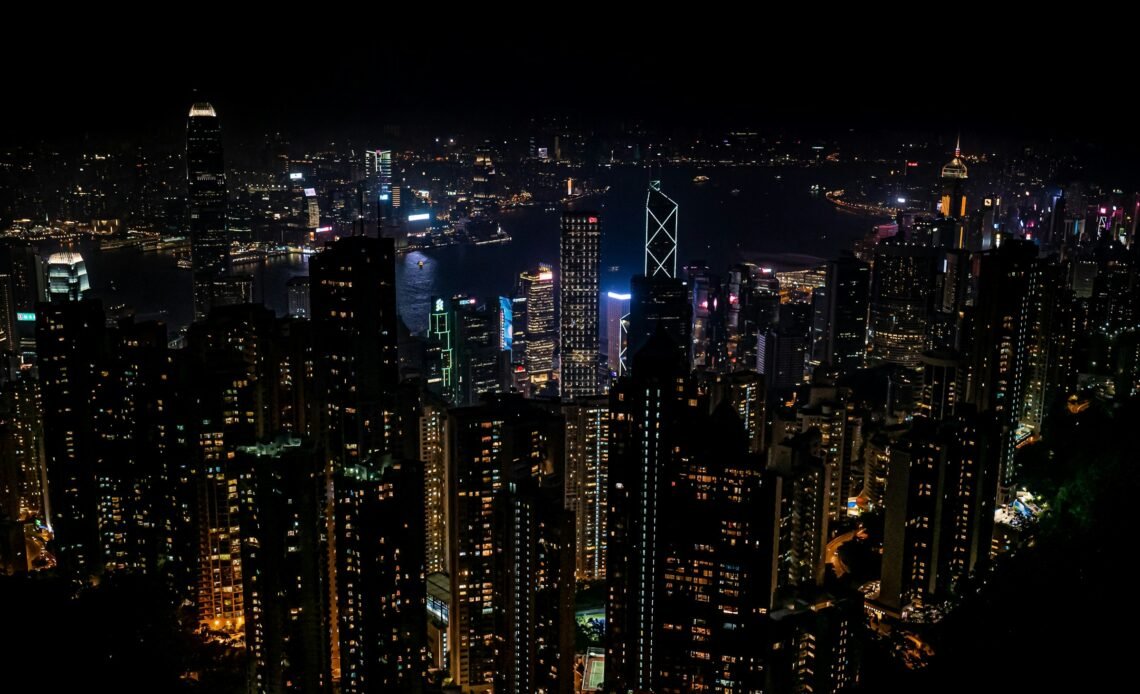
Hong Kong Island became British territory in 1842, at the end of the First Opium War, when the Treaty of Nanjing forced the Qing dynasty to cede it “in perpetuity.” Kowloon followed in 1860, then Britain leased the New Territories for 99 years in 1898 — a lease whose 1997 expiry is the real reason the whole territory went back to China, not just the part Britain ever technically owned. For 156 years, a Cantonese fishing and trading outpost grew under British law and global finance into one of the world’s great cities, then returned to Chinese sovereignty under a “one country, two systems” arrangement promising 50 years of autonomy. That hybrid DNA — a common-law city that speaks Cantonese, British-era courthouses standing in the shadow of mainland-funded towers, dim sum served two floors below a stock exchange — is still the most interesting thing about visiting Hong Kong, and it shows up in the architecture, food, temples, and markets on practically every block. This five-day itinerary moves through Central’s colonial core, Kowloon’s working temples and markets, the harbour itself, a day trip to Lantau, and the city’s modern financial skyline, because no single one of those versions of Hong Kong tells the whole story.


Day 1: Central’s colonial bones, PMQ, and Man Mo Temple
Ride the Peak Tram, which has climbed Victoria Peak on the same funicular alignment since 1888, making it one of the oldest railways of its kind in Asia. A standard round-trip ticket runs roughly HK$116 for adults, with combined tram-plus-Sky Terrace 428 packages from around HK$149 to HK$210 — book online, since queues at the Garden Road terminus run long midday. Sky Terrace 428 is open daily, 8:30am to 10pm, and gives a 360-degree view over both Victoria Harbour and the South China Sea. Back down in Central, walk to PMQ at 35 Aberdeen Street — the site held Hong Kong’s first government school from 1862 until it was razed during the Japanese occupation, then was rebuilt in 1951 as the Police Married Quarters, the colony’s first housing block built specifically for married rank-and-file officers, including Chinese constables. It sat empty for nearly 15 years after the force moved out in 2000, until a 2010 conservation push reopened it as PMQ in 2014 — now studios, shops, and restaurants inside the old residential blocks. From there, walk down Hollywood Road to Man Mo Temple, built around 1847 and dedicated to Man Cheong, the god of literature, and Mo Tai, the god of war — early Chinese leaders used it as an informal courthouse and meeting hall before Hong Kong had any Chinese representation in colonial government. It’s open daily, 8am to 6pm, free to enter, and still thick with smoke from the enormous incense coils hanging from the ceiling.
Day 2: Wong Tai Sin Temple, Sham Shui Po, and Temple Street after dark
Take the MTR to Wong Tai Sin station, a short walk from the temple of the same name. Founded in 1921 after the deity’s worship was brought over from Guangdong, Wong Tai Sin Temple is unusual in that it formally honours Confucianism, Buddhism, and Taoism side by side — a very Hong Kong compromise. Entry to the main grounds is free (only the Taisui Yuenchen Hall inside charges, around HK$100); it opens around 7am and closes in the late afternoon or early evening depending on season, and it’s the city’s busiest temple during Lunar New Year, when it can draw over a million worshippers. In the afternoon, head to Sham Shui Po, one of Kowloon’s oldest and least gentrified districts: Ki Lung Street, nicknamed “Button Street,” is lined with fabric, button, and notions stalls, many run by vendors displaced from the old Pang Jai cloth market when it relocated to a Tung Chau Street site in 2023 — go on a weekday morning, since many stalls shut by early afternoon or close entirely on Sundays. In the evening, ride the MTR to Jordan or Yau Ma Tei for Temple Street Night Market, Kowloon’s classic after-dark market for jade, clothes, and fortune-tellers, with stalls generally running from around 6pm into the night; the surrounding alleys are also where to try claypot rice and curry fish balls at open-air dai pai dong-style stands.
Day 3: Star Ferry, the harbour, and Chungking Mansions
The Star Ferry has crossed Victoria Harbour since 1888 under its current name (the government dates the franchised cross-harbour service to 1898), and the short Central–Tsim Sha Tsui crossing is still one of the best cheap views of the skyline in the city — expect to pay a little under HK$5 to HK$8 depending on deck and day, with another fare increase approved from January 2027. On the Kowloon side, walk the harbourfront promenade past the Avenue of Stars; the nightly Symphony of Lights show that used to light the skyline every evening at 8pm is being retired in 2026 for occasional installations tied to festivals and holidays rather than a nightly schedule, so check what’s showing when you’re there rather than planning the evening around it. For lunch, Chungking Mansions on Nathan Road is worth a careful, respectful walk-through: five 17-storey blocks built in the 1960s that became a budget-guesthouse and curry-house warren for South Asian and African traders, and the real-life backdrop for Wong Kar-wai’s 1994 Chungking Express, filmed there without a permit during a six-week break from another project — the building’s own staff have credited the film with reviving its reputation and foot traffic. Finish in Tsim Sha Tsui proper, where the 1915 clock tower, the last remnant of the old Kowloon-Canton Railway terminus, sits a few minutes’ walk from Canton Road’s luxury flagship stores.
Day 4: Lantau Island — the Big Buddha, Po Lin Monastery, and Tai O
Take the MTR to Tung Chung and ride the Ngong Ping 360 cable car up to the plateau — a standard round-trip cabin runs roughly HK$295 for adults, with a glass-floored Crystal Cabin costing more; book online, since Tung Chung queues can run well over an hour on weekends. At the top, Po Lin Monastery and the Tian Tan Buddha — a 34-metre bronze statue completed in 1993, visible from much of the plateau — sit inside a working monastery founded in 1906, not a theme-park replica; admission to the Buddha platform is free, and the monastery’s vegetarian restaurant serves a set lunch if you want to eat where the monks do. From Ngong Ping, catch bus 21 down to Tai O, a stilt-house fishing village on Lantau’s west coast often called the “Venice of Hong Kong” — its pang uk stilt houses are genuinely still inhabited, though most residents now earn more from tourism than fishing. A short sampan ride sometimes turns up a glimpse of the critically endangered Indo-Pacific humpback (“pink”) dolphin in the estuary, though sightings aren’t guaranteed and have grown rarer since the Hong Kong–Zhuhai–Macao Bridge was built; a dedicated Hong Kong Dolphin Watch tour from Central improves the odds.
Day 5: Mong Kok, SoHo, and the financial skyline
Spend the morning in Mong Kok, one of the most densely packed districts on Earth: the Ladies’ Market on Tung Choi Street runs a long stretch of clothing, accessories, and souvenir stalls, generally open from around noon into the evening, while the nearby Goldfish Market and Flower Market Road show a quieter, more local side of the neighborhood. In the afternoon, head back to Central and ride the Central–Mid-Levels escalator — a free, covered, outdoor system opened in 1993 that climbs roughly 135 metres over about 800 metres, built to move commuters between the Mid-Levels slopes and the financial district below. It runs straight through SoHo (“South of Hollywood Road”), a quiet residential pocket until the escalator turned it into Hong Kong’s densest cluster of bars and restaurants almost overnight. Ride it up by day, then come back down into SoHo and Lan Kwai Fong after dark for rooftop bars over the harbor and the floodlit financial district — a skyline that, since the 1997 handover, has filled in with as much mainland Chinese capital as old British and American banking names, which is the whole story of this itinerary in one view: a British-built port city, run today under Chinese sovereignty, that never fully let go of either half of its identity.
Practical notes
Get an Octopus card on arrival (sold at MTR stations, roughly HK$39-plus for a tourist version, or a standard card with a refundable HK$50 deposit) — it covers the MTR, trams, buses, the Star Ferry, and most convenience stores, and is faster than buying single tickets at every stop. October through early December is the best weather window: cool, dry, and outside typhoon season, which otherwise runs roughly April through October and peaks July to September, when a Typhoon Signal 8 can shut down outdoor attractions and transport with little notice. Outside hotels, budget roughly HK$500-800 (about US$65-100) a day per person for food, local transport, and a couple of paid attractions — Hong Kong’s street food and transport are genuinely cheap by global-city standards, even if hotel rooms and sit-down Western dining are not. If you’re relying on mobile data to navigate MTR apps and translate menus, a prepaid eSIM such as Saily is worth setting up before you land rather than hunting for Wi-Fi once there.
This article contains affiliate links, including Klook. We may earn a commission on qualifying bookings — see our Affiliate Disclosure for details.
