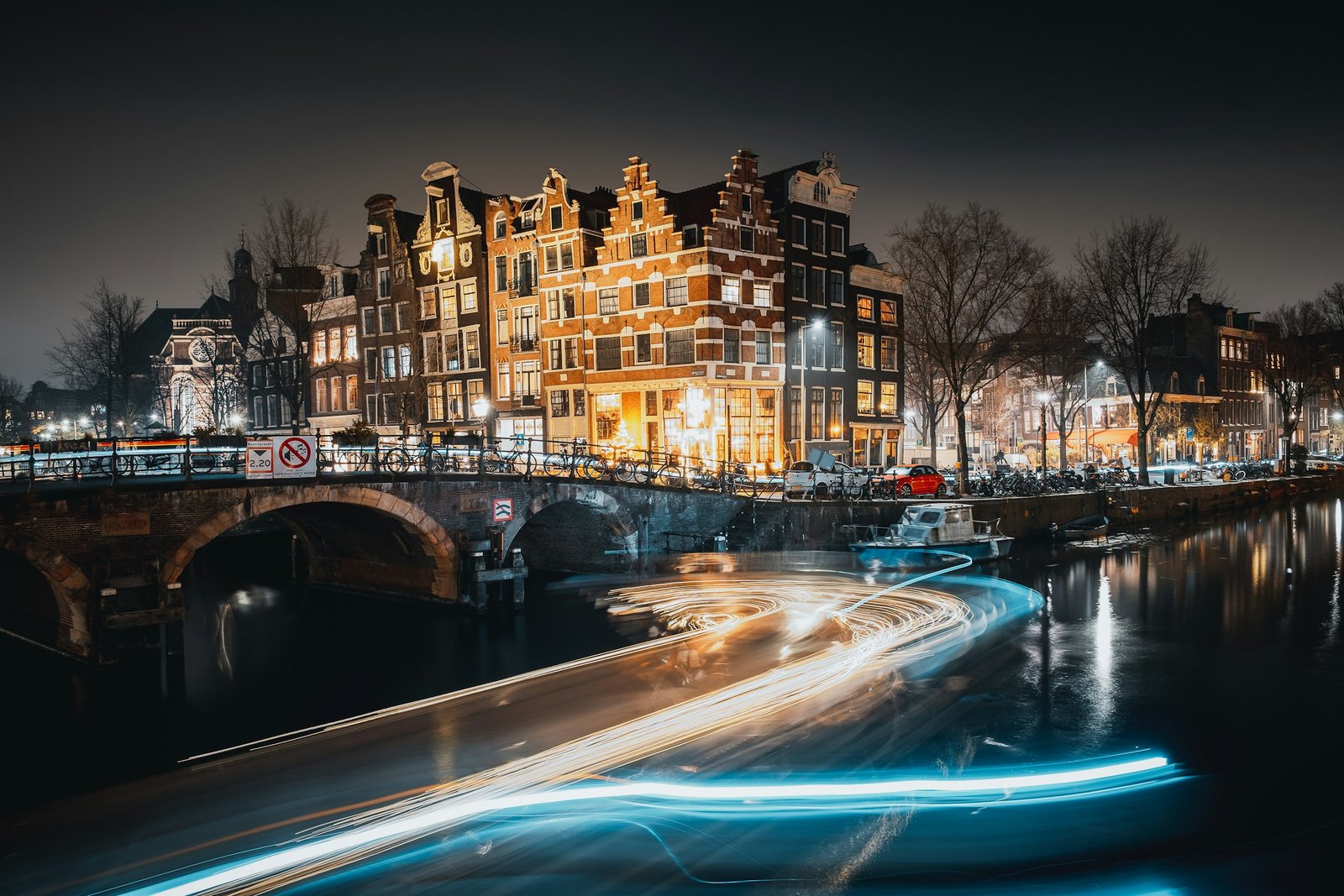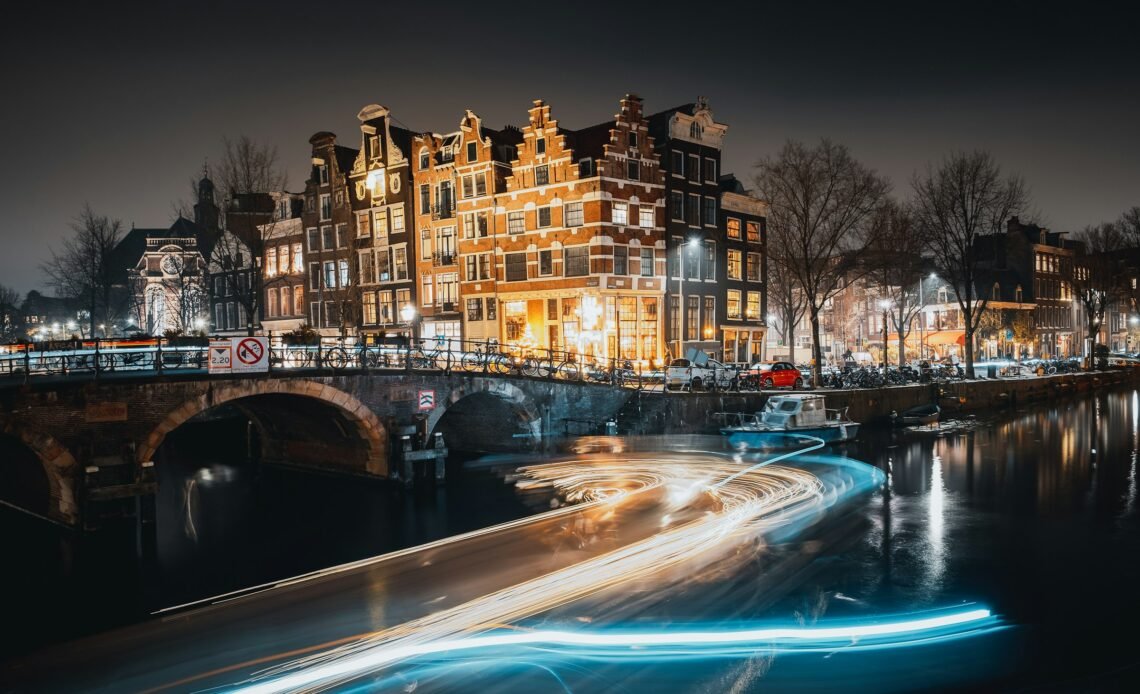
Amsterdam’s canals go dark around 4:30pm through the winter, and for the fifteenth year running, the city is turning that into an asset instead of a problem. The Amsterdam Light Festival’s Edition 15 opens Thursday, November 26, 2026, with a launch program at Amstel 1 (Waterlooplein 6) at 8pm, and runs nightly through Sunday, January 17, 2027 — nineteen light artworks strung along the water and through the streets, under the tagline “See the City in a New Light.” It is, by most measures, the largest free outdoor light art event in the Netherlands, and one of the few European winter light festivals built around boats rather than just footpaths.
From Christmas Boat Parade to Light Art Institution
The festival didn’t start as an art event. In 2009, five organizers — Vincent Horbach, Henk Jan Buchel, Felix Guttmann, Raymond Borsboom, and lighting designer Rogier van der Heide — put together the Christmas Canal Parade, a boat procession through Amsterdam’s waterways that drew roughly 100,000 spectators in its first year. The turn toward light art came almost by accident the following year, when van der Heide’s illumination of the Magere Brug (the Skinny Bridge) became the event people actually talked about. By the official Edition 1 in 2012–2013, the parade had become a seven-week canal route of commissioned light installations, including Janet Echelman’s suspended net sculpture “1.26 Amsterdam” and a parallel land route called “Illuminade” through the Plantagebuurt.
The festival has since become a genuine art-world fixture rather than a holiday sideshow. Princess Beatrix opened Edition 4 in 2015–2016, the year the festival first partnered internationally with Norrköping, Sweden. Edition 5 drew close to a million visitors and featured work by architecture firms UN Studio and Benthem Crouwel. Ai Weiwei contributed the installation “Thinline” to Edition 6 in 2017–2018. Even the pandemic didn’t kill it outright: Edition 9, in the winter of 2020–2021, scaled down to seven artworks spread across the city so people could encounter them without gathering in crowds. Edition 10 marked the tenth anniversary with Streetart Frankey’s “Darth Fisher” and left behind a permanent piece, “Today I Love You,” at Amsterdam UMC. Edition 13, in 2024–2025, transformed the Oosterdok to mark the city’s 750th anniversary. The festival operates as an independent foundation with no structural government funding, run today under managing director Dago Houben and artistic leader Pam Toonen — which is part of why, unusually for an event this size, it still relies heavily on ticket and sponsorship revenue rather than a guaranteed subsidy.
What’s Actually on View This Year
Edition 15’s official artwork list and full route map were still being finalized as of mid-November, with the festival app due mid-month and the printed walking map going on sale November 23. What’s confirmed directly from the festival: nineteen light artworks installed for this edition, opening at Amstel 1’s “Lichtstraat” program on November 26, and a self-guided walking route that the festival’s own site lists at 4.5 kilometers — doable in full or broken into sections, since the artworks are spread across several central neighborhoods rather than clustered in one park. Daily viewing hours run 4:30pm to 11pm, with an earlier 9pm close on December 31 for New Year’s Eve. Unlike a fireworks show or a concert, there’s no single moment to catch — the work stays up and lit every night for the better part of eight weeks, which makes it one of the few major European winter events that rewards a weeknight visit over a weekend crowd.
Getting There, and What It Costs
Walking the route and viewing the artworks from the street is free — no ticket required. The official printed map, useful for finding each piece without wandering, costs around €6.99 and goes on sale November 23 through the festival’s shop. The festival itself discourages driving, asking visitors to arrive by public transport or bicycle; both festival information points — one inside Amstel 1 at Waterlooplein 6, a short walk or tram ride from Amsterdam Centraal, and a second near Centraal Station itself — sit within easy reach of the city’s main tram and metro lines.
The more popular option is still the water: canal cruises built specifically around the festival’s “Water Colors” route are run by Stromma, the festival’s official boat partner, with current listed fares in the roughly €24–€30 per-person range for a trip of a little over an hour. Prices and exact departure times are confirmed through the festival’s own ticket shop and Stromma’s booking pages rather than fixed in advance, so it’s worth checking both before planning a night around a specific sailing — availability tightens considerably on weekends in December. For anyone combining the festival with other Amsterdam winter plans, the eight-week run gives enough runway to pair a weekday cruise with a separate night spent simply walking the illuminated streets near Amstel 1 and the Oosterdok, where several past editions have concentrated their largest pieces.
Official info and ticketing: amsterdamlightfestival.com.