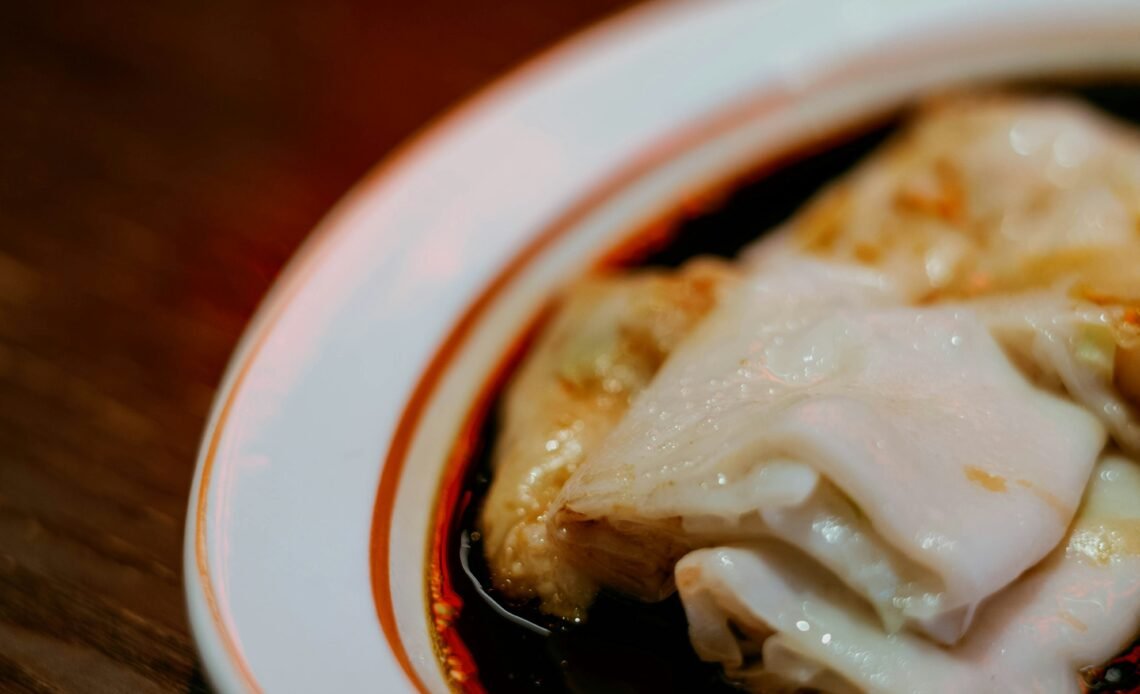
Cheung fun (腸粉) is a texture before it’s a flavor. The name translates roughly to “intestine noodle” — not the most appetizing image on paper, but an accurate one once you see the dish: long, pale, faintly translucent sheets of steamed rice batter, rolled or folded into soft coils that genuinely resemble pig intestines, which is exactly the resemblance Cantonese cooks were naming when they called it that. In Guangzhou the dish is also known as laai cheung, “pulled intestines,” because the sheet is traditionally peeled — pulled — off the steaming cloth by hand while it’s still hot enough to tear if you rush it.

A Street Food With No Settled Birth Certificate
Unlike char siu or claypot rice, cheung fun doesn’t have one clean origin story — food historians genuinely disagree. One account places steamed rice sheets as far back as the Tang dynasty in Luoding, a city in Guangdong, tied to a Buddhist temple that served them for breakfast. Another credits a specific wartime restaurant, Pantang Hexian, with inventing the modern rolled version during the Second Sino-Japanese War, while most modern cookbooks simply date the dish to the 1930s without a firm source. What’s not disputed is the delivery method: by the late Qing dynasty, street vendors were already selling cheung fun alongside spring rolls on the pavements of Guangzhou, which is the same cart-and-counter tradition that carried the dish into Hong Kong dim sum service and, eventually, into Western Chinatown breakfast counters.
Why the Texture Is the Whole Argument
Ask ten Cantonese cooks what makes good cheung fun and most will skip the filling entirely and talk about “滑” — slippery, silky — the one texture word the dish lives or dies on. That silkiness comes from the starch ratio in the batter, not the rice alone: most recipes mix rice flour with a smaller amount of wheat starch, commonly around one part wheat starch to two parts rice flour to seven parts water by weight, with wheat starch prized for giving the sheet more elasticity and translucency than rice flour can manage by itself. Tapioca starch is a common substitute that leans chewier; cornstarch is the one swap most cooks avoid, since it tends to make the sheet brittle rather than stretchy. The batter is poured thin across a flat tray or cloth inside a bamboo or metal steamer, covered, and steamed just long enough to set — over-steam it and the sheet turns rubbery instead of yielding.
The Recipe
For a plain jyu cheung fun (the classic “pig intestine” style, unfilled): whisk 100g rice flour, 50g wheat starch, 15g cornstarch, 1 tablespoon neutral oil, and a pinch of salt into 500ml water until completely smooth, then let the batter rest 15 minutes — it will separate slightly, so stir again just before using. Lightly oil a flat heatproof tray or pan that fits inside your steamer, pour in a thin, even layer of batter (just enough to coat the base, not pool thick), and steam over high heat, covered, for about 4-5 minutes, until the sheet turns glossy, slightly puffed, and pulls cleanly away from the tray.
Lift the tray out, let it cool for about 30 seconds so it firms up enough to handle without tearing, then use a bench scraper or spatula to loosen one edge and roll the sheet up into a loose coil, the way you’d roll a thin crepe. Repeat with the remaining batter, re-oiling the tray between batches. Cut the rolls into 2-inch segments and serve immediately, drizzled with a warmed sauce of 3 tablespoons light soy sauce, 1 tablespoon dark soy sauce, 1 tablespoon sugar, and 150ml water simmered together until just syrupy, finished with a scatter of toasted sesame seeds and sliced scallion. For a filled version, lay cooked shrimp, thin strips of char siu, or sautéed beef along one edge of the sheet right after steaming, before it cools, then roll around the filling instead of into a plain coil.
How It’s Actually Ordered
On a Hong Kong dim sum trolley, cheung fun splits into two camps: jyu cheung fun, the plain rolled version sliced into segments and bathed in sweet soy, and a filled version built around shrimp, beef, or char siu, usually folded rather than coiled so the filling stays visible at the cut ends. Street-stall versions skip the trolley altogether and are sold folded into thick ribbons straight off a griddle cart, often finished with hoisin, peanut sauce, or chili oil instead of the dim sum restaurant’s soy syrup — different enough from the sit-down version that regulars treat them as two separate dishes with the same name, not one dish served two ways.
