Wall Street just closed out one of its wildest weeks of 2026 in two days flat: a midterm-election rally on Wednesday, followed by the S&P 500’s worst single session since April 2025 on Thursday, followed by a partial, uneven comeback on Friday. Markets are closed for the weekend, so Friday’s numbers are the most current ones on the board heading into this week — and they tell a story about just how exposed the AI trade has become to a single week’s headlines.
Wednesday: the biggest post-election rally in decades
On November 4, 2026, Democrats won control of both the House and the Senate in the midterm elections. Stocks rallied hard on the result — wire reports described the Dow’s gain that day as its best post-midterm-election performance in 44 years, with the index adding more than 1,000 points. Analysts framed the move as relief that divided government in Washington likely means fewer abrupt policy shocks, not a verdict on either party’s agenda. Trump Media shares fell roughly 9% the same day, while gold rallied as Treasury yields and the dollar slipped.
Thursday: AI stocks erase it all, then some
That calm lasted one day. On Thursday, November 5, the S&P 500 fell 4.4% — a 334.89-point drop that left the index at 7,353.73 and marked its worst single session since the April 2025 “Liberation Day” tariff rout, according to wire-service market reports. The Dow Jones Industrial Average dropped 1,833.06 points, or 3.44%, to 51,523.06. The Nasdaq Composite fell even harder, sinking 1,421.52 points — 5.52% — to 24,315.00.
The damage was concentrated almost entirely in one corner of the market. The PHLX Semiconductor Index, which tracks major chipmakers, dropped 12.3% on the day. Nvidia alone fell 9.3%. Reporting on the session attributed the selloff to investors reassessing what Wednesday’s election result could mean for the AI infrastructure buildout — specifically, concern that a Democratic-controlled Congress could bring tighter scrutiny of data center development, alongside existing worries about how much debt is being taken on to finance new data center construction. One market-data estimate put the single-day loss in S&P 500 market value at roughly $2.9 trillion, which would rank among the largest one-day value losses the index has recorded — a figure worth treating as an estimate rather than an official tally, since it depends on the methodology used to calculate total index market cap.
Friday: a partial, narrow rebound
Markets steadied but didn’t fully recover on Friday, November 6. The S&P 500 rose 23.13 points, or 0.3%, to close at 7,376.86. The Nasdaq Composite gained more, up 264.43 points (1.1%) to 24,579.42, as some of the chip names that had been hit hardest found buyers. The Dow Jones Industrial Average was the outlier, falling 237.33 points (0.5%) to 51,285.73, even as the other two indexes rose — a split that reflects how concentrated the week’s swings were in technology and semiconductor names rather than the broader market.
Even with Friday’s bounce, the week finished in the red across the board. For the five trading days, the S&P 500 was down 203.21 points, or 2.7%; the Nasdaq Composite was down 3.4%; and the Dow was down 0.9%. In other words, Thursday’s single-day drop was bigger than the net effect of every other session that week combined.
What this does and doesn’t tell you
What the week actually demonstrated is concentration risk: a market where a handful of semiconductor and AI-infrastructure names have grown large enough that a shift in sentiment about data center spending can move the entire S&P 500 by more than four percent in a single session, and erase a historic rally in the process. It doesn’t tell you what happens next. Attention now turns to the Consumer Price Index release scheduled for Tuesday, November 10 — a data point markets will react to, but not one anyone can respond to in advance, since the actual figures haven’t been published yet.
The bottom line
Three sessions, three different stories: a historic election rally, the worst single-day drop in a year and a half, and a narrow, uneven recovery that left the week down overall. None of it is a signal to buy, sell, or hold any security — it’s simply what the major indexes did, and the specific, named catalysts — a midterm election result, a data-center-spending scare concentrated in chip stocks — that reporting tied to each move.
This article is for educational purposes only and does not constitute investment advice. Always do your own research or consult a licensed financial advisor before making investment decisions. See our Financial Disclaimer for more.
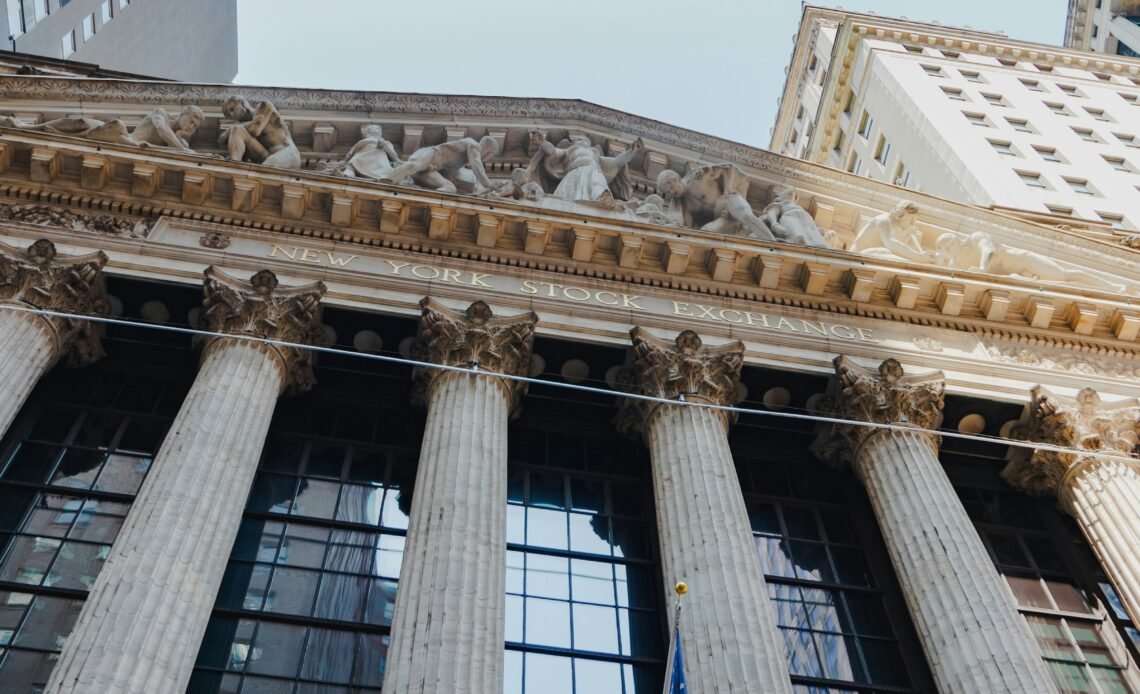
Featured image: the New York Stock Exchange building, New York. Photo by Joshua Tsu on Unsplash.