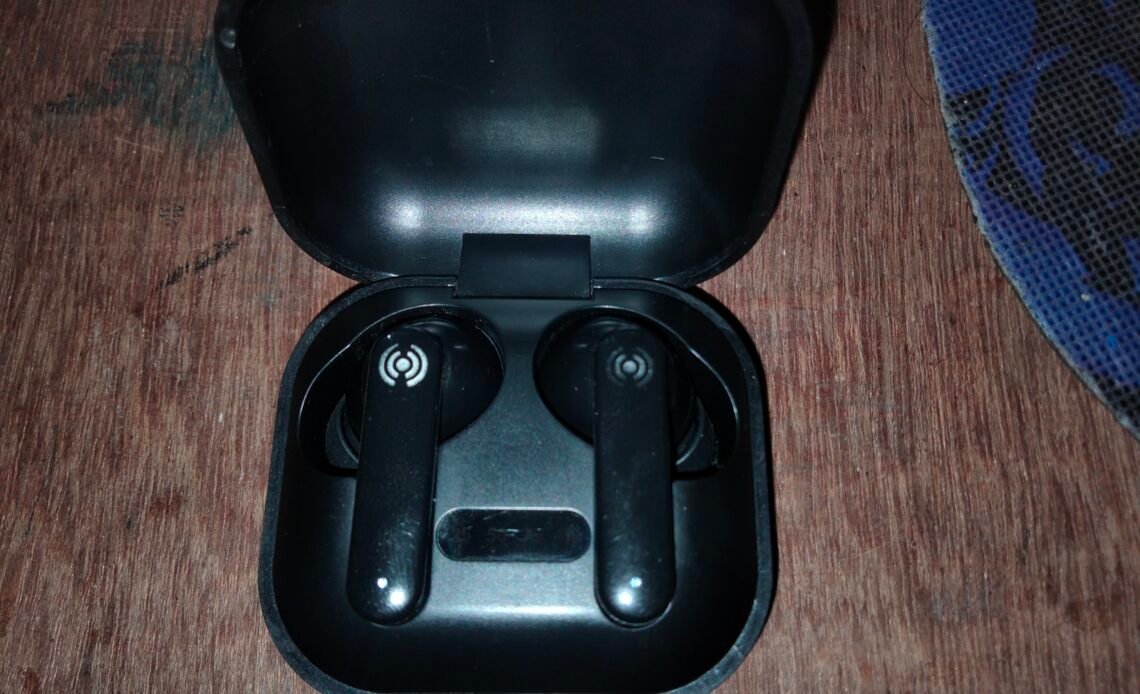
Three real launches landed in the two weeks around November 2026, and each one quietly fixes a problem the rest of the industry had just learned to live with. Fairphone built earbuds you can actually repair instead of throwing away when the battery dies. Bose brought back a wired earbud for the first time in over a decade, on the bet that some people are tired of charging anxiety. And Samsung finally let its tracker talk to iPhones, years after Apple’s AirTag made cross-platform tracking look easy. Real prices, real specs, why each one matters.

Fairphone’s Fairbuds 2 Let You Replace the Battery Yourself — $119.99
Fairphone, the Dutch company best known for making phones you can take apart with a screwdriver, launched the Fairbuds 2 in Europe on October 14 at €119, before the US got them on November 2 at $119.99 with no preorder period. The pitch is the same one that built Fairphone’s phone business: every lithium battery degrades, usually within two or three years of daily charging, and that’s normally the moment an earbud becomes e-waste. The Fairbuds 2 are built so it doesn’t have to be — Fairphone sells seven individually replaceable parts, including all three batteries (both earbuds and the case), with tool-free, glue-free swaps. A replacement earbud battery costs €9.95; a replacement case battery is €12.95. Underneath the repairability story, the hardware itself isn’t a compromise: 11mm dynamic drivers, hybrid active noise cancellation rated up to 45dB, six microphones, IP54 water resistance, a three-year warranty, and support for Sony’s LDAC hi-res codec — a feature that rarely shows up on a repairable, mid-priced earbud. Battery life is roughly 6 hours per charge with ANC on, about 40 hours total with the case.
Bose Is Selling Wired Earbuds Again, for the First Time Since 2015 — $99
Bose announced its Noise Cancelling Wired Earbuds on September 28 and began shipping them October 15, priced at $99 — the company’s first new wired earbuds in over a decade. There’s no Bluetooth, no battery, and nothing to charge: the earbuds plug straight into a USB-C port and pull their power from whatever they’re plugged into, which also means they won’t work through a non-USB adapter. What you still get is real Bose engineering — the same QuietControl active noise cancellation technology as the company’s wireless lineup, switchable between Quiet, Aware, and ANC-off modes, plus wired audio at 24-bit/48kHz. Bose ships nine combinations of eartips and stability bands to find a seal that fits, rates the earbuds IPX4 for sweat and splashes, and includes an inline remote and microphone plus a carry case. They come in Black, White Smoke, and a limited-edition Dewdrop Mint. It’s a narrow bet, but a specific one: for anyone who has ever missed a run because wireless earbuds died at 20%, a cable solves the problem Bluetooth created in the first place.
Samsung’s New Tracker Is the First SmartTag That Works With iPhones — $29.99
Samsung’s Galaxy SmartTag3 launched in South Korea on October 7 and reached the US on November 6 at $29.99 for a single tag or $99.99 for a four-pack. The headline feature isn’t the hardware — it’s that this is the first Galaxy SmartTag that works with an iPhone at all. Every SmartTag before it was locked to Samsung’s own Find/SmartThings network, the same way Apple’s AirTag only plays nicely inside Find My; losing a bag with the wrong tag in it, depending on which phone your travel companion carried, meant it simply couldn’t be found. The SmartTag3 is about 35% smaller and 33% lighter than the SmartTag2, and Samsung estimates up to 550 days of battery life in standard use (or 790 days in power-saving mode) off a single replaceable CR2032 coin cell — no charging cable to lose alongside the tag itself. The catch for iPhone owners: Left Behind Alert isn’t available on iOS yet, and the precise compass-guided finding works best paired with a recent Galaxy phone, so iPhone users get reliable basic tracking rather than the full centimeter-level experience Samsung built for its own ecosystem.
None of these three is chasing the others. A $120 earbud for someone who’s tired of throwing out $200 of hardware over one dead battery, a $99 cable for someone who’s tired of charging anxiety, and a $30 tracker for someone whose travel group doesn’t all carry the same phone. But the shared instinct is the one that keeps showing up in late-2026 launches: solve the one real annoyance a product category quietly accepted as normal, instead of adding a feature nobody was asking for.
