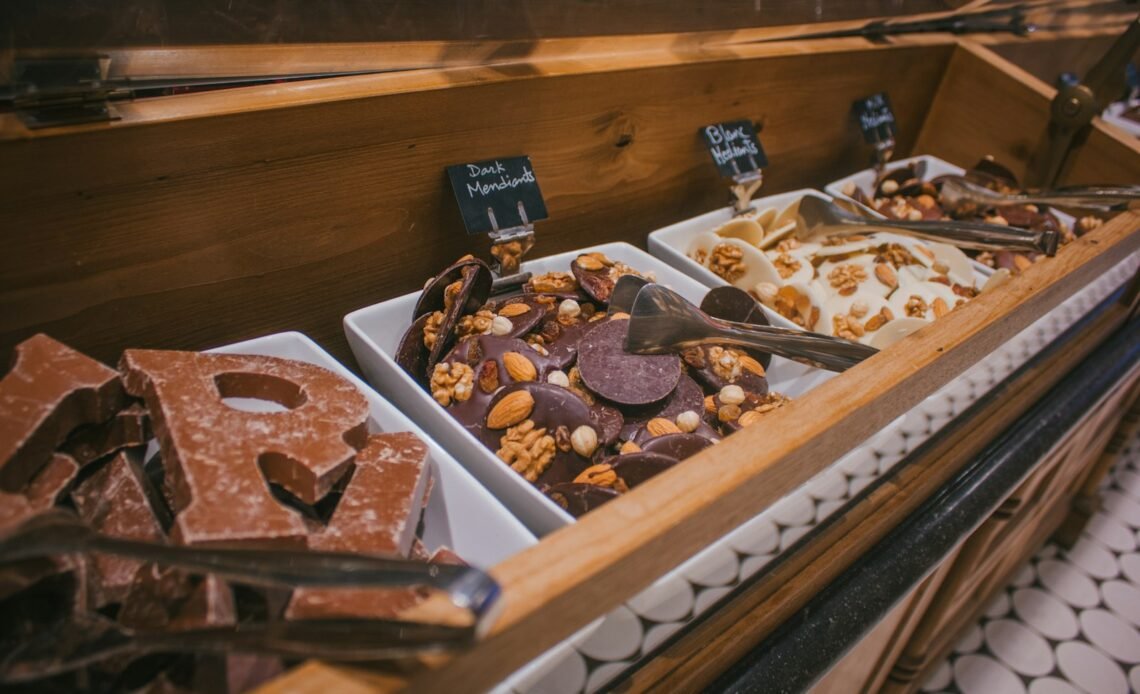
Walk down Grafton Street in Dublin and you’ll pass a chocolate café that’s been there since before most of the street’s current shopfronts existed. Butlers Chocolates opened its first retail outlet at 51 Grafton Street in 1989, but the company itself traces back further — to 1932, Dublin’s Lad Lane, and a woman named Marion Bailey-Butler who started hand-making luxury chocolates under the name Chez Nous. Nearly a century later, it’s amassed more than 30 Great Taste Awards, the industry’s most-watched blind-tasting competition, and it’s still the shop most Dubliners mean when they say “let’s get chocolate.”

A Pioneering Woman’s Chocolate Business, Decades Before It Had a Café
Butlers’ own company history credits its start to Marion Bailey-Butler, who began making confectionery by hand in 1932 — first on Baggot Street, by some accounts, before settling into Lad Lane — and sold it under the name Chez Nous Chocolates. That makes Butlers one of the handful of Irish chocolate houses whose founding predates the Irish state’s own early decades of independence by only a few years. Ownership changed hands in 1959, when Seamus Sorensen acquired the business and ran it as an independent chocolatier focused specifically on fine, hand-finished chocolate rather than mass confectionery — a decision that shaped the company’s identity for the next 60-plus years. It wasn’t until 1989 that Butlers opened a retail shop on Grafton Street, turning a wholesale chocolate-maker into a public-facing Dublin institution, and by the late 1990s and early 2000s it had added its now-signature chocolate cafés, pairing the chocolate counter with coffee, hot chocolate, and a seat to enjoy both.
Why the Great Taste Awards Actually Matter
The Great Taste Awards aren’t a popularity contest — they’re run by the Guild of Fine Food in Gillingham, England, which has organized the competition since 1988 as a genuinely blind tasting: judges assess food and drink with no knowledge of brand, packaging, or price, scoring purely on what’s in front of them. Winning once is a real result; winning repeatedly, across different products and years, is a track record. Butlers’ own tally — more than 30 Great Taste Awards accumulated over its history, including a documented Gold for its Crispy Praline bar — puts it in the same conversation as Ireland’s other serious artisan chocolate names, and it’s a meaningfully different claim than a shop simply calling its own chocolate “award-winning” without naming which award.
The Technique Behind the Smooth Finish
What separates a chocolate that snaps cleanly and melts smoothly from one that turns grainy or dull is almost entirely down to two processes: conching and tempering. Conching — grinding and aerating melted chocolate between heavy rollers for hours at a time — was invented by the Swiss chocolatier Rodolphe Lindt in 1879, reportedly after a chocolate-mixing machine was accidentally left running over a weekend and came out smoother than anything made before it. Before conching existed, chocolate was grittier and less stable; after it, mass-produced chocolate could finally approach the texture of hand-worked confectionery. Tempering — carefully cycling melted chocolate through specific temperature ranges so its cocoa butter crystallizes in a stable, uniform structure — is the reason a well-made chocolate shell is glossy and snaps audibly instead of looking streaky or melting at room temperature. Both techniques are still the backbone of any serious chocolate house’s production today, Butlers included, which is part of why a shop’s longevity and awards track record are a reasonable proxy for whether it has actually mastered them, rather than just branded itself well.
What to Actually Order
At the Grafton Street café, the move is the hot chocolate made from Butlers’ own chocolate sauce recipe — the menu runs more than ten variations, including dark, white, praline, and a chilli version for anyone who wants a real kick under the sweetness, and every hot drink comes with a complimentary chocolate on the side. For something to take away, the Crispy Praline bar is the single most decorated item in the company’s history and a reasonable starting point if you only buy one thing. If you have a free morning and want to see the process rather than just taste the result, Butlers runs The Chocolate Experience, a guided factory tour at its Clonshaugh production site that walks visitors through how the chocolate is actually made, with tasting included and tours typically running a few times a day (check the official booking portal for the current schedule and price, since third-party listings disagree on both). It’s a genuinely different experience from the café — one is a shop, the other is closer to a working factory you get to walk through.
Good to Know
The flagship café sits at 51 Grafton Street, Dublin 2, in the middle of the city’s main pedestrian shopping strip, with other Butlers cafés scattered across Dublin including Wicklow Street, Dundrum, Blanchardstown, and Dublin Airport — so you’re rarely more than a short walk from one if you’re staying in the city centre. The Chocolate Experience tour is out at Clonshaugh, near Dublin Airport, and booking in advance is required since online tickets are non-refundable; a straightforward café visit, by contrast, needs no booking at all. If chocolate is the actual reason you’re in Dublin rather than a stop along the way, pair a Grafton Street visit with Dublin’s other chocolate shops nearby — Cocoa Atelier on Drury Street is a short walk away and makes a genuinely different, French-leaning style worth comparing side by side.
