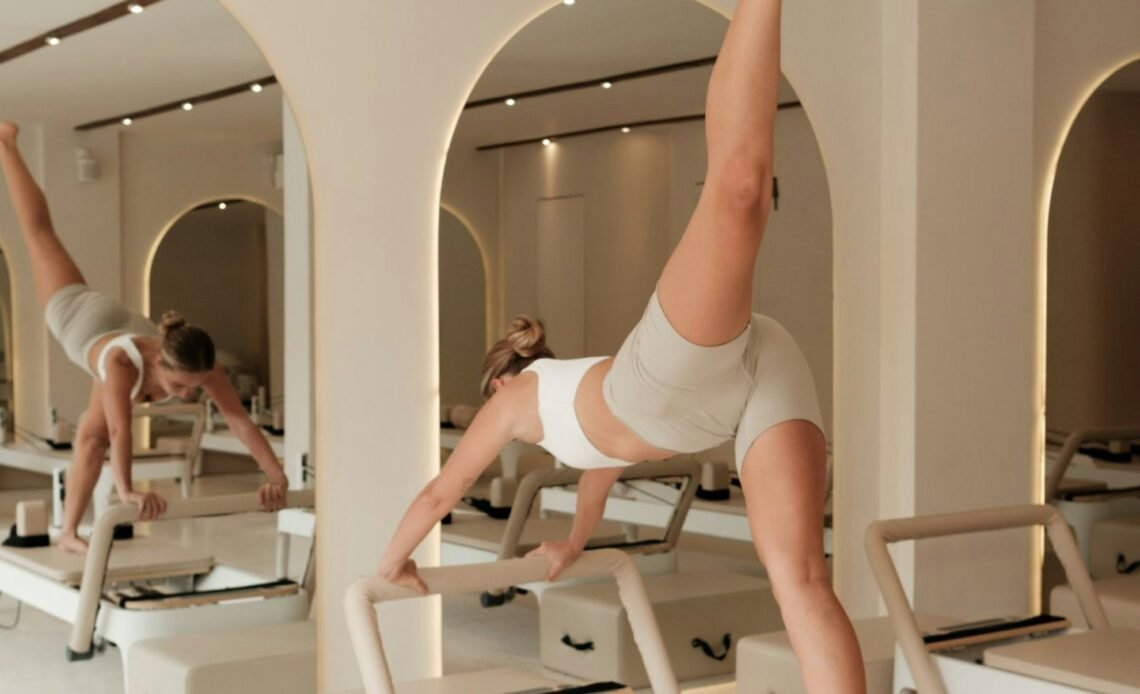
In September 2024, private equity firm L Catterton paid roughly $700 million for a majority stake in [solidcore], the reformer Pilates chain built on a $175,000 life-savings bet by a former Washington, D.C. waitress. Less than two years later, the category [solidcore] helped define is still accelerating: Club Pilates, the Xponential Fitness-owned chain, announced on August 6, 2026 that it had passed 1,500 studios worldwide, with new locations in Thailand and Mexico, while a smaller challenger, Bodybar Pilates, hit 100 studios the same month and has roughly 30 more in the pipeline. Reformer Pilates — the slow, spring-loaded, core-shredding workout once confined to dance studios — has become one of the fastest-growing corners of the fitness industry, and the money moving through it is real.

A waitress, $175,000, and a machine she found in California
[solidcore]’s origin story is the one every studio in this boom gets compared to. Anne Mahlum took her first Pilates class in 2013, got curious about the Megaformer — a longer, spring-loaded reformer machine designed by fitness inventor Sebastien Lagree — after encountering it on a trip to California, and licensed the workout to open her own studio in D.C.’s Adams Morgan neighborhood. She put in $175,000 of her own savings and charged $17 for the first class. Mahlum left the CEO role nine months later but stayed involved as the brand grew; a decade on, in April 2023, she sold her stake for a reported $88.4 million to $100 million to private equity firm Kohlberg & Company. The L Catterton deal, announced in September 2024, valued the whole company at roughly $700 million and came with a $325 million credit facility to fund expansion — the company had about 130 studios across 25 states and D.C. at the time, with a stated target of 250 studios globally within three to five years.
Pricing has climbed with the brand. [solidcore]’s Brooklyn studio currently lists a drop-in class at $43, a five-class pack at $213.18, and unlimited monthly membership at $432.63 — a long way from that original $17 class, and a reminder that this workout sits at the premium end of boutique fitness, not the budget end.
Club Pilates is the one actually winning on scale
While [solidcore] built the premium, high-intensity end of the category, Club Pilates — owned by Xponential Fitness, the same franchisor behind StretchLab and Row House — has quietly become the largest Pilates brand in the world by studio count. Its August 6, 2026 milestone announcement put the network past 1,500 studios globally, crossing into new markets in Thailand and Mexico. Xponential’s international president, Bob Kaufman, framed it as proof the format travels: “Club Pilates is a brand that has proven that it can travel and adapt meaningfully to local communities around the world.” The growth isn’t slowing — in April 2026, franchise group Riser Fitness signed a deal to open 127 more Club Pilates studios over five years, which Xponential called the largest development deal in its history.
Unlike [solidcore]’s Megaformer-based, cardio-leaning classes, Club Pilates runs on the traditional reformer — the flatbed, carriage-and-spring machine Joseph Pilates designed in the 1920s — and leans harder into the low-impact, joint-friendly pitch that’s pulled in an older and more mixed-ability membership base than most boutique fitness brands manage.
The strain underneath the growth numbers
Not every studio is riding the boom equally. Industry data from FitGrid, reported by Athletech News, found that between January and February 2026, lead conversion and first-time client return rates fell at average-performing studios even as top-decile studios held steady — a sign that the category’s growth is increasingly concentrated in a handful of well-run brands rather than lifting every independent studio. A market outlook from MMCG Invest projects the total U.S. reformer studio count growing from roughly 1,800 at the end of 2025 to about 2,600 by 2030, but it also expects Club Pilates’ same-store sales to stay roughly flat through 2026 even as its studio count keeps climbing — growth from new locations, not necessarily from existing ones getting busier.
What to actually expect in a class
Whichever brand’s door you walk through, the mechanics are the same family of machine: a sliding carriage attached to a stationary frame by adjustable springs, which you push or pull against using your legs, arms, or core while lying, sitting, or kneeling on the carriage. The springs add resistance in both directions, so a single slow movement works opposing muscle groups at once — part of why reformer workouts build the kind of visible core and long-muscle definition they’re known for without the joint pounding of running or heavy barbell work. A first class typically runs 45-50 minutes; most studios, including Club Pilates and [solidcore], strongly recommend a beginner-specific or “Foundations” class before dropping into a regular group session, since the machine’s resistance and positioning take real coaching to use safely.
For a newcomer deciding where to start, the practical difference is intensity and price point: [solidcore]’s Megaformer classes run hotter, faster, and closer to $40-45 a session in major cities, while Club Pilates and Bodybar Pilates both position themselves as more accessible on pace and, in many markets, on price — worth checking against the specific studio nearest you before committing to a package, since pricing varies significantly by city and studio ownership.
