A free-standing teenage bedroom, wallpapered in faded pink and scattered with the Lisbon sisters’ dresses from Sofia Coppola’s The Virgin Suicides, sits inside the Grand Palais starting December 9, 2026. It’s the opening set piece of “Girls. Adolescence, Fashion, Rebellion,” a show that spends five galleries treating teenage girlhood as a subject serious enough to sit alongside Louise Bourgeois sculptures and Martin Margiela garments — running through March 21, 2027, with tickets already bookable at grandpalais.fr.
An Antwerp Idea, Reworked for Paris
The exhibition didn’t start at the Grand Palais. It was conceived by Elisa De Wyngaert, an art and fashion historian at MoMu, Antwerp’s fashion museum, as a follow-up to an earlier MoMu show called “Echo.” While researching that project, De Wyngaert kept circling back to the stories of teenagers — specifically girls — and how those experiences resurface, years later, in the work of artists and designers. The result, titled simply “Girls. On Boredom, Rebellion and Being In-Between,” opened in Antwerp on September 27, 2025, and ran until February 1, 2026. The Grand Palais version is an adaptation of that original, retitled “Girls. Adolescence, Fashion, Rebellion” for its Paris run and restaged across the museum’s Galeries 8.
What makes the premise work as an exhibition, rather than a nostalgia trip, is the refusal to treat girlhood as something that simply ends. De Wyngaert’s framing — and the one the Grand Palais has kept for Paris — is that adolescence isn’t a phase visitors age out of so much as a set of feelings (boredom, restlessness, the sense of being perpetually in-between) that keep showing up in fashion, film, and art long after the people who made the work have grown up.
What’s Actually on the Walls
The lineup mixes names you’d expect from a fashion museum with ones you wouldn’t. Garments from Martin Margiela and Simone Rocha are shown alongside work by Louise Bourgeois, and film curation handled by guest curator Claire Marie Healy — whose selections anchor the Coppola bedroom reconstruction at the entrance. A video installation by Belgian filmmaker Leonardo Van Dijl, built from interviews with people of wildly different ages about what girlhood actually meant to them, runs through the middle of the show. MoMu also worked directly with a group of young people aged 9 to 19 while developing the concept, rather than building the show entirely from an adult curatorial perspective and hoping it landed.
It’s a format that leans on fashion history’s strongest card: clothing as a dated, specific, physical record of a moment, displayed with the same weight usually reserved for painting. That’s also exactly the pitch the Grand Palais’s bigger neighbor on the calendar, the Mika Ninagawa show opening a week later on December 16, is making from a different angle — 2026 has turned into a genuine season for the museum testing how far photography- and fashion-adjacent work can carry a major gallery.
A Building With Its Own Reinvention Story
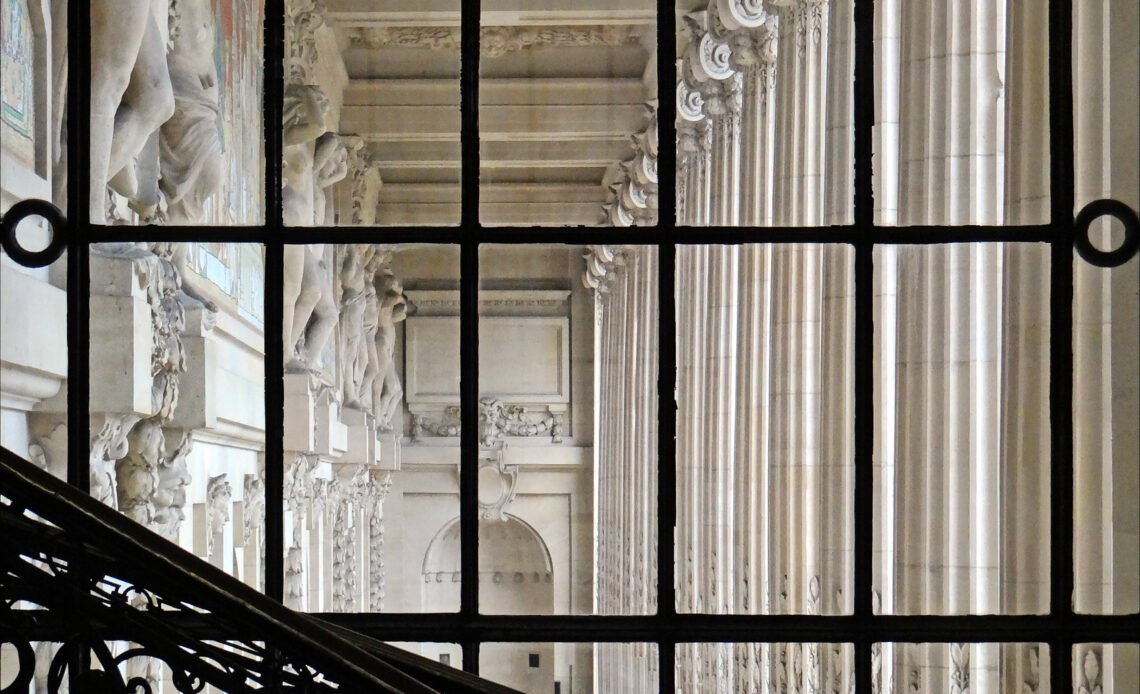
The venue is part of the draw. The Grand Palais was built at speed for the 1900 Exposition Universelle, its steel-and-glass nave designed to let Paris outdo the Eiffel Tower’s 1889 debut with something that read as delicate rather than purely industrial. It spent the next twelve decades hosting everything from aviation shows to Chanel runway sets before closing in March 2021 for what architecture firm Chatillon Architectes calls the most extensive restoration in the building’s history. The nave reopened first, in time to host Olympic fencing and taekwondo during the 2024 Paris Games; the rest of the 77,000-square-meter building — including the galleries now holding “Girls” — reopened fully on June 6, 2025, with restored sightlines between the nave and the Seine that hadn’t been visible in decades.
Planning a Visit
Tickets run €15 full price and €12 reduced (ages 18-25, students up to 30, large families), with free entry for under-18s, job seekers, visitors with disabilities, and school groups — booking through grandpalais.fr is recommended since entry isn’t guaranteed at the door. Galleries are open Tuesday through Sunday, 10 a.m. to 7:30 p.m., with late hours until 10 p.m. on Fridays; the museum is closed Mondays and shuts early on December 24 and 31. A free opening-night event runs the evening of Friday, December 11, from 6 to 10 p.m., though it requires its own free booking.
The Grand Palais sits on the Champs-Élysées side of the Seine, a few steps from Pont Alexandre III. The closest Métro stop is Champs-Élysées–Clemenceau on lines 1 and 13, with Invalides (lines 8 and 13, plus the RER C) a short walk across the river. Buy tickets directly through the official grandpalais.fr booking system rather than a third-party reseller — several resale sites note explicitly that they don’t sell tickets for this show and redirect buyers back to the museum’s own page.

