Denmark’s relationship with fish is older than the country’s relationship with its own capital. Centuries before Copenhagen became a seat of royal power, the Baltic herring trade was already financing the region’s medieval economy, and salted herring and rye bread were the two things nearly every Danish household could count on through a northern winter. That history is easy to forget at Kødbyens Fiskebar — Fiskebaren, as regulars call it — a seafood bar that just marked its 17th year inside a 1930s meat market in Vesterbro, and that has landed in the Michelin Guide every single year since it opened.
Herring Built the Danish Table Long Before Smørrebrød Did
To understand why a fish restaurant matters in a country famous for pork and butter, it helps to go back further than most food writing bothers to. Herring sustained Danish coastal communities through the Middle Ages, cured in salt brine for weeks at a time — a technique called spegesild — then stored in spiced vinegar so it would keep through winter without refrigeration. It was never a delicacy; it was survival food, the first thing on the table because it was the cheapest thing available.
Smørrebrød, the open sandwich the world now associates with Danish food, came much later and for a very different reason. It took hold as a quick, affordable lunch for industrial workers during Denmark’s 19th-century industrialization, when people needed something fast between factory shifts rather than a full sit-down meal. Restaurant Nimb is often credited with putting it on an actual menu in 1883, which is roughly when it crossed over from home kitchens into something a restaurant would charge for. In the traditional smørrebrød sequence, herring still comes first, before other fish, then meat, then cheese — a running order that has barely changed since. Today, consumption among Danes under 40 has genuinely declined, even as herring stays central to how the country defines its own food culture on paper.
A Fish Restaurant in a Meat Market, on Purpose
Kødbyen — literally “meat town” — is Vesterbro’s old meatpacking district, built in three phases: a brown-brick section from 1879, and the white functionalist blocks that went up between 1931 and 1934. For most of the 20th century it was exactly what it looked like: a working wholesale meat market, not a destination. The entrance to the old market is still marked by a concrete bull sculpted by Einar Utzon-Frank in 1933, standing guard over Flæsketorvet, the square at the district’s center.
In 2009, former Noma sommelier Anders Selmer opened a seafood bar inside one of the old white-brick halls — a fish restaurant surrounded on every side by butchers, which is exactly the joke the name leans into. Jamie Lee, a British chef who came up under Gordon Ramsay and Jason Atherton at Maze in London before landing in Copenhagen by way of Australia, has run the kitchen since. The bet — that a seafood bar could survive, let alone thrive, inside a meat district — paid off almost immediately: Fiskebaren has appeared in the Michelin Guide every year since opening, 15 consecutive editions as of the 2026 guide, and Falstaff’s Restaurant & Bistro Guide Nordics 2026 named it Casual Restaurant of the Year, Denmark, scoring it 88 points and two forks.
What’s Actually on the Table
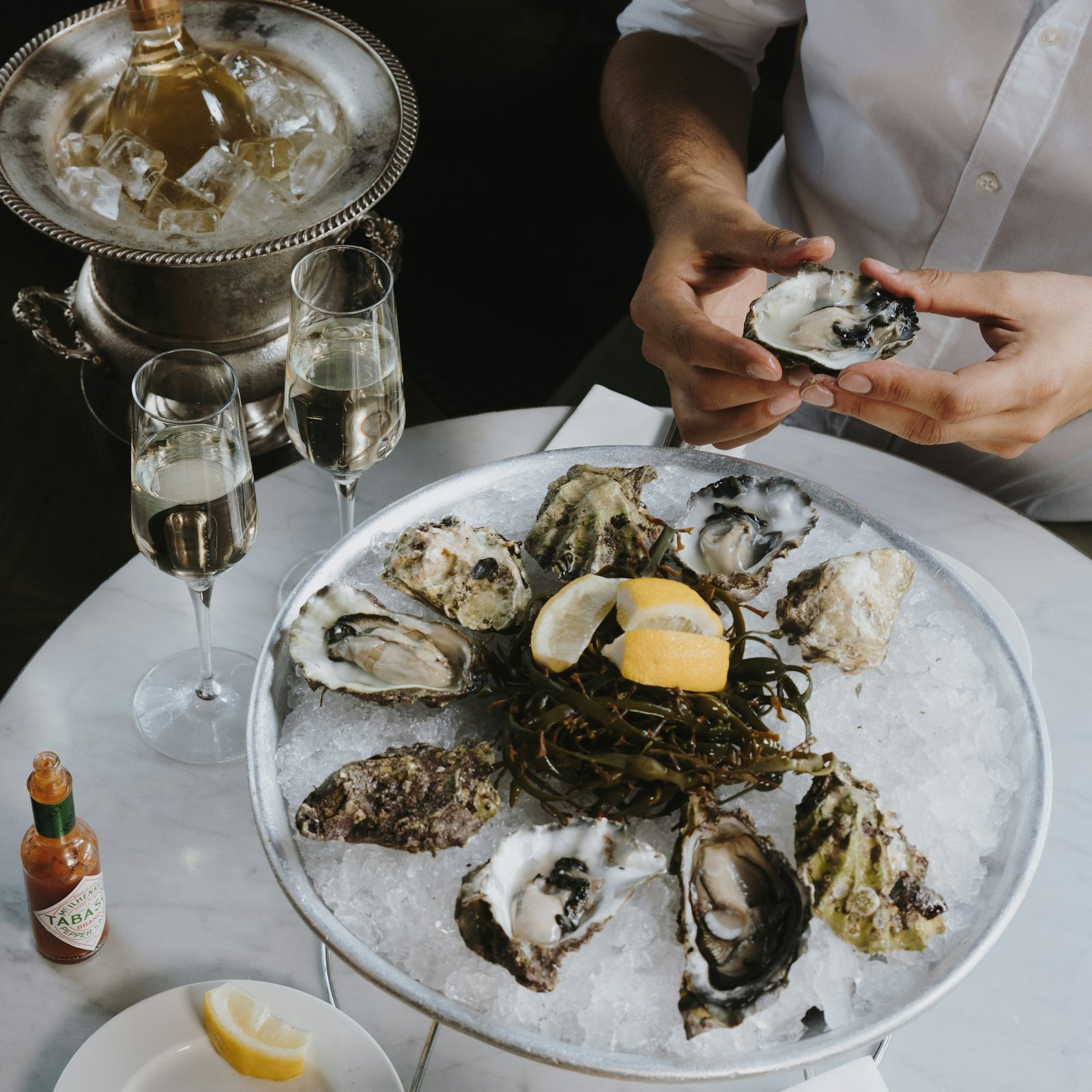
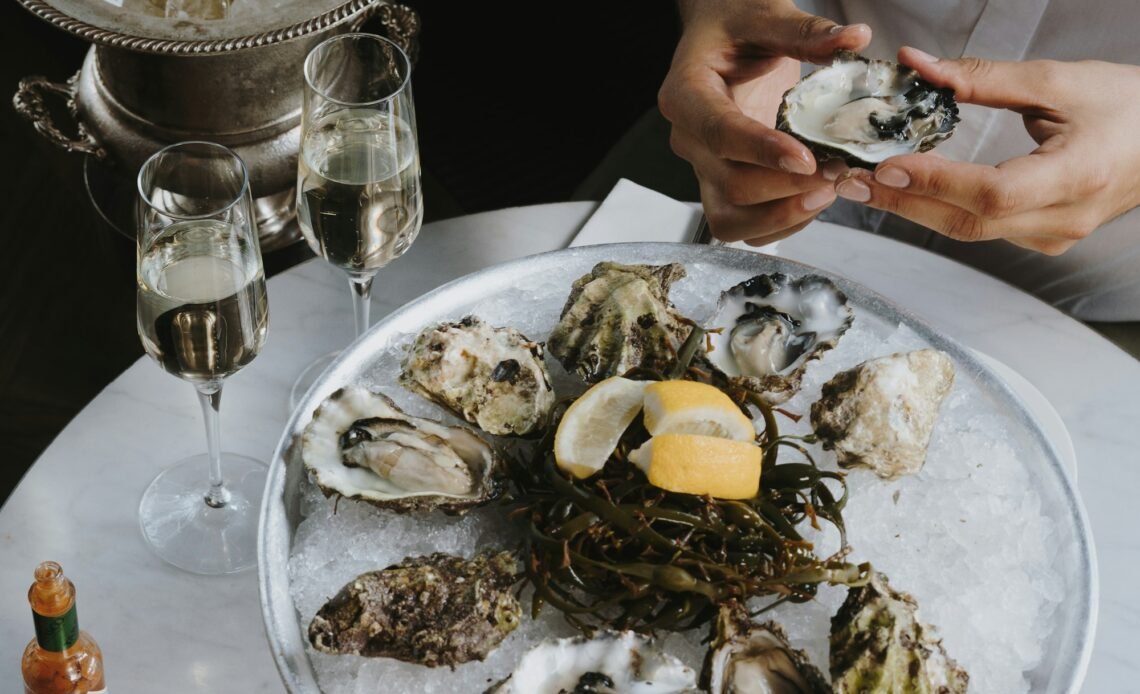
The menu runs seasonal and changes with what the day’s catch allows, but a handful of dishes anchor it. Start with the oysters — a flight of five varieties for 220 DKK, or ten for 390 DKK, served with the restaurant’s own mignonette rather than a bottled sauce. The kelp brioche with bergamot and apple (145 DKK) and the flødebolle with scallop roe and cardamom (45 DKK) — a savory riff on Denmark’s classic chocolate-coated marshmallow treat — show the kitchen’s willingness to treat fish snacks the way other restaurants treat charcuterie. From the raw and cooked plates, recent menus have featured razor clams with plankton, parsley, lemon and ricotta, North Sea shrimp with sea lettuce and buttermilk, and a pollock tail with charred cabbage, green tomato, horseradish mash, and smoked mussel — the kind of plate that uses Danish root-cellar vegetables to do what citrus and olive oil do in a Mediterranean kitchen.
Seventeen years in, the group isn’t standing still. Fiskebaren’s team is opening a new concept nearby in Kødbyen, reported by Falstaff as arriving around late July 2026 at Flæsketorvet 10 — a single space combining a café, wine bar, cocktail bar, and restaurant under one roof, expanding the same meat-district-fish-bar idea that made the original work.
Going
Kødbyens Fiskebar sits at Flæsketorvet, a 10-minute walk from Copenhagen Central Station or one stop on the S-train to Dybbølsbro. Reservations are genuinely necessary — this isn’t a walk-in spot on a Friday night — and the restaurant publishes current menus and prices directly on fiskebaren.dk, since both shift seasonally. For a city whose food identity still runs on herring and rye bread, eating excellent raw oysters inside a former meat market is as Copenhagen a contradiction as it gets.